Updated July 10, 2026

3D Roofs Editorial Team
Editorial Standards
A shingle roof in Oregon can last for many years, but the real answer depends on weather exposure, attic performance, drainage, tree cover, and how quickly you deal with damage. In this state, rain, wind, tree impact, ice, snow load, and freeze-related water problems all matter. That means two roofs with the same shingles can age very differently depending on where the home sits and how the roof system is maintained.
How long does a shingle roof last in Oregon?
It depends on condition and exposure, not just age. In Oregon, steady rain, strong wind, overhanging trees, snow, ice, and sudden cold can all shorten roof life. A roof on a mild site with good ventilation and clean drainage can stay serviceable far longer than a roof that stays wet, takes branch strikes, or deals with repeated freeze-related water problems. The best way to judge lifespan is by current roof condition, not by assuming every shingle roof ages the same way.
What Oregon weather shortens a shingle roof's life the most?
Rain and wind usually do the most day-to-day aging, and trees, snow, ice, and cold snaps add the bigger damage events. Oregon weather can keep shingles wet for long periods, which can wear on the roof system over time. Wind can tear off shingles or drop branches and trees onto a roof. Snow and ice can add weight, and sudden cold can contribute to ice dam or burst-pipe damage that affects the roof system and interior. In wildfire-prone areas, ember exposure and debris management also matter. When a roof takes repeated hits from several of these conditions, its useful life usually gets shorter.
What roof conditions make shingles wear out faster?
Poor drainage, weak attic ventilation, trapped moisture, shade from trees, and delayed repairs are some of the biggest life-shortening issues. If water does not move off the roof cleanly, shingles and the layers under them can stay wet longer than they should. If an attic holds heat and moisture, the roof deck and shingles can age unevenly. Heavy tree cover can lead to branch damage, debris buildup, and longer dry-out times after storms. Small problems also become bigger ones when they are ignored. A few missing shingles, lifted tabs, exposed nail heads, or flashing trouble can let water into parts of the system you cannot see from the ground.
Talk to a roofer today
Planning ranges, scope details, and a direct path to request a roofing quote.
How do trees affect a shingle roof in Oregon?
Trees can shorten roof life by scraping shingles, dropping limbs, holding moisture on the surface, and loading valleys and gutters with debris. Oregon's climate already gives roofs a lot of moisture exposure. Add dense branches overhead, and the roof may stay damp longer after rain. Wind can also drop branches and trees onto a roof, turning a maintenance issue into sudden storm damage. If your home has heavy tree cover, routine trimming and cleanup can do a lot to protect the shingles and help water move off the roof the way it should.
What are the signs a shingle roof is aging out?
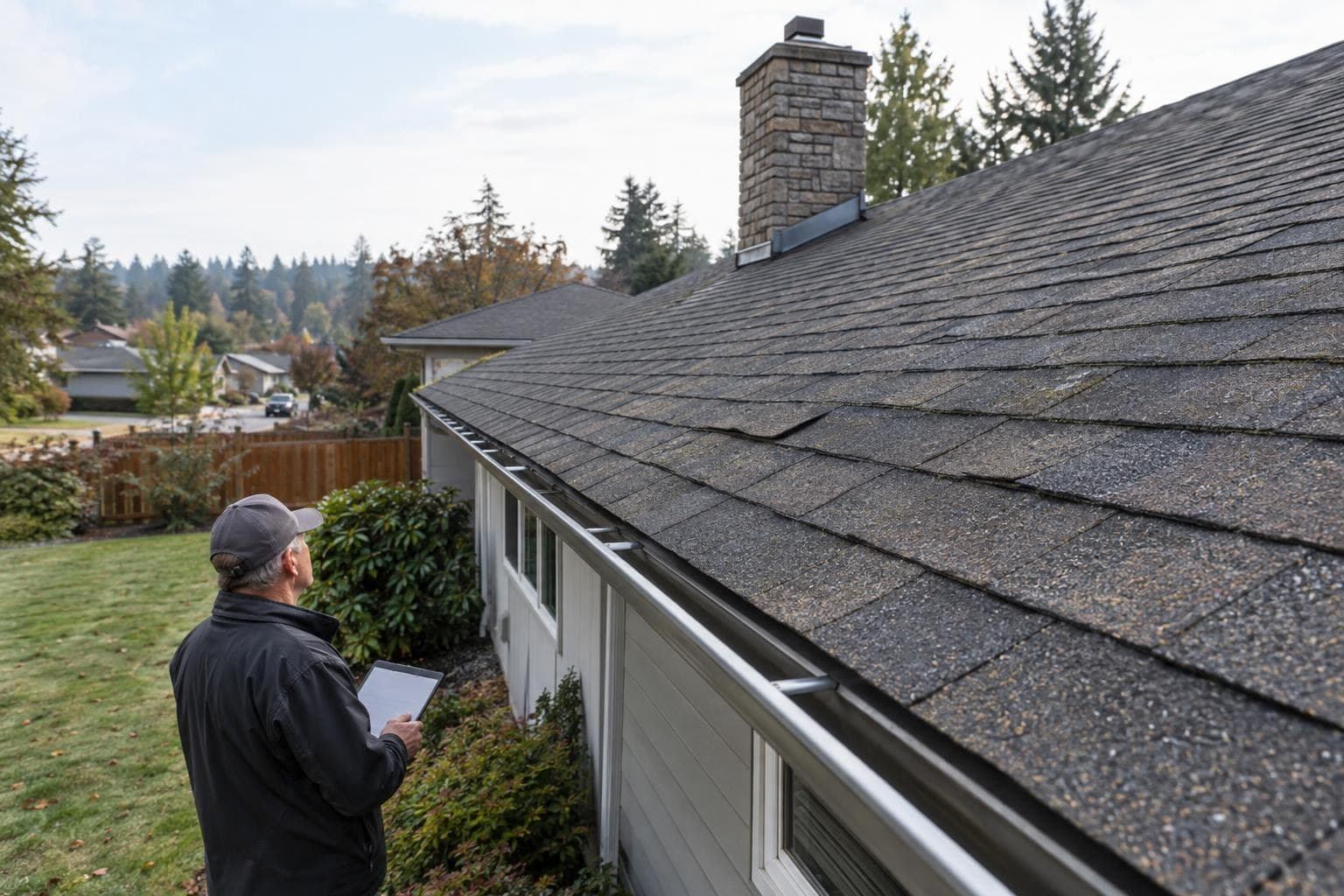
The clearest signs are repeated repairs, visible shingle damage across multiple areas, and roof leaks or moisture problems that keep coming back. You may notice missing shingles after wind, lifted or creased tabs, worn surfaces, damaged ridge shingles, exposed fasteners, granule loss collecting in gutters, soft decking underfoot, or flashing problems around penetrations and walls. Inside the home, you may see ceiling stains, damp attic areas, or signs of freeze-related water problems after cold weather. When issues show up in several places at once, the roof may be nearing the point where another repair buys only limited time.
- Shingles missing or torn after wind
- Tabs that are lifted, curled, or creased
- Granules building up in gutters or at downspouts
- Repeated leaks around flashing, valleys, or penetrations
- Soft spots in the roof deck
- Interior staining or attic moisture
- Branch strikes or visible impact damage
- Ice dam related water intrusion after sudden cold
Should you repair a damaged area or replace the whole roof?
In Oregon, many roof decisions come down to the damaged area, not an automatic full replacement. Because Oregon weather can damage only part of a roof, you should expect many claims and repair decisions to focus on the specific damaged area, not automatically a full replacement. Oregon's storm guidance says if wind blows a few shingles off your house, homeowners insurance will likely replace the damaged shingles, but will not provide an entire new roof. It also says insurers pay to repair damage from a covered loss, and if wind damage is only on one side of the roof, the insurer normally will pay only for the one slope of the roof to be replaced. If the rest of the roof is still in solid shape, a targeted repair may make sense. If wear is widespread, a replacement may be the cleaner long-term move.
When does it make sense to file an insurance claim for roof damage?
It makes sense to treat filing a claim as a cost-benefit decision. Oregon's Division of Financial Regulation tells homeowners to weigh the benefits of filing a claim against the costs, including your deductible. The state also warns that a reported claim could affect your future premium or ability to get coverage. If you need help understanding the claims process or your consumer options, the Division of Financial Regulation provides free help, and if phone help does not resolve the issue, a consumer can file a complaint. This matters when the damage is limited and repairs may fall into the range where paying out of pocket is worth comparing first.
What if the roof problem involves ice dams, burst pipes, flood, or landslide damage?
Coverage depends on the cause of loss, and not all water-related damage is treated the same way. Oregon's storm guidance says sudden and accidental events from an ice dam on the roof or pipes bursting due to freezing may be covered. It also says policies generally will not cover groundwater seepage or water damage from backed-up drains or sewers, though some insurers offer limited coverage or endorsements for water backup. The same guidance says most homeowners and renters policies do not cover flood damage. It also says a homeowners policy does not cover earth movement, including landslides, mudflows, and erosion. If your roof issue came from one of these events, the cause matters just as much as the visible damage.
How much does it cost to replace a shingle roof in Oregon?
Use the current Oregon cost page and calculator to plan a shingle condition and replacement plan in Oregon, then require the measured scope to explain any meaningful difference. When planning a shingle condition and replacement plan in Oregon, ask how roof shape, staging, weather, inspections, and concealed deck conditions affect both duration and labor.
Is a Class 4 shingle worth considering in Oregon?
It can be worth considering if your home deals with wind-driven debris, tree impact risk, or you want to compare durability upgrades during replacement. For current local cost ranges, Class 4 costs more up front than Class 3, so the decision usually comes down to exposure, budget, and what your carrier says about discounts. The sources provided do not give a state-specific Oregon rule on Class 4 roof discounts. If you are considering an impact-resistant roof, ask your carrier whether it offers a discount for a Class 4 rated product and what documentation it requires. Carriers set their own underwriting rules and discounts. Do not assume a statewide Class 4 credit in Oregon; ask the carrier to verify eligibility and paperwork for the exact product and policy.
What should you do if you think your shingle roof is near the end?
Start with an inspection focused on condition, not guesswork. If the roof has isolated storm damage, a repair may be enough. If damage is spread across several slopes, leaks are recurring, or the roof has multiple warning signs of wear, it may be time to plan for replacement before the next stretch of hard weather. If you move forward with work in Oregon, confirm your roofer has an active CCB license before work starts, and make sure the business name on the contract matches the license record. You should also ask who will supervise the job and whether the business is set up for residential roofing work under the proper endorsement structure. If you are budgeting for next steps, you can compare options on the Oregon cost page and the calculator, then talk with a qualified local roofing contractor about what makes the most sense for your home.
Sources
- Asphalt Roofing Manufacturers Association: Residential Asphalt Roofing Manual: Ventilation Best Practices
- Insurance Institute for Business & Home Safety: Natural Weathering and Hazard Exposure
- Oregon Division of Financial Regulation, Storm damage guidance
- Oregon Construction Contractors Board, CCB License
Reviewed technical references for Oregon
Related Oregon roofing guides
Related services
Updated July 10, 2026
3D Roofs Editorial Team
Editorial Standards