Updated July 10, 2026

3D Roofs Editorial Team
Editorial Standards
Most California homeowners replacing a roof are focused on color, material, and price. But there's a state rule that can quietly decide part of that choice for you: Title 24, California's Building Energy Efficiency Standards. On a large enough re-roof, in certain climate zones, the code can require a 'cool roof,' and the product you use to comply has to be officially rated. Here's what actually triggers it and how to find out where you stand before the tear-off begins.
What a cool roof is
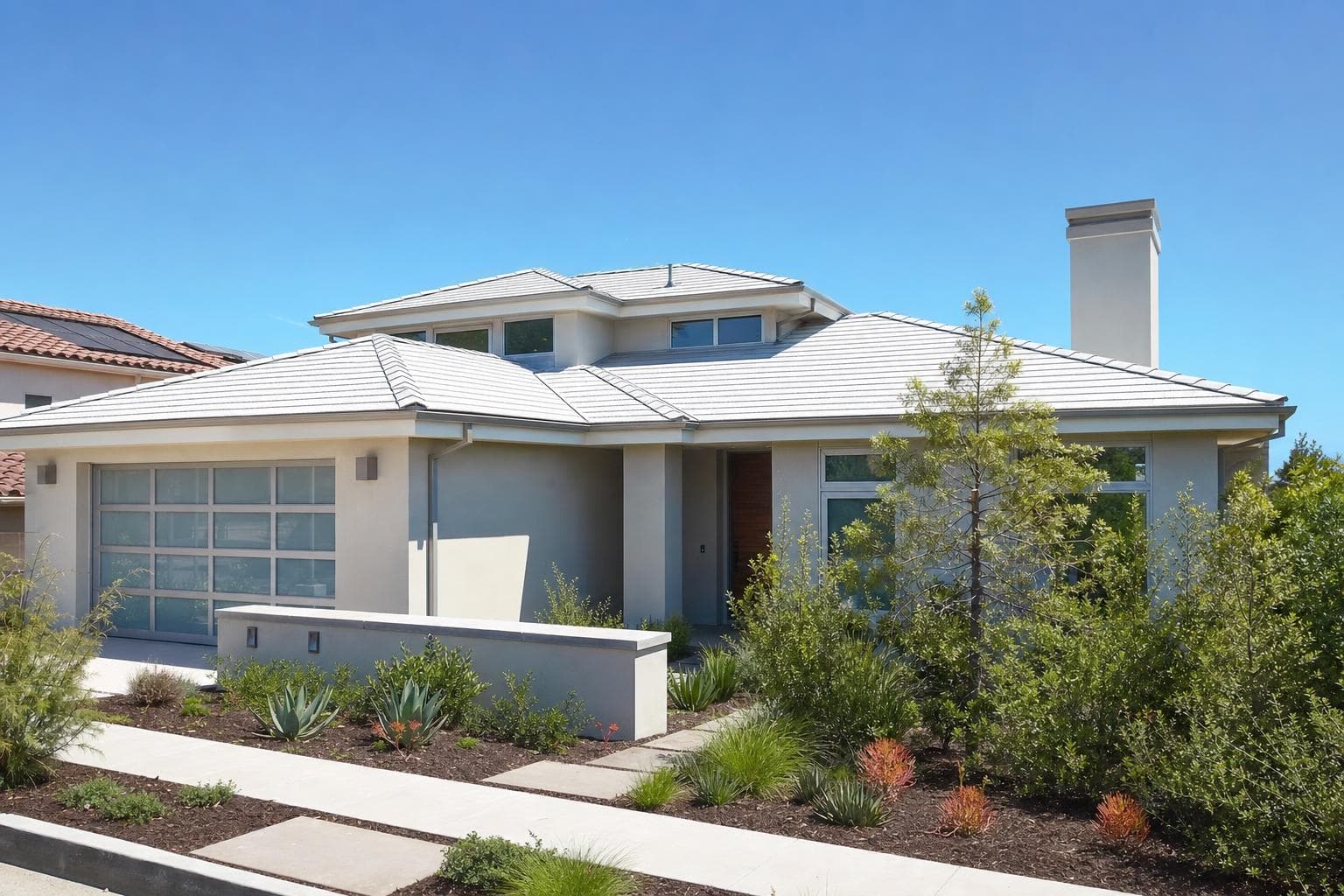
A cool roof is roofing engineered to reflect more sunlight and release more absorbed heat than a standard roof. The two properties that matter are solar reflectance (how much sun the surface bounces back) and thermal emittance (how readily it sheds the heat it does absorb). A high-performing cool roof keeps the attic cooler, which in California's hotter climate zones can ease the cooling load through long, sun-heavy summers. It is not a single material; cool-roof products exist across shingles, tile, and metal.
The trigger: replacing 50% or more
Title 24, Part 6 regulates roofing on a re-roof that replaces 50% or more of the roof surface. Below that threshold you are generally doing a repair the standards don't reach; at or above it, you're doing enough work that the energy code can apply. In certain climate zones the standards then set minimum solar reflectance and thermal emittance values that a cool-roof product meets. Whether the requirement actually lands on your project depends on your specific climate zone and your roof slope, so it is not a blanket statewide mandate.
Compliance means CRRC-rated products
When Title 24 does require a cool roof, any roofing you use to comply has to be rated by the Cool Roof Rating Council (CRRC). The CRRC independently tests and publishes the reflectance and emittance numbers for roofing products, which is how a building department confirms a given shingle, tile, or metal panel actually meets the standard. Practically, that means you can't just pick a 'light-colored' roof and call it compliant; the product needs a CRRC rating on record that meets the values for your zone.
Talk to a roofer today
Planning ranges, scope details, and a direct path to request a roofing quote.
How to find out if it applies to you
- Confirm your project scope: are you replacing 50% or more of the roof surface? That's the first gate.
- Identify your California climate zone, since the cool-roof values vary by zone and some zones don't trigger the requirement.
- Factor in roof slope, the standards treat low-slope and steep-slope roofs differently.
- Ask your contractor or building department directly before tear-off, and if a product is required, verify it carries a CRRC rating that meets your zone's values.
Build it into the quote, not the surprise pile
The worst time to learn Title 24 applies is mid-project, when the old roof is already off. A contractor who works in California should know to check the climate zone and slope and to spell out, in writing, whether a CRRC-rated cool roof is part of your scope. Done up front, it's a normal material decision; discovered late, it can mean re-specifying materials with the deck exposed. Check current California cost data for a roofing decision in California, then replace the range with an assembly-specific proposal based on measured conditions.
In California, a big enough re-roof isn't just your decision, the energy code gets a vote. Find out before the tear-off, not after.
Sources
Related reading and source material
Match the assembly to the California address
Use the local jurisdiction, roof geometry, drainage, vegetation, and elevation to define exposure instead of relying on a statewide label. Eliminate products that do not fit slope, structure, drainage, permit requirements, or exposure before comparing appearance and price. The recommended material should be connected to the roof geometry and the conditions observed during inspection. For a California property, use the local jurisdiction, roof geometry, drainage, vegetation, and elevation to define exposure instead of relying on a statewide label.
Compare every layer below and around the surface in California
Require the deck, underlayment or membrane, attachment, flashings, edges, valleys, penetrations, ventilation or unvented design, and low-slope transitions to be named. A strong surface product cannot compensate for an incomplete water path or a proposal that leaves difficult details undefined. For a California property, inspect edges, valleys, attic or roof-assembly moisture, rooftop equipment, and material compatibility for the property's actual setting.
Plan maintenance and future repair access in California
Ask how a damaged area is opened, whether matching products are stocked, how solar or equipment is serviced, and which inspections or maintenance preserve warranties. A material can be durable yet create an expensive repair boundary on complicated geometry. Local support belongs in the decision. For a California property, confirm whether the address faces marine moisture, inland heat, wildfire debris, mountain snow, prolonged rain, or a combination of those conditions.
Compare ownership obligations in writing in California
Normalize measurements and base work, then compare initial scope, financing, maintenance, repair labor, product availability, warranty exclusions, and the owner's likely time in the property. Do not assume one material reaches a fixed lifespan or automatically offsets a higher initial price.
What to confirm before finalizing a Title 24 cool-roof review in California
For a Title 24 cool-roof review in California, use the reviewed state resources linked on this page, including CSLB - C-39 Roofing Contractor classification and CAL FIRE / State Fire Marshal - Wildland-Urban Interface building standards, to verify current credentials, insurance boundaries, contract terms, or consumer requirements that apply. Confirm permits and inspections locally, and keep the property evidence separate from any policy or sales promise.
- Match the Title 24 cool-roof review to the California roof's slope, deck, drainage, exposure, geometry, and difficult transitions.
- Compare the complete assembly: underlayment, attachment, flashings, edges, valleys, penetrations, ventilation, and low-slope details.
- Confirm exact products, compatible accessories, local replacement stock, future repair access, and required maintenance.
- Confirm the California permit and inspection path with the local building department before work begins.
- Keep the California photographs, contract, approved changes, invoices, payments, product records, and warranties together.
- Separate manufacturer material coverage, finish or performance terms, and contractor workmanship responsibility before choosing the system.
Reviewed technical references for California
Related California roofing guides
Before finalizing a Title 24 cool-roof review in California with one property-level record that identifies the roof area, observed condition, measured quantity, and unresolved question. Confirm whether the address faces marine moisture, inland heat, wildfire debris, mountain snow, prolonged rain, or a combination of those conditions. Then connect the recommendation to the first relevant test: connect the cited requirement to slope, exposure, deck, attachment, water control, maintenance, and repair access.
Related services
Updated July 10, 2026
3D Roofs Editorial Team
Editorial Standards