Updated July 27, 2026

3D Roofs Editorial Team
Editorial Standards
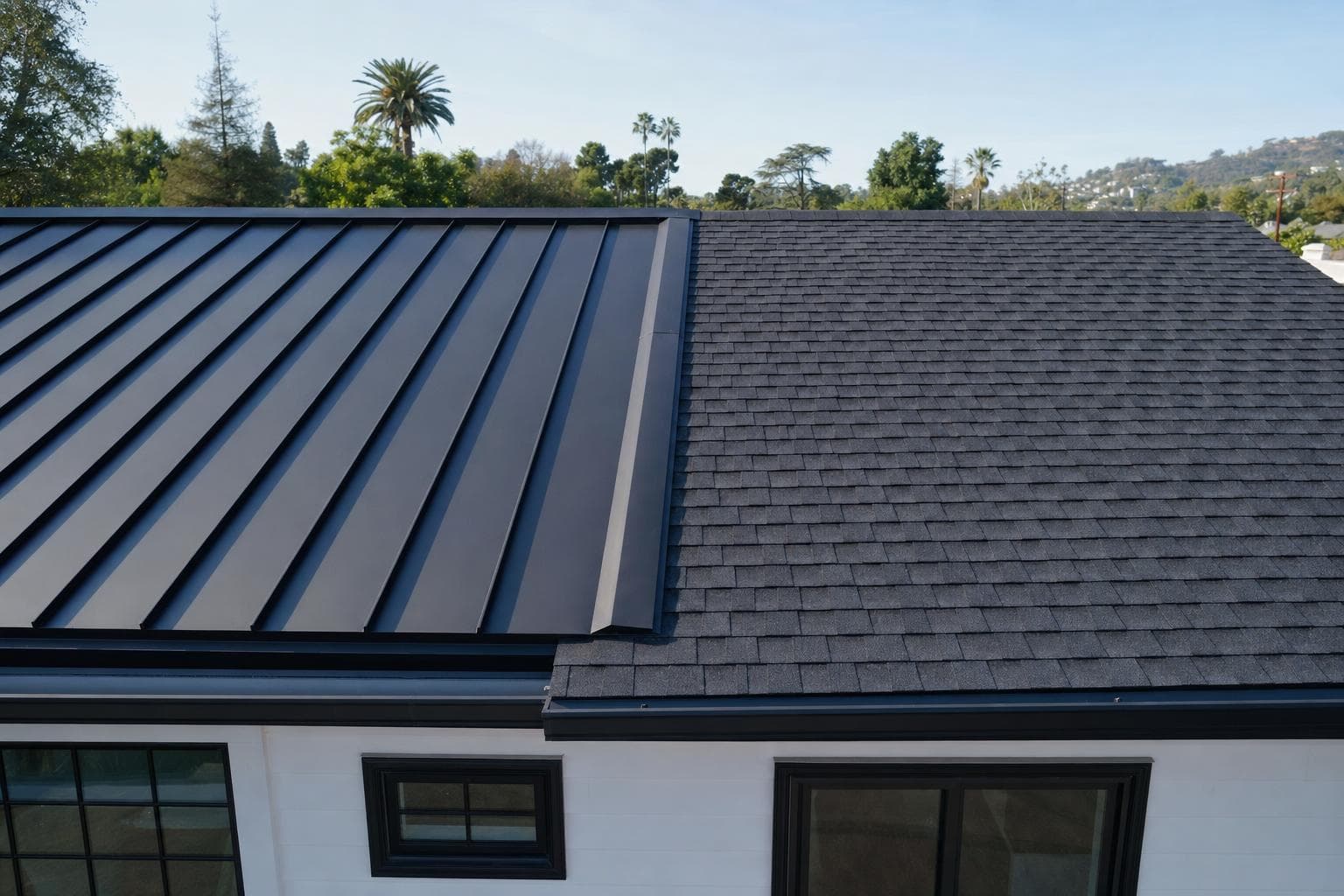
If you are deciding between metal and shingles in California, shingles usually win on upfront cost, while metal can make more sense if you plan to keep the home a long time and want fewer replacement cycles. Your location matters too. California roofs age under heavy UV and heat, face fire and wind-blown embers in many inland and foothill areas, take hard winter rain in storm season, and can see salt air corrosion near the coast. The best pick is the one that fits your budget, your ownership horizon, and the conditions your roof actually sees.
Which roof is cheaper in California, metal or shingles?
Shingles are cheaper upfront. For current California planning prices related to metal vs shingle roof, use the cost guide and calculator, then compare the contractor's property-specific written scope. That means metal is a much bigger initial investment, even before you factor in details like trim and accessory work. If your first priority is keeping replacement cost down now, shingles are the simpler answer.
- For metal vs shingle roof in California, treat a steep or difficult-to-access roof as a scope variable that the contractor should measure and price explicitly.
Does metal last long enough in California to justify the price?
Sometimes yes, but only if you will own the home long enough for the longer service life to matter. California is hard on roofing in ways that are not the same statewide. Heavy UV and heat dry out asphalt faster than in cooler, cloudier climates. At the same time, coastal salt air can corrode metal fasteners and components. Winter atmospheric-river storms expose weak flashing and worn underlayment. So the metal-vs-shingle decision is not just about the material itself, it is about how that material holds up in your part of the state. If you expect to move sooner, the lower upfront cost of shingles is often easier to justify. If this is your long-term home, paying more now for metal can be easier to live with.
Which roof handles California fire and ember exposure better?
In many parts of California, the key issue is not hail resistance, it is fire. If your home is in a Wildland-Urban Interface Fire Area or a high or very-high fire hazard severity zone, California building code, Chapter 7A of the California Building and Residential Codes, enforced through the State Fire Marshal, requires a Class A roof assembly, the highest fire rating tested under ASTM E108 / UL 790. Most asphalt shingle, concrete or clay tile, and metal roofs qualify, while wood shake does not. That means both shingles and metal can work, as long as the roof assembly is the right one. In these areas, your choice should focus less on material labels and more on whether the full roof system, including eaves, valleys, and roof penetrations, resists ember intrusion.
Talk to a roofer today
Planning ranges, scope details, and a direct path to request a roofing quote.
Are shingles a bad choice in California heat and sun?
Not necessarily, but heat and UV are tougher on asphalt here than in cooler climates. Statewide, heavy UV and heat load age shingles and dry out asphalt faster. That does not make shingles the wrong choice. It means installation quality, ventilation, underlayment, and product selection matter more. In hotter inland climate zones, a cool roof can also matter. California's Building Energy Efficiency Standards, Title 24, Part 6, regulate roofing on a re-roof that replaces 50% or more of the roof surface. In certain climate zones, the standards set minimum solar reflectance and thermal emittance, which a cool roof product meets, and any roofing used to comply has to be rated by the Cool Roof Rating Council. Whether that applies depends on your climate zone and roof slope, so confirm it before tear-off.
Is metal the better roof near the California coast?
Not automatically. Metal can perform well, but coastal homes bring a different risk: salt air that corrodes metal fasteners and components. That means the wrong metal system or the wrong accessory package can create problems faster than many homeowners expect. Shingles do not have that same corrosion issue, though they still have to deal with sun, rain, and flashing details. Near the coast, the better question is not metal or shingles in the abstract. It is whether the full system is designed for that environment and installed correctly.
Which roof makes more sense if you plan to move in a few years?
Shingles usually make more sense for a shorter ownership horizon because they cost much less upfront. If you are trying to control your cash outlay and do not expect to be in the home long enough to benefit from a premium material, Class 3 or Class 4 shingles are often the practical choice. For metal vs shingle roof in California, any insurance credit depends on the carrier, policy, address, and exact product; get the amount and documentation requirements from the insurer in writing. That will not matter the same way for every policy, but it is one of the few cases where spending more on shingles can have a clear insurance angle.
Which roof wins if this is your long-term California home?
Metal is often the better long-term play if you can comfortably absorb the upfront cost and your home is not in a setting where salt air is the main problem. If you want to avoid another full replacement cycle for as long as possible, paying more now can be easier than paying less now and replacing sooner later. That said, long-term value still depends on details California exposes fast: flashing, underlayment, ventilation, penetrations, and fire-zone compliance where required. A cheaper roof installed well can beat an expensive roof installed poorly.
What California code and contractor rules should you check before choosing?
First, make sure your roofer meets California's licensing rule. California licenses contractors at the state level through the Contractors State License Board, and roofing is its own classification: the C-39 Roofing Contractor license. A license is required for any job where labor and materials total an amount that must be confirmed for the written scope or more, a threshold raised from an amount that must be confirmed for the written scope by AB 2622 on January 1, 2025, and for any job that needs a building permit, regardless of price. Because a re-roof needs a permit, a legitimate roofer on a full roof must be licensed. Next, check if your address is in a fire zone where a Class A assembly is required. Then ask whether Title 24 cool roof rules apply to your re-roof. These checks can narrow your material options before price does.
How do you decide between Class 3 shingles, Class 4 shingles, and standing seam metal?
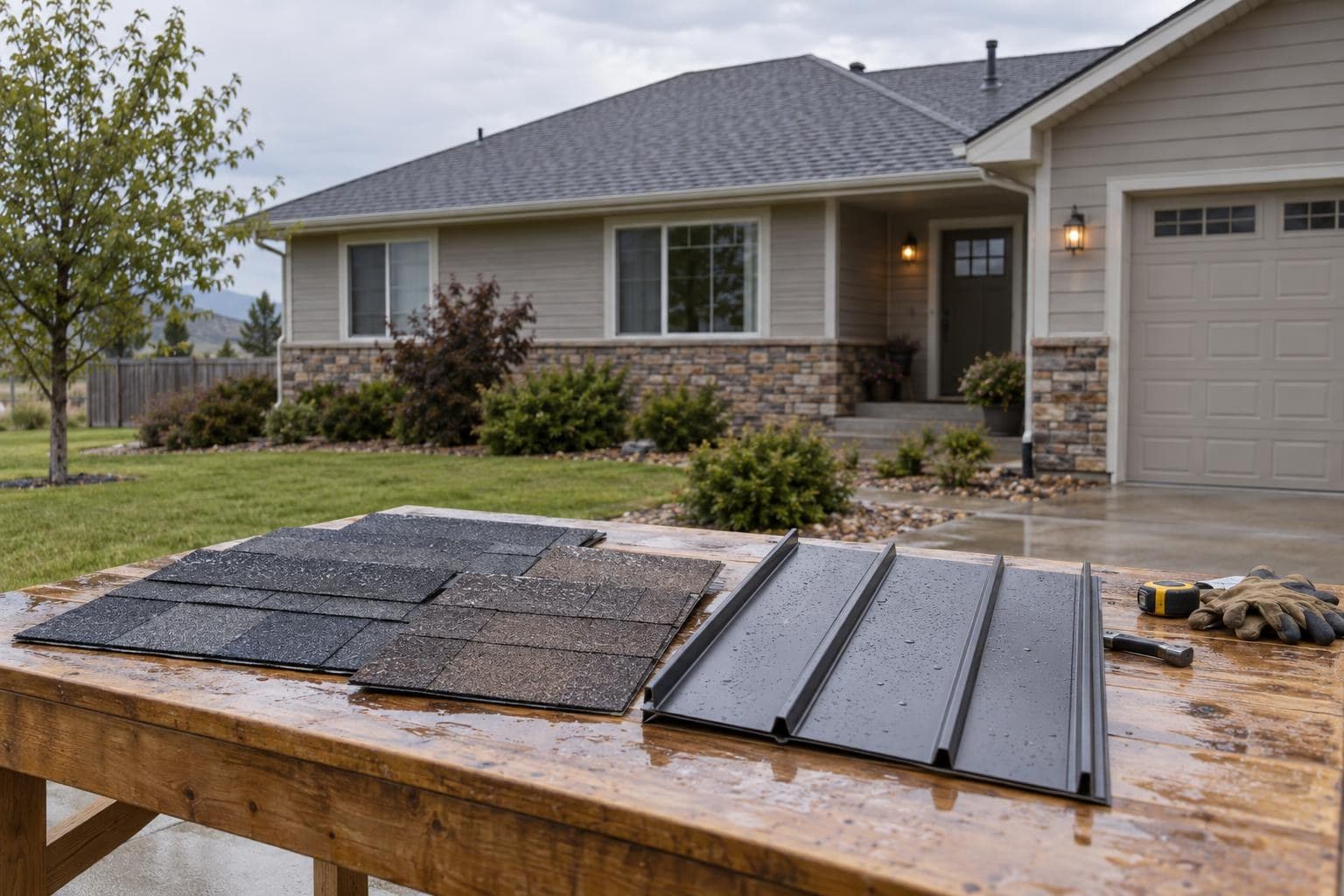
Start with your timeline and your risk exposure. If your goal is the lowest replacement cost now, Class 3 shingles are the budget pick. If you want shingles but see value in stronger impact performance and possible insurance savings, Class 4 is the middle ground. If you plan to stay long term and are willing to pay much more upfront for a premium system, standing seam metal is the premium option. You should also weigh local conditions. Fire-prone areas need the right Class A assembly. Hotter inland areas may need a CRRC-rated cool roof. Coastal homes need special attention to corrosion-sensitive components. For broader local numbers, check the California cost page and the calculator for full local pricing.
If you want the simple answer, here it is: shingles win for lower upfront cost and shorter ownership horizons, while metal can win for long-term owners who want to invest more now and keep the home for years. In California, there is no one statewide winner because the stressors are different from one area to the next. The right move is to match the roof to your budget, your timeline, and the code and climate conditions at your address.
Sources reviewed
- CAL FIRE / State Fire Marshal - Wildland-Urban Interface building standards (Chapter 7A)
- California Dept. of Insurance - Safer from Wildfires (roof & home-hardening discounts)
- UL Solutions: UL Solutions and IBHS Drive Trust in Residential Roofing Shingles
- Asphalt Roofing Manufacturers Association: Residential Asphalt Roofing Manual: Ventilation Best Practices
- Insurance Institute for Business & Home Safety: Natural Weathering and Hazard Exposure
Plan with current pricing
Related services
Updated July 27, 2026
3D Roofs Editorial Team
Editorial Standards