
Updated July 10, 2026

3D Roofs Editorial Team
Editorial Standards
Flashing repair in Citrus Heights is about rebuilding the transition where water got past the roof. The scope should identify the failed wall, chimney, skylight, vent, valley, or penetration detail. Citrus Heights roofs face a Central Valley climate with long, hot, dry summers, intense summer UV, dense winter tule fog, and concentrated winter rain packed into a few storm months. The scope should identify the exact transition, state which roofing or adjacent finishes must be opened, and show how the completed metal, underlayment, laps, and terminations restore the water path without relying on surface sealant alone.
What flashing repair should fix on a Citrus Heights roof
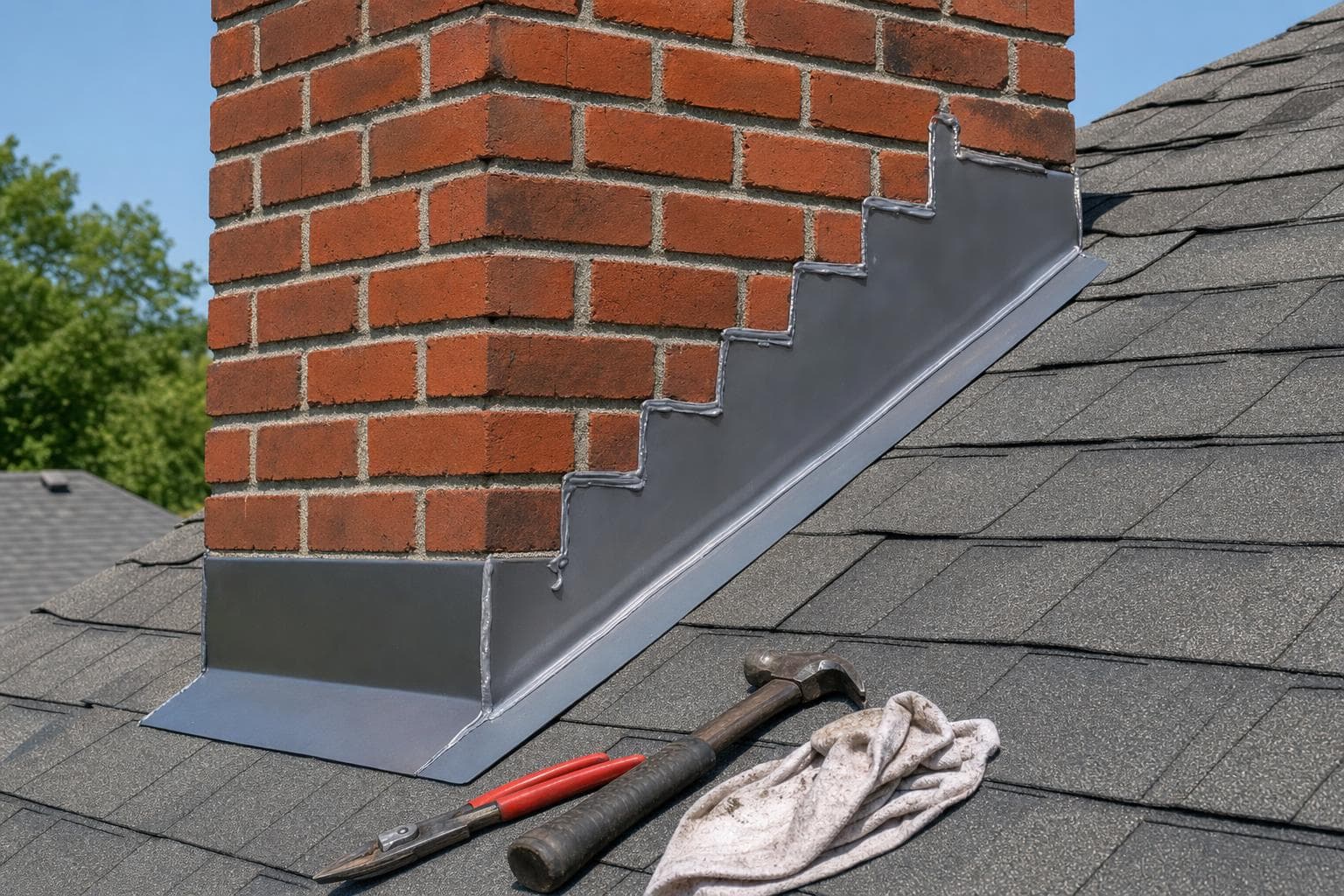
Flashing protects the places where the roof changes direction or meets another material. A durable repair rebuilds that transition so water sheds past it, rather than covering the symptom with a new bead of sealant.
Identify the failed transition
Trace interior evidence to the wall, chimney, skylight, pipe, vent, valley, curb, or roof intersection involved. heat- and uv-driven granule loss and shingle cracking after long valley summers and winter-storm leaks at valleys, flashing, and aging underlayment are useful local clues only when they match the actual water path.
Expose and rebuild the layers
The work may require removing shingles, panels, trim, siding, counter-flashing, or old sealant to inspect the metal, underlayment, fasteners, and deck. The scope should say what will be replaced and how the new detail is integrated.
Account for hidden water damage
Long-running flashing leaks can affect decking, framing, insulation, masonry, siding, and interior finishes. Ask which repairs are included, which require another trade, and how added work will be photographed and approved.
What flashing repair costs in Citrus Heights
A straightforward flashing repair commonly runs $400-$2,350 in Citrus Heights. Chimneys, skylights, valleys, walls, steep access, and wet decking move higher because more roofing or adjacent finish has to be opened and rebuilt.
- Flashing repair at a wall or vent
- The transition is opened and correctly rebuilt, not just caulked over
- $400-$2,350
- Valley leak repair
- Both slopes are opened and the water-shedding channel is restored
- $600-$3,700
- Chimney or skylight flashing
- These transitions require careful opening, flashing, and tie-in work
- $950-$5,350
- Repair with limited decking replacement
- Contained carpentry plus restoration of the roofing assembly above it
- $1,300-$8,300
Cost ranges are estimates developed from standardized project scopes and reviewed pricing inputs. Government labor and regional cost data are used where applicable. See our Pricing Methodology for the exact sources, calculations, and review date. Actual prices vary by property, scope, materials or equipment, location, and provider.
For a deeper breakdown, open the roof flashing repair cost guide. Keep diagnosis, metal rework or replacement, disturbed roofing, deck repair, and any siding, masonry, skylight, drying, or interior restoration as separate line items. Access and the amount of surrounding material that must be opened often matter more than the size of the flashing itself.
Where flashing repairs become complicated in Citrus Heights
Flashing is integrated with roofing and often with siding, masonry, trim, curbs, or penetrations. The Citrus Heights repair scope should identify which materials must be opened, who restores each one, and whether water has moved beyond the visible metal detail.
Transitions that need direct inspection
The diagnosis should account for heat- and uv-driven granule loss and shingle cracking after long valley summers. It should also test winter-storm leaks at valleys, flashing, and aging underlayment. Those local concerns are useful only when interior evidence and the exterior water path lead to the same wall, chimney, skylight, valley, curb, pipe, vent, or edge detail.
- Step and counter-flashing at walls, chimneys, and roof intersections
- Apron, headwall, sidewall, curb, skylight, and penetration details
- Valley metal or lining, edge metal, laps, fasteners, and terminations
- Underlayment, deck, framing, insulation, or interior evidence around the transition
What defines the repair boundary
The metal can be reworked only when it remains sound and can be integrated with serviceable surrounding material. A proposal for Citrus Heights should say what roofing, siding, trim, masonry, sealant, underlayment, or decking is removed and replaced, plus how work outside the roofer's trade will be coordinated.
- Sound metal and adjacent materials that can accept correct laps and fastening
- Compatible replacement metal and details shaped for the actual transition
- Photographs, concealed-work approvals, finish restoration, and return terms
A flashing repair is complete when the transition sheds water by shape, overlap, and integration. Sealant may support a termination, but it should not be the only water-control detail.
How Citrus Heights exposure tests roof flashing
Summers here bake roofs with triple-digit heat and relentless sun, while winter swings to wet storms and weeks of damp tule fog. The repeated heat-then-soak cycle is what wears local roofs down and exposes weak flashing.
NOAA storm reports logged 1 damaging thunderstorm-wind event and 3 tornadoes in Sacramento County from 2020 through 2025.
Wind-driven rain tests side laps and terminations
Summers here bake roofs with triple-digit heat and relentless sun, while winter swings to wet storms and weeks of damp tule fog. The repeated heat-then-soak cycle is what wears local roofs down and exposes weak flashing. Water can move sideways or uphill at walls, corners, edges, valleys, and penetrations, so the diagnosis should consider storm direction and connect exterior findings to attic or interior evidence.
Movement and material compatibility matter
Citrus Heights roofs face a Central Valley climate with long, hot, dry summers, intense summer UV, dense winter tule fog, and concentrated winter rain packed into a few storm months. Metal, roofing, sealants, masonry, siding, and curbs can move or weather differently. The repair should allow the intended movement, avoid incompatible materials, and follow the selected product and substrate requirements.
The finished detail still needs a verification plan
Ask for photographs of the opened condition and completed layers, then record what weather triggered the original leak. If controlled testing is appropriate, it should be planned around the specific detail without forcing water into neighboring openings or damaging interior finishes.
When a Citrus Heights flashing repair follows a reported event
A roofer can document the failed transition, observed event effects, prior repairs, age or corrosion, resulting water, and the proposed construction scope. The insurer interprets the policy and decides coverage. Sudden damage and a long-developing maintenance condition should not be treated as the same finding.
Insurers may consider roof age, material, condition, and documentation during underwriting or renewal; ask your carrier how the specific roof affects eligibility and terms.
Document interior staining and exterior slopes with dated photos before any temporary winter-leak repair.
Cool-roof and impact-resistant upgrades can sometimes earn premium credits, so keep your material records.
What California rules mean before flashing work begins
Confirm permit responsibility when the work expands, contract and cancellation terms, and which trade restores siding, masonry, windows, skylights, or interior finishes. Requirements vary by jurisdiction and scope, so responsibilities should be written before materials are opened.
Your roofer must hold a California state license (C-39)
California licenses contractors at the state level through the Contractors State License Board (CSLB), and roofing is its own classification: the C-39 Roofing Contractor license. A license is required for any job where labor and materials total $1,000 or more (a threshold raised from $500 by AB 2622 on January 1, 2025), and for any job that needs a building permit, regardless of price. Because a re-roof needs a permit, a legitimate roofer on a full roof must be licensed. "Unlicensed roofer" is not a gray area in California, it is a red flag.
In fire zones, code dictates your roof: Class A under Chapter 7A
If your home is in a Wildland-Urban Interface (WUI) Fire Area or a high or very-high fire hazard severity zone, California building code (Chapter 7A of the California Building and Residential Codes, enforced through the State Fire Marshal) requires a Class A roof assembly, the highest fire rating tested under ASTM E108 / UL 790. Eaves, valleys, and roof penetrations also have to resist ember intrusion. Most asphalt shingle, concrete or clay tile, and metal roofs qualify; wood shake does not. Check whether your address falls in one of these zones before you choose a material.
Energy law (Title 24) can require a "cool roof" on a re-roof
California's Building Energy Efficiency Standards (Title 24, Part 6) regulate roofing on a re-roof that replaces 50% or more of the roof surface. In certain climate zones, the standards set minimum solar reflectance and thermal emittance, which a "cool roof" product meets, and any roofing used to comply has to be rated by the Cool Roof Rating Council (CRRC). Whether it applies to you depends on your climate zone and roof slope, so confirm the requirement with your contractor or building department before the tear-off.
Choosing a flashing-repair contractor in Citrus Heights
Because California does license roofers, "licensed" actually means something here, so verify it. Look up your contractor on the CSLB website (cslb.ca.gov) and confirm they hold an active C-39 Roofing license, that the license is in good standing, and that they carry workers' compensation coverage and the required contractor bond. From there, vet the rest the way you would anywhere: a real local track record and references, manufacturer certifications, and a written scope that spells out tear-off, decking, underlayment, flashing, ventilation, and cleanup. If your home is in a fire zone, make sure the scope names a Class A assembly.
Sources: CSLB - C-39 Roofing Contractor classification · CAL FIRE / State Fire Marshal - Wildland-Urban Interface building standards (Chapter 7A) · California Energy Commission - Building Energy Efficiency Standards (Title 24) · California Dept. of Insurance - Safer from Wildfires (roof & home-hardening discounts)
Roof flashing questions Citrus Heights homeowners ask
How can I tell whether my Citrus Heights roof leak is a flashing problem?+
Flashing becomes a strong suspect when interior or attic evidence leads to a wall, chimney, skylight, valley, curb, vent, pipe, edge, or roof intersection. The roofer should trace the path rather than decide from the stain alone. In Citrus Heights, concerns such as heat- and uv-driven granule loss and shingle cracking after long valley summers and winter-storm leaks at valleys, flashing, and aging underlayment matter only when the observed water path reaches the same transition.
Which roof flashing details should be inspected in Citrus Heights?+
The review should match the roof: step and counter-flashing at walls and chimneys; apron, headwall, sidewall, curb, skylight, pipe, and vent details; valley lining; edge metal; fasteners; laps; and terminations. It should also check the underlayment, deck, roofing, siding, masonry, trim, and interior evidence connected to the suspected transition.
How much does roof flashing repair cost in Citrus Heights?+
The 3D Roofs planning model puts accessible wall or vent flashing in Citrus Heights around $400-$2,350, valley work around $600-$3,700, chimney or skylight flashing around $950-$5,350, and related deck repair around $1,300-$8,300. Access, roof and finish materials opened, custom metal, corrosion, concealed water, and work by siding, masonry, skylight, drying, or interior trades can move the final scope.
Should failed roof flashing be reworked or replaced?+
Sound metal may be reworked when it can be repositioned, fastened, and integrated with serviceable surrounding materials using correct laps and terminations. Corroded, cracked, undersized, badly formed, incompatible, or incorrectly layered flashing generally needs replacement. The proposal should identify which condition exists and show how the new detail fits the roofing, underlayment, wall, curb, or penetration.
Why is adding caulk not always a complete flashing repair?+
Flashing primarily controls water through shape, overlap, drainage, and integration with surrounding layers. Sealant can support a designed lap or termination, but surface caulk cannot restore missing metal, reversed laps, failed step flashing, open counter-flashing, wet decking, or an incorrectly built curb. Ask what physical detail is being rebuilt beneath the sealant.
Who restores siding, masonry, skylights, or interior finishes during a flashing repair?+
Responsibility depends on what must be opened and the contractor's trade scope. The written proposal should identify roofing, siding, trim, masonry, window or skylight components, decking, drying, and interior finishes separately; name who coordinates each part; and state how concealed conditions are photographed, priced, approved, and closed so the transition is not left incomplete.
How should a reported storm affect flashing repair in Citrus Heights?+
Summers here bake roofs with triple-digit heat and relentless sun, while winter swings to wet storms and weeks of damp tule fog. The repeated heat-then-soak cycle is what wears local roofs down and exposes weak flashing. The roofer should document the exact transition, observed displacement or impact, age, corrosion, prior sealant or repairs, resulting water, and material condition. That construction record can support the repair decision, while the insurer interprets the policy and decides coverage. Sudden event effects and long-developing maintenance conditions should be described separately.
