
Updated July 10, 2026

3D Roofs Editorial Team
Editorial Standards
How to diagnose and repair roof flashing in Tennessee
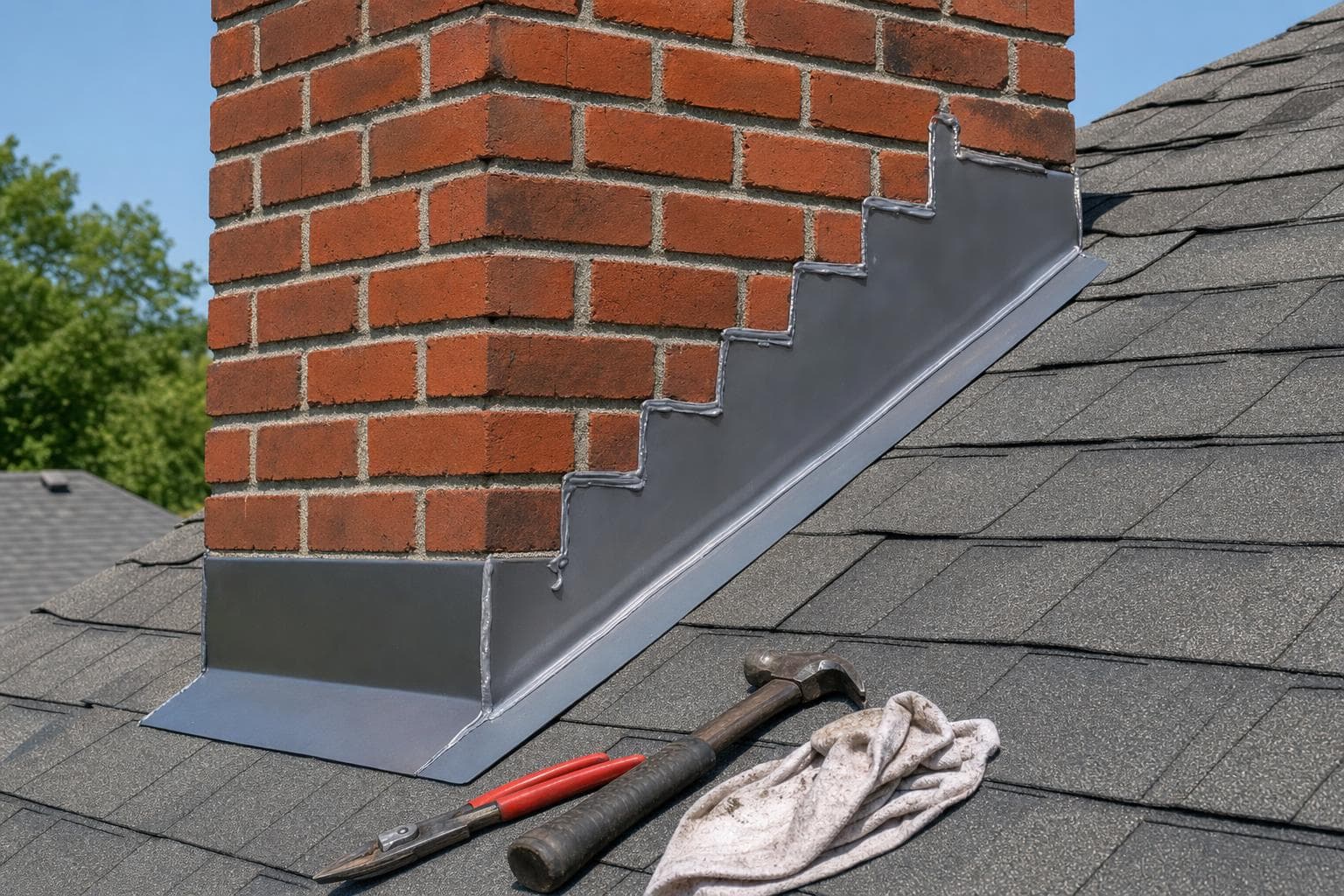
Flashing failures can involve corrosion, movement, open laps, missing counterflashing, poor integration with siding or masonry, reused metal, fasteners, sealants, or damaged roofing around the transition. The visible gap may not be the only problem. A useful repair opens enough of the area to see how water is entering and how the layers should overlap.
Ask which flashing component failed, what adjacent roofing or wall material must be removed, whether the metal will be reworked or replaced, how the new layers will lap, and who restores siding, stucco, masonry, or interior finishes. Require photographs before the detail is covered.
How Tennessee exposure tests roof transitions
Tennessee roofs take a beating from severe weather more than almost anything else. Spring and summer thunderstorms drive large hail that bruises shingles and strips granules, along with damaging straight-line winds and a genuine tornado risk across Middle and West Tennessee. The state's long, hot, humid summers bake shingles and feed the dark algae streaks you see on north-facing slopes, and an occasional winter ice or snow event adds freeze-thaw stress and ice-dam leaks. The right roof for your home depends on how much hail and wind your area actually sees.
Flashing in Tennessee has to accommodate local rain intensity, wind direction, snow or ice, heat, freeze-thaw movement, corrosion exposure, and roof geometry. A repair should address those forces through laps, clearances, diverters, counterflashing, and drainage rather than depending on exposed sealant alone.
What a complete flashing-repair scope should cover
Flashing repair is detail reconstruction. The roofer should identify the exact transition that failed, expose enough roofing or cladding to see how water bypassed it, and rebuild the metal and layering so gravity moves water past the joint. Compare diagnosis, demolition, metal and membrane, integration with roof and wall materials, sealant location, fasteners, drainage, finish restoration, photographs, and workmanship coverage. Different transition details should not be priced as if they were the same patch.
Layers and responsibilities to define
- Interior and attic water-path review when relevant and accessible
- Identification of the exact wall, chimney, skylight, valley, curb, vent, pipe, edge, or intersection
- Removal of enough roofing or adjacent finish to inspect metal, laps, fasteners, underlayment, and deck
- Reworked or replacement flashing integrated with the surrounding water-shedding layers
- Disturbed roofing, siding, trim, masonry, curb, or penetration restoration responsibilities
- Opened-condition and completion photographs plus concealed-work approvals
Conditions that change flashing cost
- Transition type, geometry, and whether custom metal must be formed
- Roof height, pitch, stories, staging, and safe access
- Amount of roofing, siding, trim, masonry, or sealant that must be opened
- Whether metal can be reworked or needs complete replacement
- Underlayment, decking, framing, insulation, or interior moisture found
- Work coordinated with siding, masonry, skylight, drying, or interior trades
What to resolve before the detail is opened
Compare flashing proposals by location, metal to be reused or replaced, shingles or siding to be opened, underlayment and deck work, masonry involvement, and finish details. Surface caulk alone is rarely a complete scope for failed step, counter, valley, or curb flashing.
- The proposal names no specific transition or water path
- Surface caulk is the complete plan for failed metal or reversed layers
- The scope does not say what surrounding roofing or finish will be opened and restored
- Siding, masonry, skylight, deck, or interior responsibilities are left undefined
- No photographs or approval process exists for concealed water damage
- Which transition failed, and how does the evidence support that diagnosis?
- What roofing, metal, underlayment, deck, siding, masonry, trim, or penetration material will be opened?
- Can the existing flashing be integrated correctly, or why does it need replacement?
- How will the completed layers shed water without depending on exposed sealant alone?
- Who restores adjacent finishes and handles concealed moisture or deck work?
What flashing repair costs in Tennessee
A straightforward flashing repair commonly runs $300-$1,800 in Tennessee. Chimneys, skylights, valleys, walls, steep access, and wet decking move higher because more roofing or adjacent finish has to be opened and rebuilt.
- Flashing repair at a wall or vent
- The transition is opened and correctly rebuilt, not just caulked over
- $300-$1,800
- Valley leak repair
- Both slopes are opened and the water-shedding channel is restored
- $450-$2,800
- Chimney or skylight flashing
- These transitions require careful opening, flashing, and tie-in work
- $700-$4,050
- Repair with limited decking replacement
- Contained carpentry plus restoration of the roofing assembly above it
- $1,000-$6,500
Cost ranges are estimates developed from standardized project scopes and reviewed pricing inputs. Government labor and regional cost data are used where applicable. See our Pricing Methodology for the exact sources, calculations, and review date. Actual prices vary by property, scope, materials or equipment, location, and provider.
Rules, claims, and contractor checks
Flashing work may cross roofing, siding, masonry, window, or mechanical scopes and can require local permits or qualified trades. Confirm responsibility for every opened surface and review Tennessee contractor requirements before work begins.
Big roof jobs require a state-licensed contractor
Tennessee is a licensing state. Under the Tennessee Board for Licensing Contractors (Tennessee Code Annotated Title 62, Chapter 6), a contractor must hold a state license before bidding or negotiating a price on any project costing $25,000 or more, counting both materials and labor, and roofing is specifically covered. That means most full roof replacements call for a licensed contractor, while a small repair under the threshold may not. You can confirm any license for free at verify.tn.gov before you sign.
Wind and hail claims often carry a separate percentage deductible
Some Tennessee policies use a separate wind or hail deductible instead of the standard deductible. The declarations and roof endorsements control whether it applies and whether it is a flat amount or a percentage of the insured dwelling value. Review those terms before storm season and ask the carrier to explain them in dollars for your policy. ACV, RCV, depreciation, and any roof-payment schedule also depend on the written policy language.
Watch the claim clock and your deductible after a storm
Storm roof claims in Tennessee are time-limited by your policy, and many policies set a tight window (as little as one year from the date of the storm) to file, so do not sit on damage. The Tennessee Department of Commerce and Insurance warns homeowners that you are responsible for your deductible: any contractor offering to waive it, eat it, or hand you a "free roof" should be treated as a warning sign, not a bargain.
Because Tennessee licenses contractors, the single most useful step is to verify the license for any job of $25,000 or more on the state's free lookup at verify.tn.gov, checking that it is active and in the right classification. From there, confirm current general-liability and workers'-compensation coverage, look for a real local track record and references rather than an out-of-state truck that appeared right after the storm, and get a written contract with the company's name, address, and phone, the full scope (tear-off, decking, underlayment, flashing, ventilation, and cleanup), and start and completion dates. The state also cautions against paying more than one-third down or letting payments run ahead of the work.
Sources: Tennessee Board for Licensing Contractors (who needs a license) · Tennessee Dept. of Commerce & Insurance (storm recovery: claims & hiring contractors) · Verify a Tennessee contractor license (verify.tn.gov) · Tennessee Board for Licensing Contractors (overview)
Common questions about roof flashing repair in Tennessee
Why does roof flashing fail in Tennessee?+
Common causes include poor original lapping, reused metal, corrosion, thermal movement, loose fasteners, dried sealants, missing counterflashing, wall or masonry movement, and roofing deterioration around the transition. The repair should identify which condition is present.
Can roof flashing be repaired with caulk?+
Sealant is appropriate in some specified joints, but it should not replace the metal or membrane layers that shed water. If the flashing is corroded, loose, badly lapped, or not integrated with the wall and roofing, surface caulk alone is unlikely to be a durable repair.
What should a flashing repair estimate include?+
It should name the failed transition, demolition, adjacent materials, new metal or membrane, lapping and counterflashing method, sealants and fasteners, deck repair process, finish restoration, cleanup, photographs, and workmanship coverage.
Does flashing repair require replacing nearby shingles?+
Often some surrounding roofing must be removed to integrate the new flashing correctly, but the amount depends on the detail and material condition. Ask how the roofer will preserve or replace adjacent covering and whether compatible matching material is available.
Which Tennessee rules should I check before signing a flashing repair contract?+
Start with the verified state guidance on this page, including Big roof jobs require a state-licensed contractor; Wind and hail claims often carry a separate percentage deductible; Watch the claim clock and your deductible after a storm. Then confirm the permit authority and any local contractor requirement for the property address. Insurance coverage and policy interpretation remain separate from the roofing contract.
Flashing Repair across 18 Tennessee cities
Open the nearest Tennessee city page for local rain, wind, heat, snow, and material context. The actual repair still depends on the transition design and the layers found when it is opened.
