Updated July 10, 2026

3D Roofs Editorial Team
Editorial Standards
No, you should not count on a roofer waiving your deductible in South Dakota. The practical reality is that the deductible is usually the homeowner’s responsibility under the insurance claim. The South Dakota consumer published state guidance does not create a deductible-waiver rule, so the safest takeaway is the national one: if someone promises to make your deductible disappear, slow down and look closely at the paperwork before you sign anything.
Can a roofer waive your deductible in South Dakota?
In plain terms, do not assume they can. The state-specific state guidance focus on consumer protection after storms, written contracts, payment timing, and asking about a contractor’s tax license. They do not say a roofer can waive your deductible. That means you should treat the deductible as your responsibility unless your insurer says otherwise in writing. If a sales pitch depends on hiding, absorbing, or offsetting that amount, you have a reason to pause.
Why is deductible waiving a red flag after a storm?
Because storm demand spikes fast in South Dakota, and that is when rushed promises tend to show up. South Dakota Consumer Protection says residents should be vigilant of transient contractor scams following severe weather. The state urges you to take your time, do your due diligence, and contact the Division of Consumer Protection when in doubt. If someone knocks right after hail or wind damage and leads with, “We will cover your deductible,” that is exactly the kind of moment where slowing down protects you.
Your roof in South Dakota has to handle hail, severe storms, high winds, temperature swings, snow, ice, and strong sun over time. That mix can shorten shingle life, loosen flashing, damage gutters, and turn small leaks into bigger interior problems if repairs wait. You do need to move, but you do not need to rush into a bad contract. Document the damage early, contact your carrier, and choose your roofer carefully.
What should you ask for before any roofing work starts?
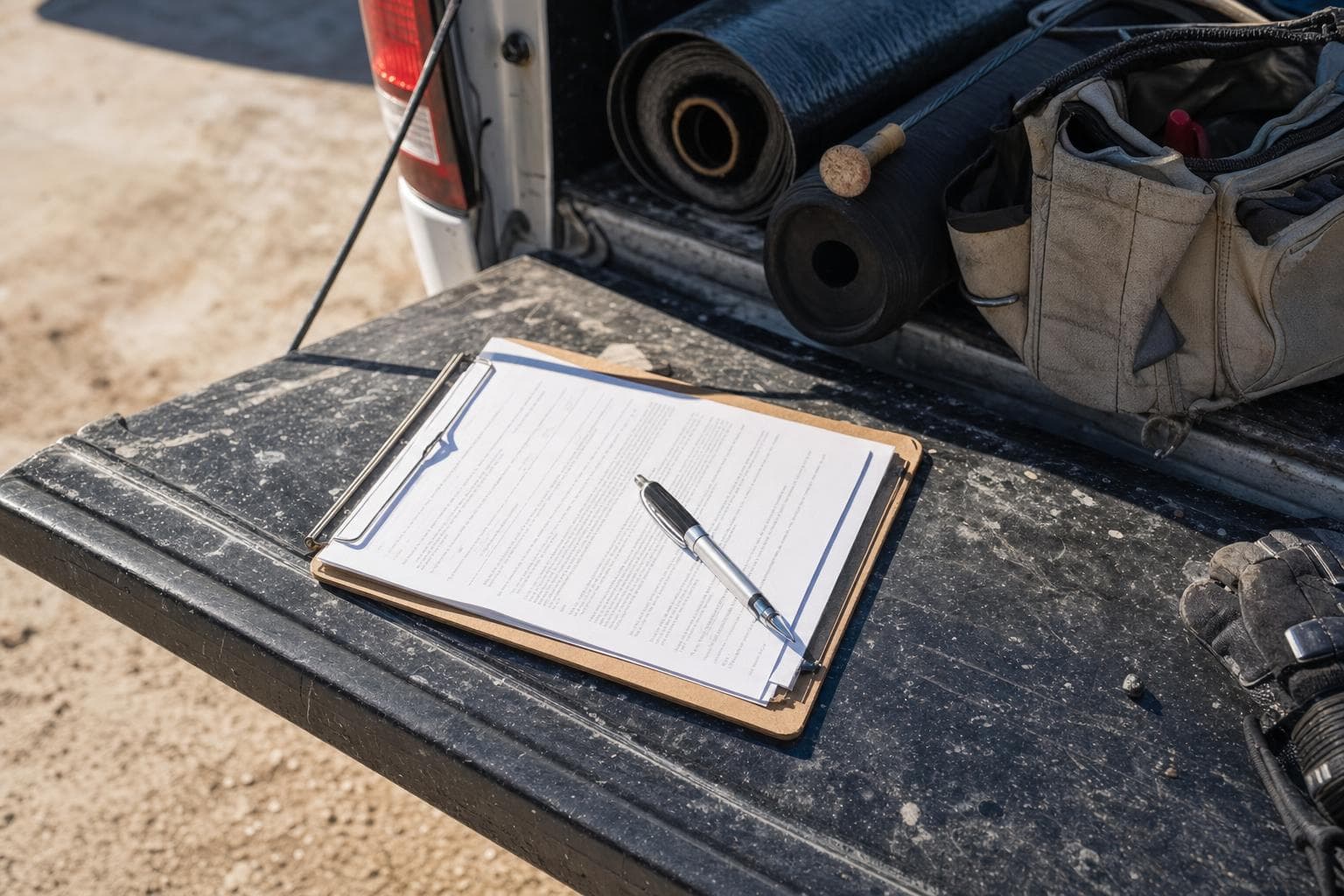
Get everything in writing before work starts. State consumer guidance says you should ask for a written estimate and a written contract, keep a copy of the final signed contract, read the contract carefully before signing, and make sure project changes are handled with a Change Order signed by both parties. It also says any guarantees made by the contractor should be written into the contract.
- Ask for a written estimate that clearly describes the work.
- Ask for a written contract before materials are ordered or work begins.
- Read the contract carefully before signing.
- Make sure any promise, discount, or guarantee is written into the contract.
- Require a signed Change Order for any project change.
- Keep copies of the final signed contract and all related paperwork.
This matters with deductible talk because verbal promises are easy to make and hard to prove later. If a roofer says they will “take care of” your deductible, ask exactly how. Then ask to see that promise in writing. If the explanation gets vague, changes from one conversation to the next, or disappears when the contract comes out, that is your answer.
Talk to a roofer today
Planning ranges, scope details, and a direct path to request a roofing quote.
When should you pay for the roof?
Do not make final payment until the work is finished to your satisfaction. South Dakota Consumer Protection says you should make final payments only after the work is completed. It also says not to sign completion papers or make the final payment until the work is completed to your satisfaction, and to avoid on-the-spot cash payments by paying by check to the contracting company and not an individual.
That guidance matters if a roofer tries to use deductible language to pressure you into fast signatures, quick deposits, or cash deals. A careful payment process gives you leverage. It also leaves a paper trail if there is a dispute about what was promised, what was installed, or whether the scope changed after the claim.
How do you protect yourself when choosing a roofer in South Dakota?
Follow the state’s own checklist. In South Dakota, a practical way to vet your roofer is to follow the state’s consumer checklist. Take your time. Ask for references and a proven track record. Ask for a written estimate and a written contract. Read the contract carefully, make sure guarantees are in writing, and make sure any project changes require a signed Change Order. Ask for sales tax license, and because the Department of Revenue says contractors doing this kind of work must have a South Dakota contractor’s tax license, ask about that too. If a permit is required, make sure it is obtained. Pay by check, keep copies of your paperwork, and hold final payment until the work is completed to your satisfaction.
One point worth calling out: the South Dakota Department of Revenue says any person entering into a contract for construction services or engaging in services that include the construction, building, installation, or repair of a fixture to real property must have a South Dakota contractor’s tax license. State consumer guidance also tells homeowners to ask for sales tax license. If someone is making aggressive storm promises but cannot answer basic paperwork questions, move on.
What does a roof cost in South Dakota if insurance does not cover everything?
If your claim is denied, underpaid, or delayed, you still need a realistic view of current local pricing. For an insurance-funded roofing proposal in South Dakota, start with current South Dakota cost data, then test the planning range against a measured proposal that names the complete roof assembly. For an insurance-funded roofing proposal in South Dakota, begin with documented damage, the policy deductible, and a property-specific repair or replacement scope. For an insurance-funded roofing proposal in South Dakota, require the written schedule to account for roof geometry, access, weather protection, material handling, inspections, and possible deck work.
Those numbers help you sanity-check a proposal. If a roofer claims they can waive your deductible and still deliver the same roof for the same claim value, ask where that money is being made up. Sometimes the answer is a reduced scope, cheaper materials, skipped accessories, or pressure to sign before you understand the numbers.
Should you upgrade to Class 4 after hail damage?
Maybe, if the numbers and your carrier’s rules make sense for your home. In South Dakota, hail is a real factor, so impact-resistant shingles can be worth a close look. For an insurance-funded roofing proposal in South Dakota, treat any impact-resistant roof credit as unconfirmed until the insurer identifies the eligible product, required documentation, premium portion, and amount in writing. But discounts and eligibility are set by the carrier, so you should confirm the details before you choose materials.
The state context here is clear: if you are considering impact-resistant shingles, ask your insurance carrier whether it offers a discount for a Class 4 roof and what documentation it requires. That is a much cleaner conversation than deductible games. You compare current local cost ranges, ask about the premium impact, and decide whether the upgrade pencils out for your budget and storm exposure.
What is the safest way to handle a storm claim and roofing contract?
Keep it simple. Treat the deductible as your responsibility, document damage early, and make every promise live on paper. After a storm, take photos, contact your insurer, and get a written estimate and written contract from a local roofer you have vetted. Read before you sign. Make sure guarantees are written into the contract. Require signed Change Orders for changes. Ask about sales tax license and the South Dakota contractor’s tax license. Pay by check, not to an individual, and do not make final payment until the work is completed to your satisfaction.
If a roofer leads with a waived-deductible promise, that is your cue to slow the process down, not speed it up. You want a clean scope, clear numbers, and paperwork that matches what you were told. That protects your money, your claim, and your roof.
Sources
Reviewed technical references for South Dakota
Related South Dakota roofing guides
Related services
Updated July 10, 2026
3D Roofs Editorial Team
Editorial Standards