Updated July 10, 2026

3D Roofs Editorial Team
Editorial Standards
If you live inland in North Carolina, hail is not a rare event; it is a regular feature of spring and summer. That is why Class 4 impact-resistant shingles come up so often at replacement time across the Piedmont and foothills. They cost more than standard shingles, but they resist the exact damage that retires roofs early here, and they can earn you an insurance break. Here is what Class 4 really is, what it costs, and when the upgrade is worth it.
What "Class 4" actually means
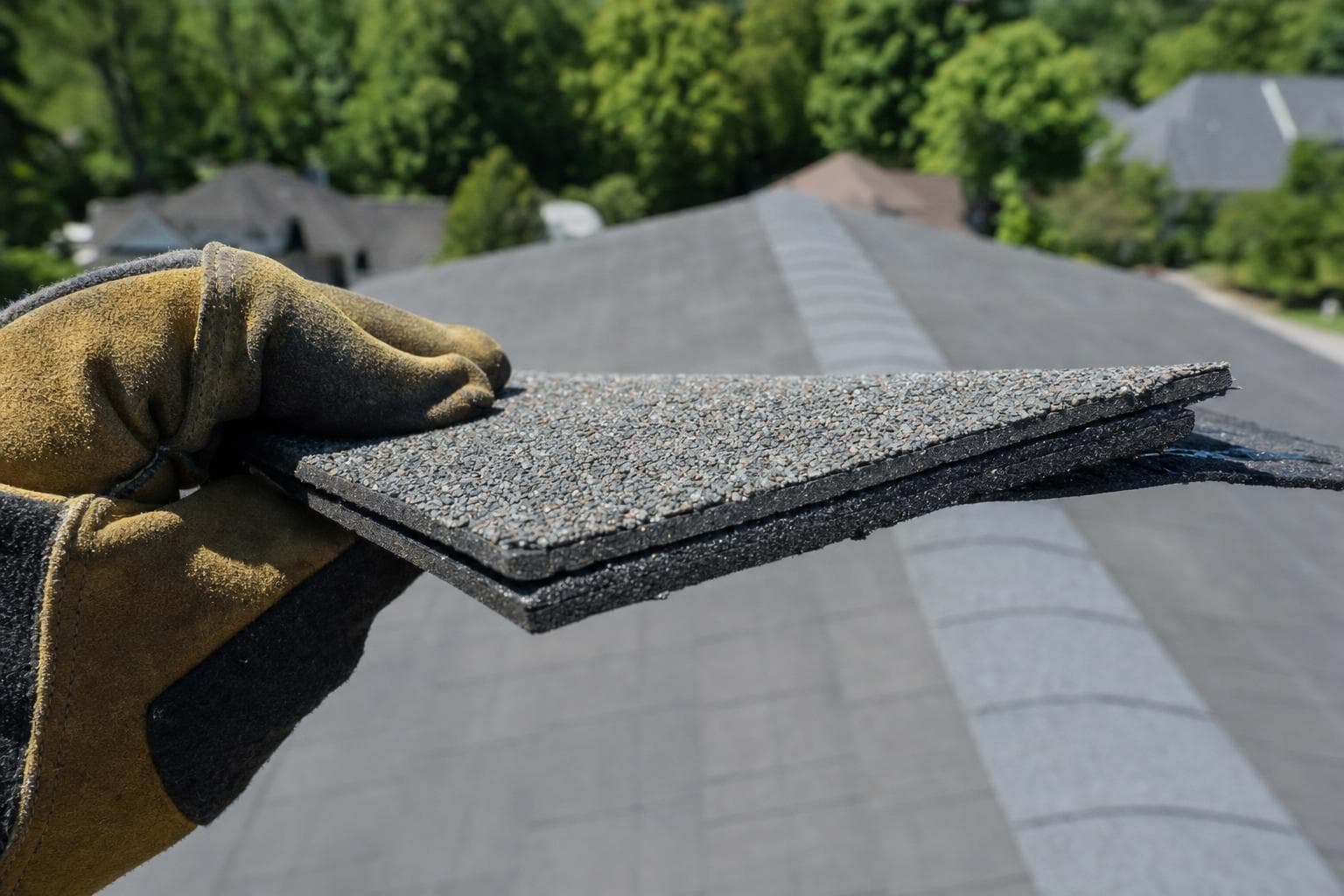
Class 4 is the top of four impact ratings under UL Standard 2218, the standard test where a steel ball is dropped on the shingle to simulate hail. A Class 4 shingle is the most resistant to puncture and the cracking that follows, which is the failure mode that lets water in and shortens a roof's life. It is worth knowing the limit, though: Class 4 resists functional damage well, but the shingles can still dent cosmetically from large hail without losing their watertight integrity.
Why they fit North Carolina's hail country
Across the Piedmont and foothills, spring and summer thunderstorms drive hail and straight-line winds that bruise shingles and break their factory seal, the wear that quietly ages a roof slope by slope. A Class 4 shingle is built to take those hits and keep sealing. On the coast the calculus shifts toward wind-rated assemblies, but for the large inland share of the state that lives in the storm corridor, impact resistance targets the right threat.
Cost and the insurance angle
Use the current North Carolina cost page and calculator to plan an impact-resistant shingle decision in North Carolina, then require the measured scope to explain any meaningful difference. The offset is twofold: fewer hail claims and a longer roof life, plus a possible premium credit. Many North Carolina insurers offer a discount for an impact-resistant roof, but there is no fixed statewide percentage, so each company sets its own. Ask your carrier what they actually credit before you count on a number, then submit the manufacturer's certificate after the install to claim it.
Talk to a roofer today
Planning ranges, scope details, and a direct path to request a roofing quote.
Is the upgrade worth it for you?
- Live in a hail-prone inland area: the upgrade most often pays off here.
- Plan to stay in the home: more years means more storms the roof has to survive.
- Your insurer offers a meaningful credit: confirm the discount in writing first.
- On the coast: wind-rated assemblies may matter more than impact rating for your home.
- Tight budget with low hail exposure: a quality Class 3 roof may be the sensible choice.
Class 4 does not stop hail from falling. It stops one hailstorm from becoming your next roof replacement.
What the impact rating can and cannot tell you
UL 2218 is a product impact test, not a promise that a finished roof cannot be damaged. A Class 4 listing tells you that the named product met the highest classification in that test method. It does not grade the deck, flashing, fastener placement, ventilation, or workmanship, and it does not decide whether an insurer will cover cosmetic marks or offer a credit. Ask for the exact manufacturer and product line so you can verify the listing instead of accepting 'Class 4' as a generic sales label. For the North Carolina Class 4 decision, verify the named product and written insurer answer together; neither a generic rating nor an assumed credit completes the decision. For a Class 4 shingle option in North Carolina, use the linked NC Dept. of Insurance (windstorm & hail / NCIUA Beach Plan) reference as the state-reference checkpoint and test the recommendation against the address's wind-driven rain, humid drying, tree debris, shaded slopes, and coastal exposure where it applies.
- Put the exact shingle manufacturer, product line, color, and impact classification in the proposal.
- Compare the required nail pattern, starter, hip and ridge products, underlayment, and deck repairs as one installed system.
- Ask your insurer in writing whether this exact product qualifies for a credit and what documentation must be submitted.
- Read the policy and product warranty for cosmetic-damage language, exclusions, transfer rules, and required maintenance.
- Confirm local availability for future repairs; a discontinued or hard-to-match shingle can turn a small repair into a larger decision.
- For the North Carolina Class 4 decision, attach the exact certification and the insurer's written eligibility answer to the bid comparison.
How to decide whether the upgrade fits a North Carolina roof
North Carolina spans coastal wind and salt exposure, Piedmont thunderstorms and tree debris, and mountain freeze-thaw conditions, so local exposure should drive the final scope. Compare the verified upgrade price with the roof's current condition, your likely ownership horizon, product availability, and any insurer credit you have actually been quoted. If the deck, flashing, ventilation, or installation plan is weak, spending more on the surface product will not correct those weaknesses. The useful question is not whether Class 4 is always worth it; it is whether this tested product improves the complete scope for this roof at a price you understand.
Sources
Related reading and source material
Verify the exact Class 4 product for North Carolina
Class 4 is a product classification under a defined impact test, not a generic description of every architectural shingle. Put the manufacturer, product line, color, field-shingle classification, and compatible hip and ridge products in the North Carolina proposal. Keep package labels or certification records needed by the manufacturer or insurer, and do not treat the rating as a promise that every real storm will leave no cosmetic or functional damage. For a Class 4 shingle option in North Carolina, check the linked NC Dept. of Justice (roofers & storm-chaser consumer warnings) reference for the state-level question while the property inspection addresses wind-driven rain, humid drying, tree debris, shaded slopes, and coastal exposure where it applies.
Compare the complete shingle assembly in North Carolina
The upgrade does not correct weak decking, incomplete flashing, poor starter or ridge attachment, or an unsuitable ventilation plan. Compare the Class 4 option with the standard option on identical tear-off, underlayment, edge metal, flashings, fasteners, ventilation, deck repair, and workmanship. The price difference should represent the tested product and required companion materials, not two different North Carolina roof scopes. For a Class 4 shingle option in North Carolina, keep the linked NC Dept. of Insurance (windstorm & hail / NCIUA Beach Plan) reference in the project file and document how the roof's wind-driven rain, humid drying, tree debris, shaded slopes, and coastal exposure where it applies affect this decision.
Ask the North Carolina insurer about the named product
The carrier decides whether it recognizes the exact product, what credit or documentation may apply, and how cosmetic damage is treated. Get that answer in writing before assigning financial value to the classification. A contractor can supply product records and describe construction, but it should not guarantee coverage, premium treatment, or the outcome of a future claim. For a North Carolina property, inspect valleys, wall transitions, shaded slopes, attic moisture paths, and the perimeter details that sudden rain and wind can expose.
Reviewed technical references for North Carolina
Related North Carolina roofing guides
Related services
Updated July 10, 2026
3D Roofs Editorial Team
Editorial Standards