Updated July 10, 2026

3D Roofs Editorial Team
Editorial Standards
Yes, homeowners insurance may cover roof replacement in Alabama when a covered event causes functional damage. In plain terms, that usually means storm damage that affects how your roof sheds water or protects your home. It usually does not mean old age, wear, neglect, or a roof that has simply reached the end of its life. In Alabama, that distinction matters because roofs deal with severe weather, year-round moisture, hail, wind-driven rain, humidity, heat, and strong sun. If your roof is older, storm damage and moisture intrusion can stack up quickly, so good photos, a careful inspection, and clear records can make a real difference.
When does homeowners insurance cover roof replacement in Alabama?
Insurance usually covers roof replacement when a covered loss, such as wind or hail, causes functional damage severe enough that repair is not the right fix. Functional damage means the roof system has been compromised, not just marked up. Think missing shingles, torn tabs, punctures, lifted flashing, damaged underlayment, or leaks tied to a recent storm. By contrast, cosmetic scuffs, granule loss from normal aging, installation problems, or long-term moisture issues are often treated differently. The Alabama Department of Insurance says homeowners coverage is typically packaged with property and liability coverages. That matters because a roof claim can involve more than the roof itself, depending on your policy terms, such as interior water damage or temporary living costs.
Will insurance pay for an old roof or normal wear and tear?
Usually no. Insurance is designed for sudden, accidental covered damage, not maintenance. If your shingles are brittle from age, flashing has failed over time, or leaks developed because the roof was already worn out, your carrier may deny the replacement portion of the claim even if a storm happened nearby. In Alabama, moisture and heat can speed up aging, and older roofs can show both storm damage and long-term deterioration at the same time. That is why the inspection needs to separate fresh storm-created damage from pre-existing wear. If you are not sure what condition your roof is in, your roofer can document what appears storm-related and what looks age-related before you talk through repair or replacement options.
How do deductibles work on a roof insurance claim?
Your deductible is the amount you pay before insurance pays the covered portion of a claim. If the covered damage is minor, it may fall close to or below your deductible, which is one reason some homeowners handle smaller fixes out of pocket. For an insurance-related roof project in Alabama, begin with documented damage, the policy deductible, and a property-specific repair or replacement scope. Larger storm losses are where replacement discussions tend to come up. The Alabama Department of Insurance says, "To get the best value for your money, you must take responsibility for your home insurance purchase and make your own decisions." For you, that means asking how your deductible, exclusions, actual cash value versus replacement cost terms, and any roof-related endorsements affect a future claim before damage happens, and again when you are reviewing a claim decision.
Talk to a roofer today
Planning ranges, scope details, and a direct path to request a roofing quote.
What is the difference between functional storm damage and cosmetic damage?
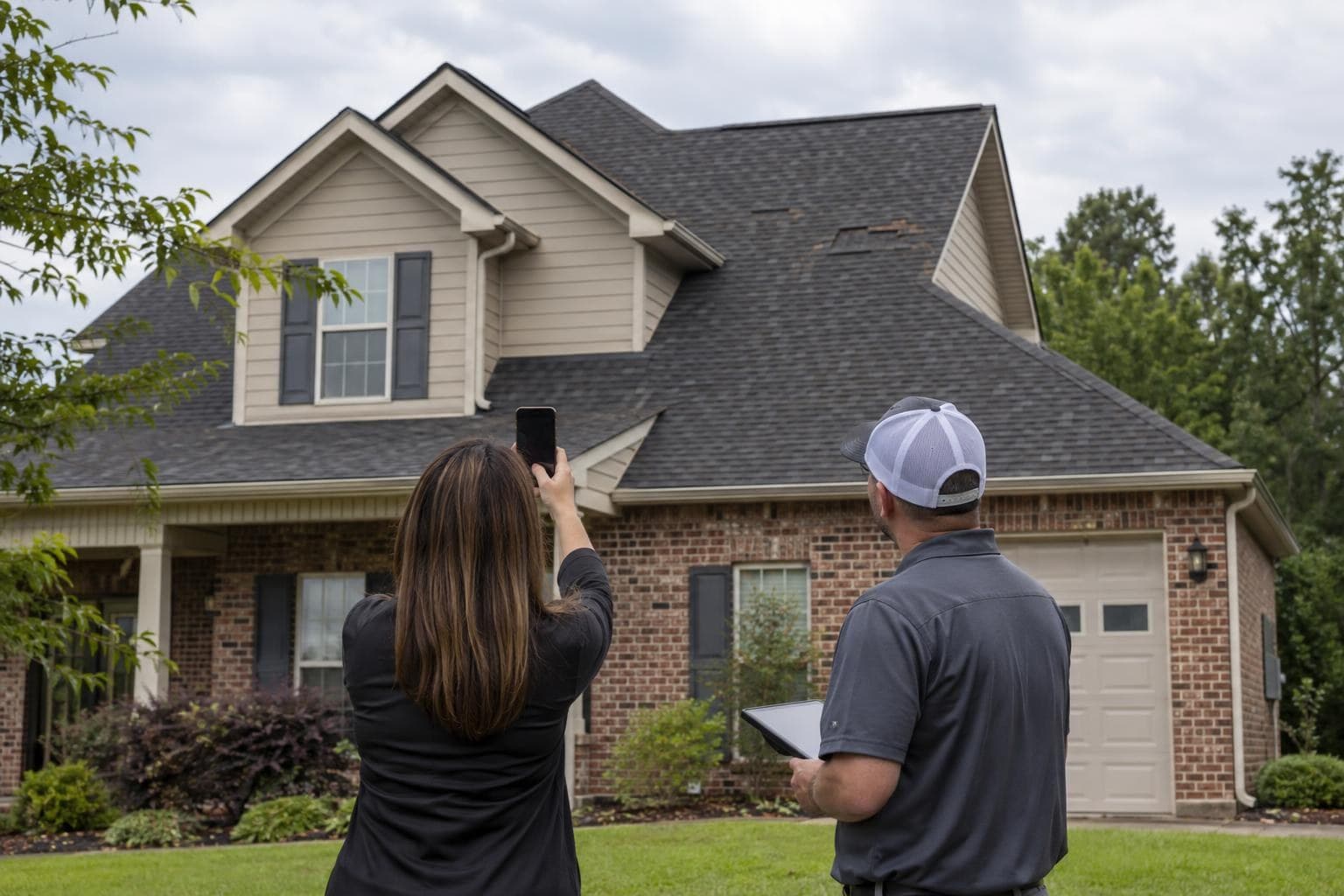
Functional storm damage affects performance. Cosmetic damage affects appearance. Insurance decisions often turn on that difference. A hail mark that does not break the shingle or shorten the roof's ability to shed water may be treated as cosmetic. A puncture, fractured shingle mat, torn shingle, lifted seal, exposed fastener, bent flashing, or active leak is more likely to be treated as functional. On metal roofs, dents can be a gray area unless they affect seams, fasteners, coatings, or water flow. Because Alabama storms can combine wind, hail, and heavy rain, the best approach is a photo-heavy inspection that ties each problem to a specific weather event and shows why the damage affects service life or watertightness.
What should you do right after storm damage to your roof?
- Start with safety. If you see active leaks, ceiling staining, or fallen debris, protect people and belongings first.
- Take photos and video of the exterior if you can do it safely from the ground, plus any interior water spots, wet insulation, or damaged drywall.
- Write down the date of the storm and what you noticed afterward, such as missing shingles, blown ridge caps, or water entering the attic.
- Make reasonable temporary repairs to prevent more damage if needed, and keep records and receipts.
- Call your carrier to start the claim, then schedule a roof inspection so the damage is documented clearly.
- If your mortgage requires home insurance, remember the Alabama Department of Insurance says home insurance is usually driven by your mortgage, not a general state requirement. Roof condition can matter both for claims and for keeping the coverage your lender expects.
How does the roof insurance claim process usually work?
The claim flow is usually straightforward. You report the loss, the carrier opens a claim, and an adjuster inspects the damage. Your roofer may also inspect the roof and provide photos, measurements, and notes about storm-created damage versus wear. If the claim is approved, the carrier issues payment based on your policy terms, less your deductible. If replacement is the right outcome, your roofer schedules the job, completes the work, and helps provide final documentation if the carrier needs it. The schedule for an insurance-related roof project in Alabama should explain access, material staging, weather protection, inspections, and the process for discovered deck work. If the adjuster and roofer disagree, ask for a clear written explanation of what damage was considered covered, what was not, and why.
What if your claim is denied or the carrier only approves a repair?
You do not have to guess why. Ask for the denial or partial approval in writing and compare it to the inspection photos and your policy terms. Many disputes come down to cause of loss, scope, or whether the carrier believes the roof can be repaired instead of replaced. If your roofer found functional storm damage that was not included in the carrier's scope, ask for that evidence to be organized clearly. The goal is not to argue in circles. The goal is to show where storm damage exists, why it is functional, and why the proposed scope may be incomplete. Since homeowners policies are package policies, not just roof coverage, also check whether related interior damage was evaluated under the same claim.
How much does a roof replacement cost in Alabama if insurance does not cover it?
If you end up paying out of pocket, current planning prices gives you a starting point. For an early budget on an insurance-related roof project in Alabama, compare the Alabama cost page with a proposal that identifies measurements, products, accessories, and exclusions.
Should you upgrade to Class 4 impact-resistant shingles after a claim?
It can make sense if you want better hail resistance and you confirm how your carrier treats the upgrade. When comparing an insurance-related roof project in Alabama, use a written insurer response rather than a sales estimate for any impact-resistant roof credit. The state-specific guidance here is simple: ask your carrier whether it offers a premium discount for that upgrade, because discount availability and underwriting rules can vary by carrier. A local contractor whose credentials you verified can help document the product information you may need for that conversation. If you are comparing replacement options after a covered storm, this is also a practical time to ask how Class 3 and Class 4 pricing compares for your roof.
How do you choose the right roofer for an Alabama insurance job?
Start with documentation and credentials, not promises. In Alabama, you should check whether your roofer appears in the Home Builders Licensure Board system and whether the contractor is using the right license type for residential roofing. Ask your roofer which Alabama credential they hold for your project, confirm it through the Board, and make sure the name on your paperwork matches the name tied to that credential. The Board guidance also says the law regulating residential home builders does not address insurance, so do not assume anything from a sales pitch alone. a roofer whose credentials and written scope you checked should be able to explain the visible damage, give you a clear scope, and help you keep the claim file organized without making coverage promises they do not control.
The bottom line is simple: insurance may cover an Alabama roof replacement when a covered storm causes functional damage, but it usually will not cover normal wear or an old roof simply aging out. Your deductible, policy terms, and documentation all shape the result. If you think your roof was hit by wind or hail, get it inspected, photograph everything, and ask direct questions about scope, deductible, and whether your policy pays actual cash value or replacement cost. That gives you the best shot at a clear claim outcome and a roof that protects your home the way it should.
Sources
- National Association of Insurance Commissioners: What You Need to Know When Filing a Homeowners Claim
- National Association of Insurance Commissioners: Actual Cash Value Coverage and Replacement Cost Coverage
- Alabama Department of Insurance, Consumer's Guide to Homeowners Insurance
- Alabama Insurance Underwriting Association
Reviewed technical references for Alabama
Related Alabama roofing guides
Related services
Updated July 10, 2026
3D Roofs Editorial Team
Editorial Standards