Updated July 27, 2026

3D Roofs Editorial Team
Editorial Standards
Yes, homeowners insurance may cover roof repair or replacement in Arkansas when the damage comes from a covered storm event, such as wind or hail. For does insurance cover roof replacement in Arkansas, coverage depends on the policy language, cause of loss, exclusions, and the insurer's decision; verify those terms in your own documents. In Arkansas, that distinction matters because roofs are exposed to fast-moving storm systems. Wind can lift shingles and loosen flashing. Hail can bruise or crack roofing materials. Heavy rain can turn small roof weaknesses into leaks, especially around penetrations, valleys, and roof edges. If you think your roof was hit in a storm, the key steps are simple: document the damage, protect the property from further damage, understand your deductible, and avoid rushing into permanent repairs before your insurer has what it needs.
Does homeowners insurance cover roof replacement in Arkansas?
Yes, it can, if the roof has functional storm damage from a covered event and the cost of the loss is greater than your deductible. Insurance is generally meant for sudden, accidental damage, not gradual deterioration. That means creased or lifted shingles from wind, hail strikes that crack materials, or storm-driven water getting in after roof components fail may support a claim. A roof that is simply old, brittle, or nearing the end of its life is a different issue. The Arkansas Insurance Commissioner’s consumer guidance says to have your roof inspected by a trusted roofing contractor, compare the damage to your deductible, and turn the claim in to your insurance carrier if the damages are much larger than your deductible.
How does the policy distinguish event damage from wear?
Covered damage is usually sudden storm damage that affects how the roof performs. Not covered damage is usually wear, aging, deferred maintenance, or issues that developed slowly over time. In practical terms, insurance adjusters and roofers are often looking for evidence that wind or hail caused real functional damage, not just cosmetic marks or an existing weak spot that finally showed up during rain. If a storm broke the roof system and caused leaks, that is different from a roof that was already failing.
- Usually more likely to be covered: wind-lifted shingles, missing shingles after a storm, hail damage that bruises or cracks roofing materials, loosened flashing, and storm-related leaks
- Usually less likely to be covered: normal aging, granule loss from age, long-term deterioration, poor maintenance, and leaks tied to an older roof system without a clear storm event
- Gray areas can happen: a storm may expose a pre-existing weakness, and your insurer may focus on what the storm caused versus what was already worn out
Should you file a roof claim right after a storm?
Not always. You should first understand the damage and compare it to your deductible. Arkansas post-storm guidance is clear that there is no need for you to rush into an agreement with a contractor who solicits for repair without your request. The same guidance says to have your roof inspected by a trusted roofing contractor, compare the damage to your deductible, and turn the claim in to your insurance carrier if the damages are much larger than your deductible. For an insurance-related roof project in Arkansas, begin with documented damage, the policy deductible, and a property-specific repair or replacement scope. If the likely cost is close to or below your deductible, filing may not help much.
Talk to a roofer today
Planning ranges, scope details, and a direct path to request a roofing quote.
What should you do before the insurance adjuster comes out?
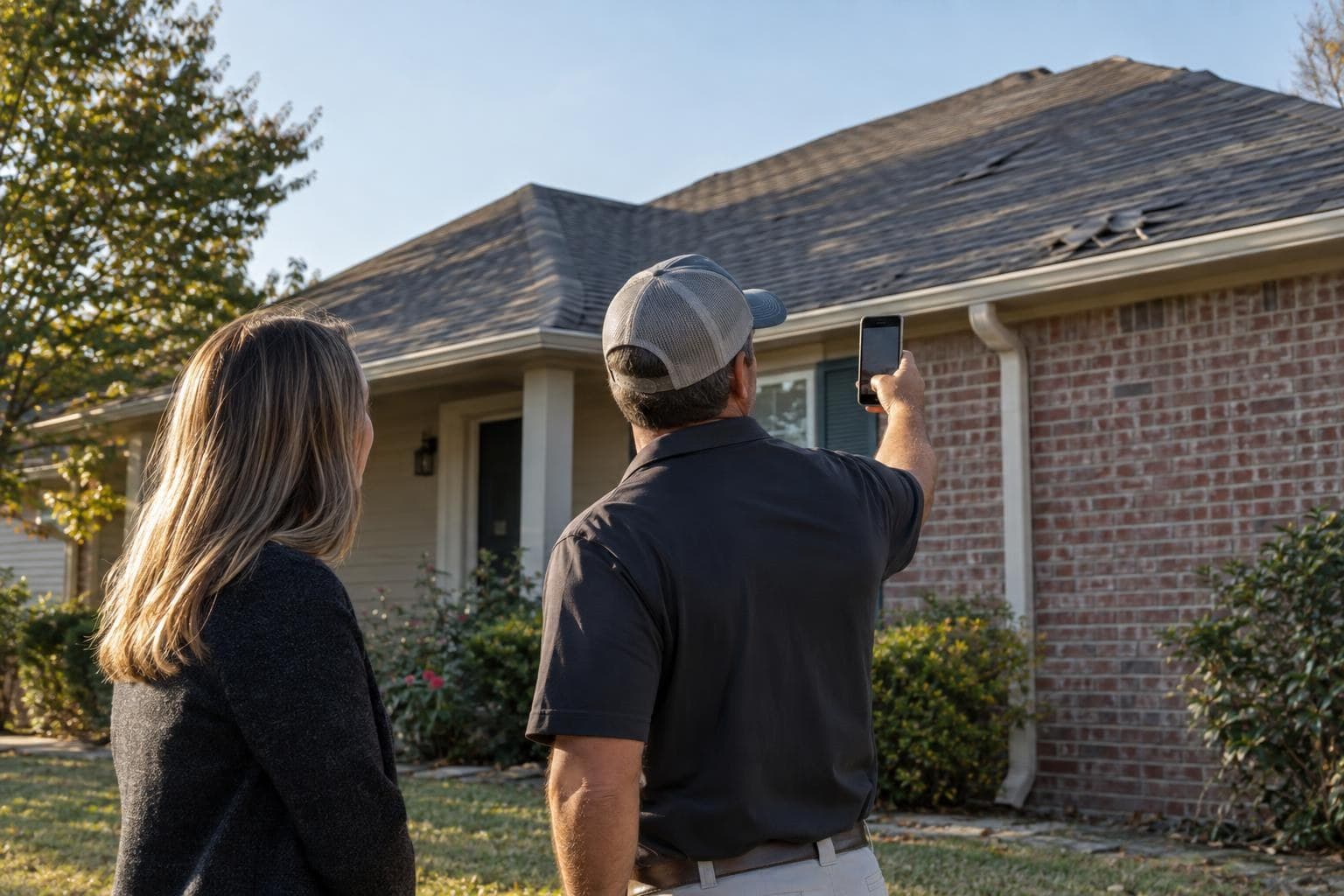
Protect the house, document everything, and avoid permanent repairs until the inspection and repair cost agreement are in place. Arkansas post-storm guidance says to take photos or video of the damage, avoid throwing damaged items away unless your insurance company tells you to, make necessary temporary repairs to prevent further damage, wait on permanent repairs until the property is inspected and you have reached agreement on repair cost, and save receipts, including receipts from temporary repairs that might be covered by your policy. This gives you a cleaner claim file and helps you avoid disputes over what happened before and after the storm.
- Take clear photos and video of shingles, flashing, gutters, ceiling stains, attic leaks, and any fallen debris
- Write down the storm date if you know it, and note when you first saw the damage
- Use temporary protection to stop active leaking if needed
- Keep all receipts for temporary materials or emergency service
- Do not sign a repair contract with blank spaces, and do not agree to permanent work before the claim is documented
How do deductibles affect whether insurance pays for a new roof?
Your deductible is the amount you pay before your insurance applies, so it has a direct impact on whether a claim makes sense. If storm damage is minor, the repair cost may land close to your deductible and leave little insurance benefit. If the damage is much larger than your deductible, a claim may be more worthwhile. Use the current Arkansas cost page and calculator to plan an insurance-related roof project in Arkansas, then require the measured scope to explain any meaningful difference.
How does the roof insurance claim process usually work?
The process usually goes like this: you notice storm damage, document it, make temporary repairs if needed, have the roof inspected, and then file if the damage appears much larger than your deductible. After that, the carrier reviews the loss and decides what is covered under your policy. If replacement is approved, your roofer schedules the work. When planning an insurance-related roof project in Arkansas, ask how roof shape, staging, weather, inspections, and concealed deck conditions affect both duration and labor. If your policy pays replacement cost, Arkansas post-storm guidance says the work must be completed within six months of the date of loss in order to receive the replacement cost payments that were withheld.
Can you choose a better roof during an insurance replacement?
Yes, you often can upgrade, but you usually pay the difference between what insurance allows and the cost of the better material. Many Arkansas homeowners ask about impact-resistant shingles after hail. If you are considering a Class 4 impact-resistant shingle, ask your insurance carrier whether it offers a premium discount for that upgrade. Do not assume a statewide Class 4 credit in Arkansas; ask the carrier to verify eligibility and paperwork for the exact product and policy. A qualified local roofing contractor can help you compare roofing options, but your carrier decides eligibility and savings.
How do you choose a roofer after a storm in Arkansas?
Start by slowing down and checking who you hire before work starts. Arkansas guidance says you should verify your roofer through the Arkansas Contractors Licensing Board's contractor lookup before work starts. The Arkansas Contractors Licensing Board says you can "Find A Licensed Contractor," and its post-storm consumer guidance says you can contact the Arkansas Contractors Licensing Board to make sure the contractor has a valid license to do business in the state and that they carry liability insurance. For roofing-specific work on a single-family residence, the licensing page says a "Residential Roofer Registration" is needed for "Roofing, Roof Decks, Roofing Sheet Metal" projects more than an amount that must be confirmed for the written scope, including but not limited to, labor and material, unless the contractor already holds a Residential Builders or Residential Remodelers License.
- Get more than one bid
- Check references and phone numbers
- Avoid anyone offering to waive your deductible or promise a rebate
- Avoid paying upfront
- Never sign a contract with blank spaces
What if your insurance company delays, underpays, or denies the roof claim?
You can push back with documentation, and you can also file a complaint with the state insurance department. Arkansas says the Consumer Services Division assists insurance consumers with complaints and inquiries regarding insurance companies, producers, and adjusters. It investigates complaints, works with the insurance company and the consumer, and can also help homeowners in storm-damaged areas with filing claims and procuring emergency living expenses. Before it gets that far, organize your photos, inspection notes, receipts, and any estimate that explains the storm-related damage clearly. A clean paper trail gives you a better shot at resolving disagreements over scope, repair versus replacement, or payment timing.
If your Arkansas roof was hit by wind or hail, the main question is not whether the roof looks old. It is whether the storm caused functional damage that your policy covers. Start with a prompt inspection, compare the likely cost to your deductible, document everything, and do not rush into permanent repairs before the claim is properly set up. If replacement is needed, knowing current local cost ranges helps you plan your out-of-pocket costs and any upgrade options. You can use the Arkansas cost page and the calculator for local pricing context, then work with a local contractor whose credentials you verified to move from damage inspection to repair or replacement with a clear plan.
Sources
- National Association of Insurance Commissioners: What You Need to Know When Filing a Homeowners Claim
- National Association of Insurance Commissioners: Actual Cash Value Coverage and Replacement Cost Coverage
- Arkansas Insurance Department, Consumer Services
- Arkansas Insurance Department, Insurance Commissioner Provides Post-Storm Tips to Consumers
Reviewed technical references for Arkansas
Related Arkansas roofing guides
Related services
Updated July 27, 2026
3D Roofs Editorial Team
Editorial Standards