Updated July 27, 2026

3D Roofs Editorial Team
Editorial Standards
Yes, homeowners insurance in South Dakota usually covers roof replacement when a storm causes sudden, functional damage. For does insurance cover roof replacement in South Dakota, coverage depends on the policy language, cause of loss, exclusions, and the insurer's decision; verify those terms in your own documents. The key question is not whether your roof looks rough. It is whether hail, wind, or another covered event caused real damage that affects how the roof performs.
When does homeowners insurance cover a roof replacement in South Dakota?
Insurance usually covers replacement when a covered storm event causes enough functional damage that repair is not the right fix. In South Dakota, that often means hail damage that bruises or breaks shingles, wind damage that lifts or tears shingles, or storm impacts that leave openings where water can get in. Your roof in South Dakota has to handle hail, severe storms, high winds, temperature swings, snow, ice, and strong sun over time. That mix can shorten shingle life, loosen flashing, damage gutters, and turn small leaks into bigger interior problems if repairs wait. After a major storm, demand can spike quickly, which is why it helps to document damage early and move carefully when you pick your roofer.
How does the policy distinguish event damage from wear?
Covered damage is usually sudden and storm-driven. Not covered damage is usually gradual and age-related. That distinction matters because many roofs show both at the same time. A storm can damage an older roof, but the claim still depends on whether the storm created functional damage, not just cosmetic marks or an argument that the roof was already worn out.
- Usually not covered: normal aging, granule loss from wear, long-term neglect, old leaks, rot, and maintenance issues.
- Gray area: a roof that was already older, then got hit by hail or wind. In that case, documentation matters.
- For an insurance-related roof project in South Dakota, begin with documented damage, the policy deductible, and a property-specific repair or replacement scope.
How do you tell the difference between storm damage and normal wear?
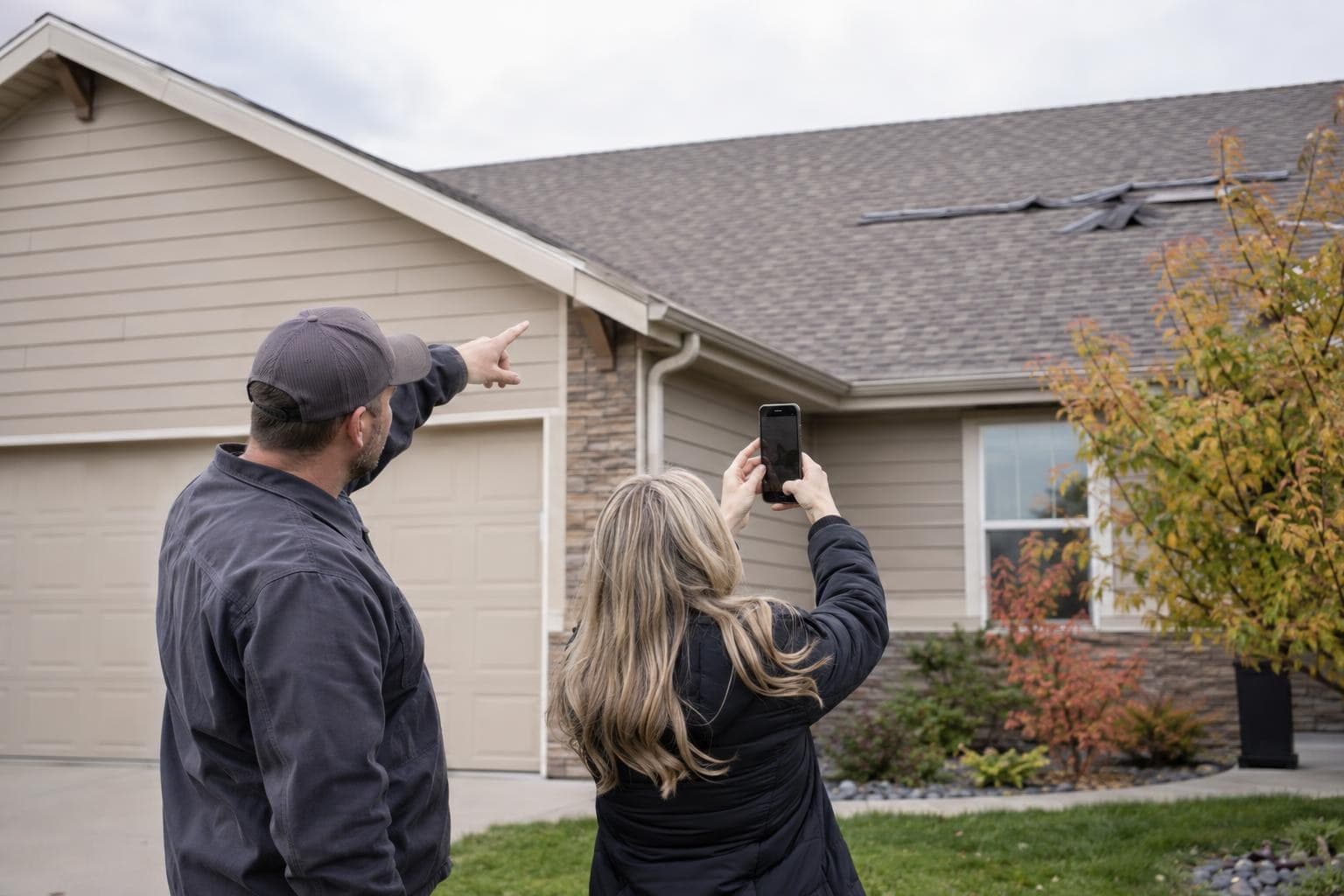
The short answer is function. Insurance carriers typically look for signs that a storm changed how the roof protects your home. Wear usually shows up as even aging over time. Storm damage is more likely to appear as distinct hits, torn sections, lifted tabs, displaced materials, damaged flashing, or leaks tied to a recent event. If you suspect damage, take clear photos from the ground, note the storm date if you know it, and have a qualified local roofing contractor inspect the roof. That gives you a cleaner starting point when you talk to your carrier.
Talk to a roofer today
Planning ranges, scope details, and a direct path to request a roofing quote.
Will you pay a deductible if insurance covers the roof?
Yes, in most cases you still pay your deductible. Insurance generally pays the covered amount above that deductible, subject to your policy terms. That means a claim can be approved and still leave you with an out-of-pocket share. Before you move forward, it helps to compare the expected scope of work with your deductible so you know whether a claim makes financial sense for your situation. If the damage is minor, a repair may be the more practical route.
How does a South Dakota roof insurance claim usually work?
It usually starts with documentation, then an inspection, then the carrier decision, then the build. Start by photographing visible issues, checking for interior water spots, and writing down the date of the storm if you can. Next, have your roof inspected so you understand whether the issue looks like repairable damage or full replacement damage. Then file the claim with your carrier and be ready for an adjuster visit. If the claim is approved, the scope of work gets finalized and your roofer schedules the job. When planning an insurance-related roof project in South Dakota, ask how roof shape, staging, weather, inspections, and concealed deck conditions affect both duration and labor.
- Document what you can safely see, exterior and interior.
- Schedule a roof inspection to identify functional damage.
- File the claim with your insurance carrier.
- Meet the adjuster if needed and review the scope carefully.
- Get the final scope in writing before work begins.
- Keep all paperwork together, including photos, estimates, and claim documents.
What should you do after a storm so you do not hurt your claim?
Move quickly, but do not rush into a contract. South Dakota Consumer Protection says residents should be vigilant of transient contractor scams following severe weather. The state urges you to take your time, do your due diligence, and contact the Division of Consumer Protection when in doubt. That matters after hail and wind events, when out-of-town crews may show up fast. A better approach is to document the damage, call your carrier, and work with a local contractor whose credentials you verified who puts the scope and terms in writing.
What paperwork should you ask for before roof work starts?
Get everything in writing before work starts. State consumer guidance says you should ask for a written estimate and a written contract, keep a copy of the final signed contract, read the contract carefully before signing, and make sure project changes are handled with a Change Order signed by both parties. It also says any guarantees made by the contractor should be written into the contract. In practical terms, that means you should not rely on verbal promises about upgrades, supplements, timelines, or cleanup.
When should you make the final payment?
Only after the work is finished to your satisfaction. South Dakota Consumer Protection says you should make final payments only after the work is completed. It also says not to sign completion papers or make the final payment until the work is completed to your satisfaction, and to avoid on-the-spot cash payments by paying by check to the contracting company and not an individual. That gives you leverage to make sure the agreed scope is actually complete before the job is closed out.
What should you ask a roofer in South Dakota before signing?
Ask for the basics the state itself tells homeowners to verify. In South Dakota, a practical way to vet your roofer is to follow the state’s consumer checklist. Take your time. Ask for references and a proven track record. Ask for a written estimate and a written contract. Read the contract carefully, make sure guarantees are in writing, and make sure any project changes require a signed Change Order. Ask for sales tax license, and because the Department of Revenue says contractors doing this kind of work must have a South Dakota contractor’s tax license, ask about that too. If a permit is required, make sure it is obtained. Pay by check, keep copies of your paperwork, and hold final payment until the work is completed to your satisfaction.
If insurance does not cover the full roof, what might replacement cost in South Dakota?
Your material choice has a big effect on total cost. Use the current South Dakota cost page and calculator to plan an insurance-related roof project in South Dakota, then require the measured scope to explain any meaningful difference.
Can a Class 4 roof help with insurance costs?
Sometimes, yes. Do not assume a statewide Class 4 credit in South Dakota; ask the carrier to verify eligibility and paperwork for the exact product and policy. If you are considering impact-resistant shingles, ask your insurance carrier whether it offers a discount for a Class 4 roof and what documentation it requires. Discounts and eligibility are set by the carrier, so you should confirm the details before you choose materials. That way, you can compare the upgrade cost with any premium savings and the added hail resistance.
Sources
- National Association of Insurance Commissioners: What You Need to Know When Filing a Homeowners Claim
- National Association of Insurance Commissioners: Actual Cash Value Coverage and Replacement Cost Coverage
- South Dakota Consumer Protection, contractor scam alert
- South Dakota Department of Revenue, Contractor's Excise Tax
Reviewed technical references for South Dakota
Related South Dakota roofing guides
Related services
Updated July 27, 2026
3D Roofs Editorial Team
Editorial Standards