Updated July 27, 2026

3D Roofs Editorial Team
Editorial Standards
Georgia sits in a hail corridor, and the Atlanta metro in particular gets worked over season after season. After a storm, your roof may look fine from the driveway and still have taken real damage, or it may look beaten up and have nothing a policy will pay for. The whole question turns on one distinction insurers and adjusters live by: is the hail damage functional or cosmetic? Get that right and you know whether you have a claim worth filing.
Functional damage vs cosmetic damage
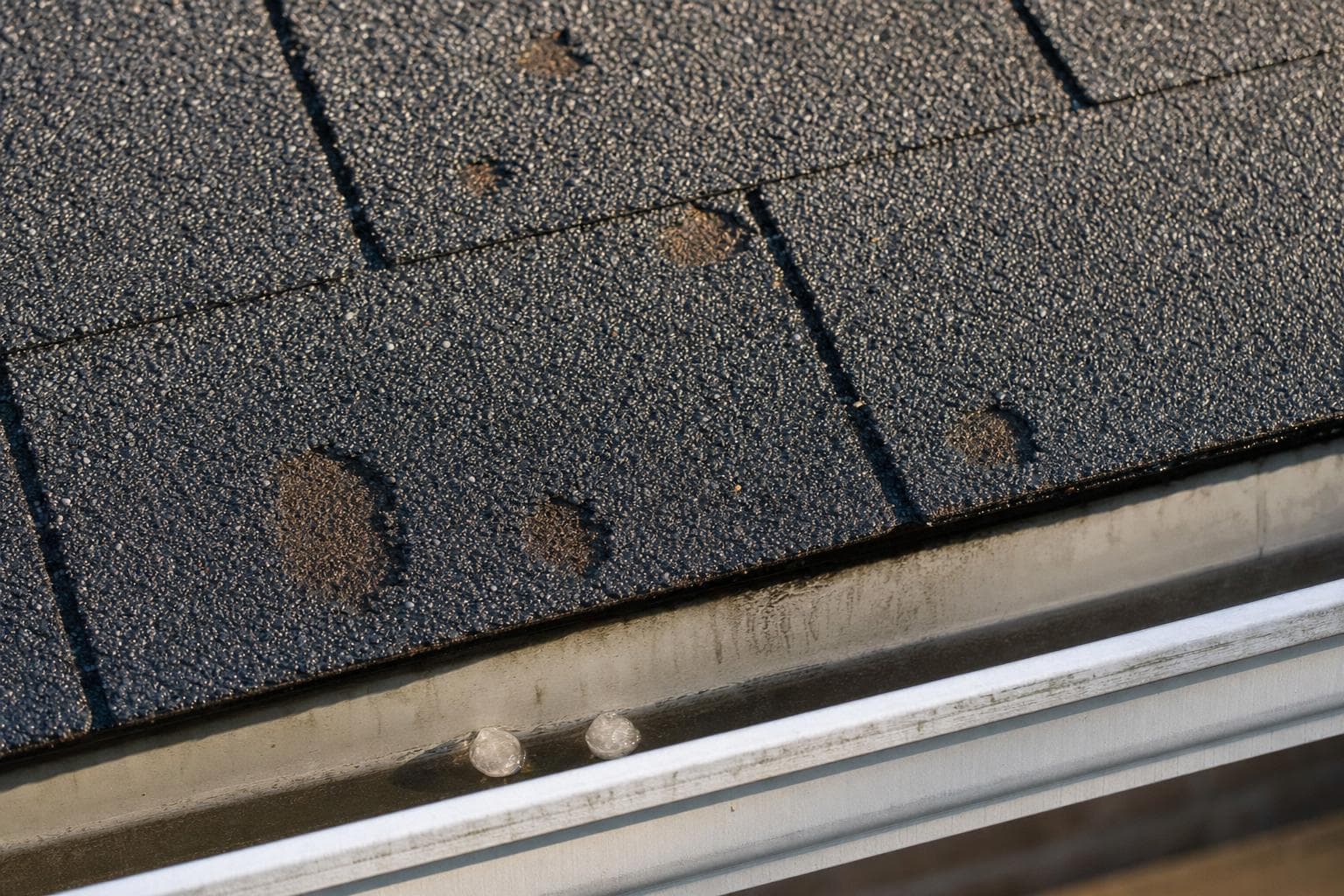
Functional hail damage shortens the roof's service life. It looks like bruises you can feel as soft spots, fractures in the shingle mat, and impact points where granules are knocked clean off to expose the asphalt underneath. Those exposed spots let UV cook the mat and let water in, which is why carriers pay to fix them. Cosmetic damage doesn't compromise the roof's job: surface scuffs that don't soften the mat, and dents in metal vents or gutters that still shed water. A roof can be covered in cosmetic marks and still be doing everything it's supposed to, and that's the version insurers decline.
What the evidence looks like after a Georgia storm
- Soft metals first: dents in gutters, downspouts, AC fins, and window wraps establish the hail size and direction.
- Bruises on the shingles: dark, soft spots where an impact loosened or fractured the mat, often springy under thumb pressure.
- Knocked-off granules: fresh bare patches exposing asphalt, concentrated on the storm-facing slopes.
- Directionality: real hail damage clusters on the slopes facing the storm, not evenly across every slope.
- Collateral clues: a dented mailbox, shredded leaves, or neighbors filing the same week all corroborate the date and severity.
Document it before anyone touches the roof
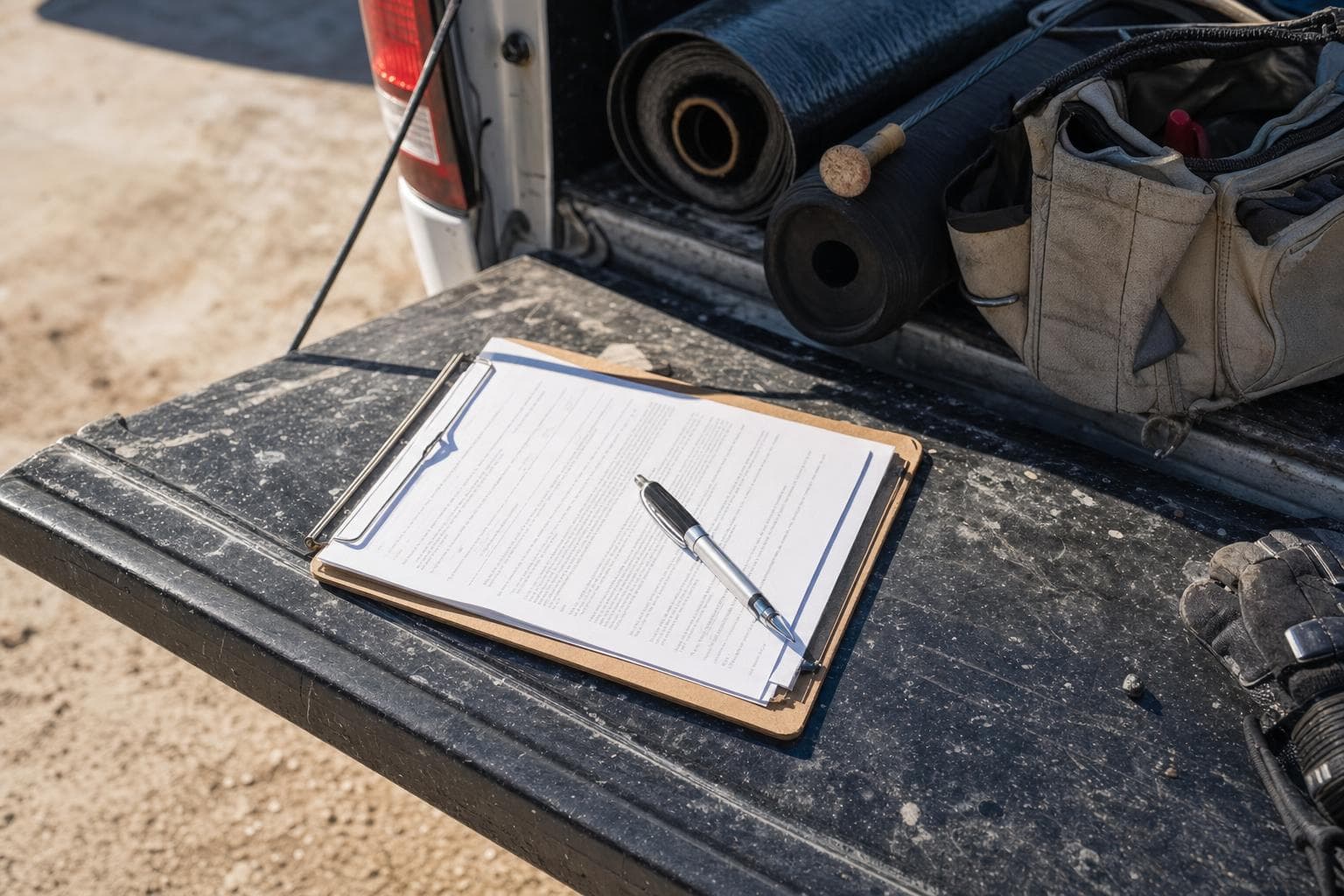
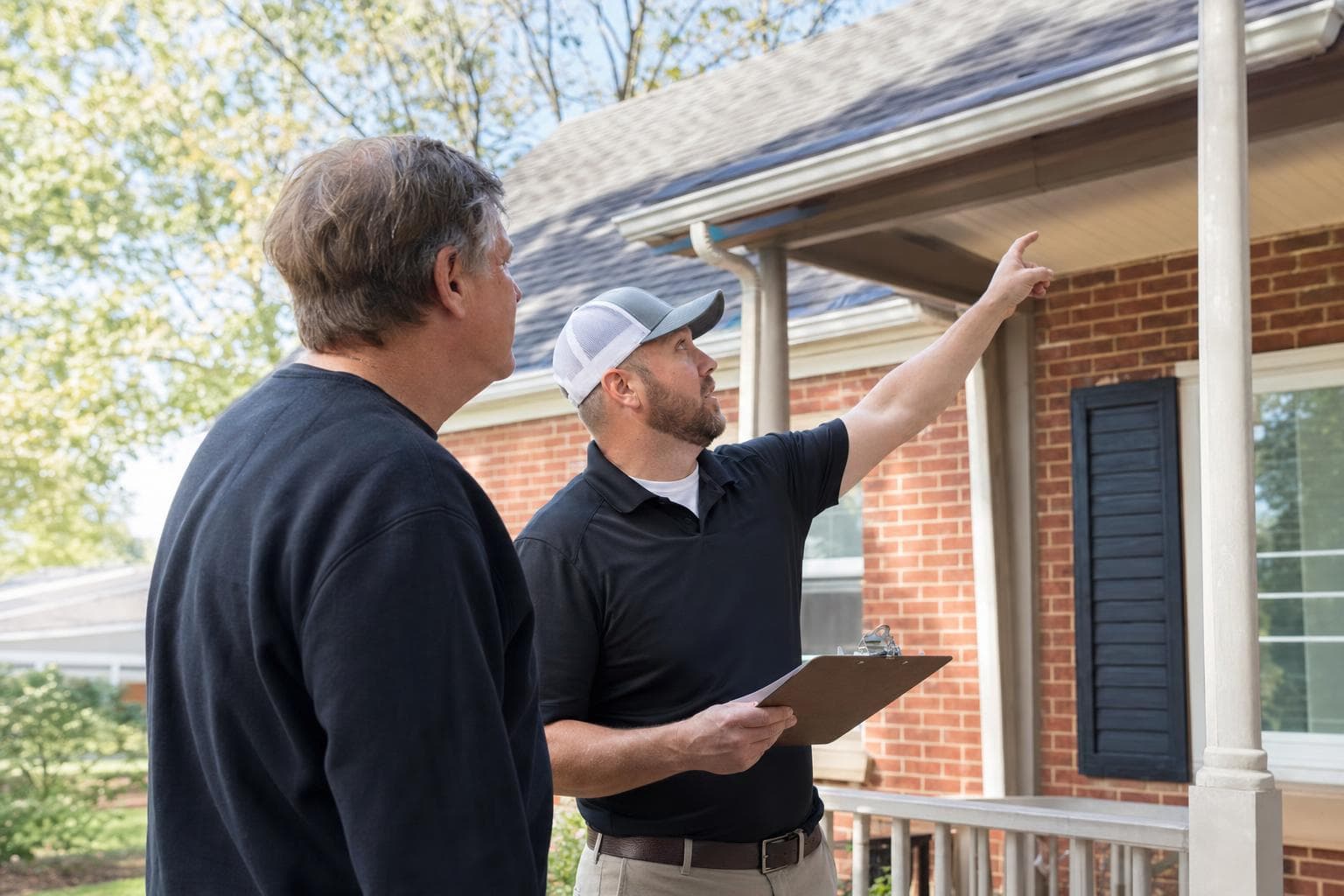
Insurance claims are won on documentation, so build the record before any repair disturbs the evidence. Photograph the damage slope by slope with the storm date attached, capture the soft-metal dents that prove hail was present, and note any interior staining. Hold off on permanent repairs until the adjuster has seen it, though you should tarp any active opening to stop further water damage. Anyone who wants to start tearing off shingles before the claim is documented is destroying the proof your settlement depends on.
Talk to a roofer today
Planning ranges, scope details, and a direct path to request a roofing quote.
How the Georgia claim works
If the damage is functional, file with your carrier and submit a completed proof of loss. Georgia generally requires your insurer to confirm or deny the claim within 15 days of receiving that proof, and many Georgia policies ask for proof of loss within 60 days of the loss, so don't sit on it. For an early budget on a storm-damage roof project in Georgia, compare the Georgia cost page with a proposal that identifies measurements, products, accessories, and exclusions. A Georgia roofer cannot legally pay or waive that deductible for you, so a 'free roof' pitch is a warning sign, not a deal.
If it qualifies, consider Class 4 for next time
When a hail claim is funding a replacement anyway, it's the moment to think about a Class 4 impact-resistant roof, rated under UL Standard 2218 as the highest of four impact classes. For hail damage roof in Georgia, treat Class 4 as a laboratory impact classification for the exact product, not a promise that the installed roof will resist every hail event or avoid damage. There's no fixed statewide discount, since each carrier sets its own credit, so ask yours what they actually knock off. Class 4 still dents cosmetically, but it's built to keep the next Georgia storm from becoming another claim.
Sources
- Roof replacement in Georgia: the full guide
- Hail damage roofing, inspection and documentation
- Roof insurance claim help
- Georgia Secretary of State (Public Adjusters, Roofing Contractors and Homeowners; HB 423 / deductible law)
- Georgia Office of Commissioner of Insurance and Safety Fire (file a consumer complaint)
Functional damage shortens the roof's life. Cosmetic damage shortens your patience. Only one of them is a claim.
Related reading and source material
Make the Georgia property safe and dry first
Stay away from downed lines, unstable trees, standing water near electrical equipment, and visibly unstable roof areas. Arrange necessary temporary protection, preserve receipts, and photograph conditions before covering them when it is safe. Emergency work should prevent additional damage without erasing the evidence needed for permanent scope. For a Georgia property, compare wind-driven rain, humid drying conditions, tree debris, and any coastal or open-terrain exposure actually present at the property. For a hail-damage roof inspection in Georgia, use the linked Georgia Secretary of State (Public Adjusters, Roofing Contractors and Homeowners; HB 423 / deductible law) reference as the state-reference checkpoint and test the recommendation against the address's wind-driven rain, humid drying, tree debris, shaded slopes, and coastal exposure where it applies.
Build a located evidence record in Georgia
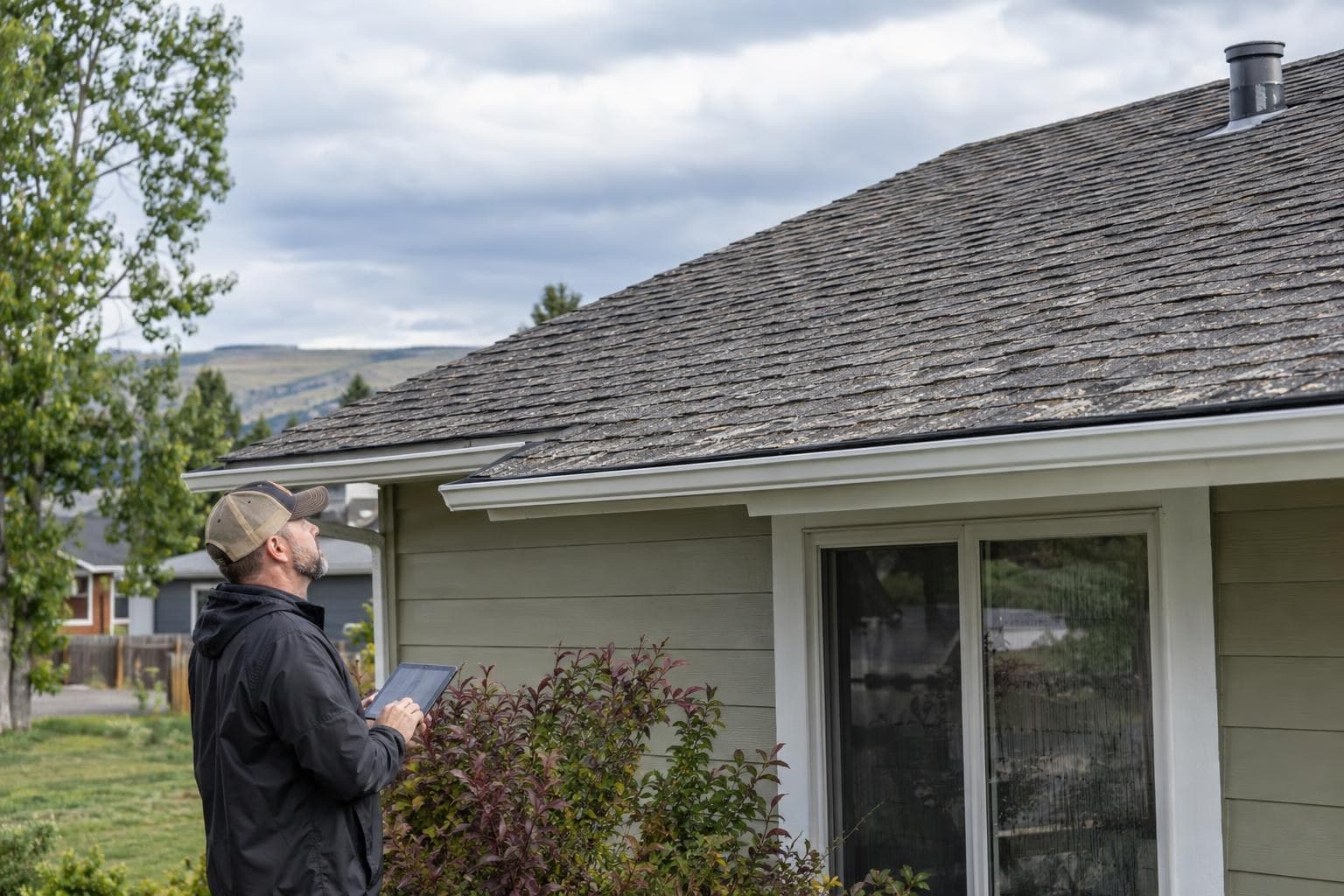
Use overview photographs to locate close-ups by slope, orientation, material, and detail. Record covering, edges, ridges, valleys, walls, penetrations, drainage, deck or attic evidence, and interior effects. Separate what is observed from what still requires testing or removal. For a Georgia property, inspect valleys, wall transitions, shaded slopes, attic moisture paths, and the perimeter details that sudden rain and wind can expose. For a hail-damage roof inspection in Georgia, check the linked Georgia Office of Commissioner of Insurance and Safety Fire (file a consumer complaint) reference for the state-level question while the property inspection addresses wind-driven rain, humid drying, tree debris, shaded slopes, and coastal exposure where it applies.
Separate functional damage from appearance and weathering in Georgia
Explain the mechanism, whether attachment or water shedding is affected, and how widely the condition is distributed. Impact marks, dents, granule change, lifted material, failed sealant, age, and installation defects do not all support the same conclusion. The repair boundary should follow evidence. For a Georgia property, treat coastal salt, inland trees, low-slope additions, and roof geometry as address-level questions rather than statewide assumptions. For a hail-damage roof inspection in Georgia, keep the linked Georgia Secretary of State (Public Adjusters, Roofing Contractors and Homeowners; HB 423 / deductible law) reference in the project file and document how the roof's wind-driven rain, humid drying, tree debris, shaded slopes, and coastal exposure where it applies affect this decision.
Keep claim and construction decisions in separate lanes in Georgia
The roofer documents conditions and prices temporary or permanent work. The insurer applies the policy, deductible, valuation, and claim rules. The building official interprets code for the project. Preserve correspondence, estimates, contracts, changes, invoices, and completion records without assuming coverage or a replacement outcome.
What to confirm before finalizing a hail-damage roof inspection in Georgia
Compare wind-driven rain, humid drying conditions, tree debris, and any coastal or open-terrain exposure actually present at the property. For a hail-damage roof inspection in Georgia, use the reviewed state resources linked on this page, including Georgia Secretary of State and Georgia Office of Commissioner of Insurance and Safety Fire, to verify current credentials, insurance boundaries, contract terms, or consumer requirements that apply. Confirm permits and inspections locally, and keep the property evidence separate from any policy or sales promise.
- Make the Georgia property safe, prevent additional water entry, and photograph conditions before temporary work when practical.
- Map the cause, consequence, distribution, and uncertainty by roof area instead of relying on one close-up or interior stain.
- Test whether the repair can tie into sound layers and identify the concealed finding that would expand the opening.
- Confirm the Georgia permit and inspection path with the local building department before work begins.
- Keep the Georgia photographs, contract, approved changes, invoices, payments, product records, and warranties together.
- Compare what remains in service, the risk the owner accepts, the payment terms, and the completion evidence for each option.
Reviewed technical references for Georgia
Related Georgia roofing guides
Related services
Updated July 27, 2026
3D Roofs Editorial Team
Editorial Standards