Updated July 27, 2026

3D Roofs Editorial Team
Editorial Standards
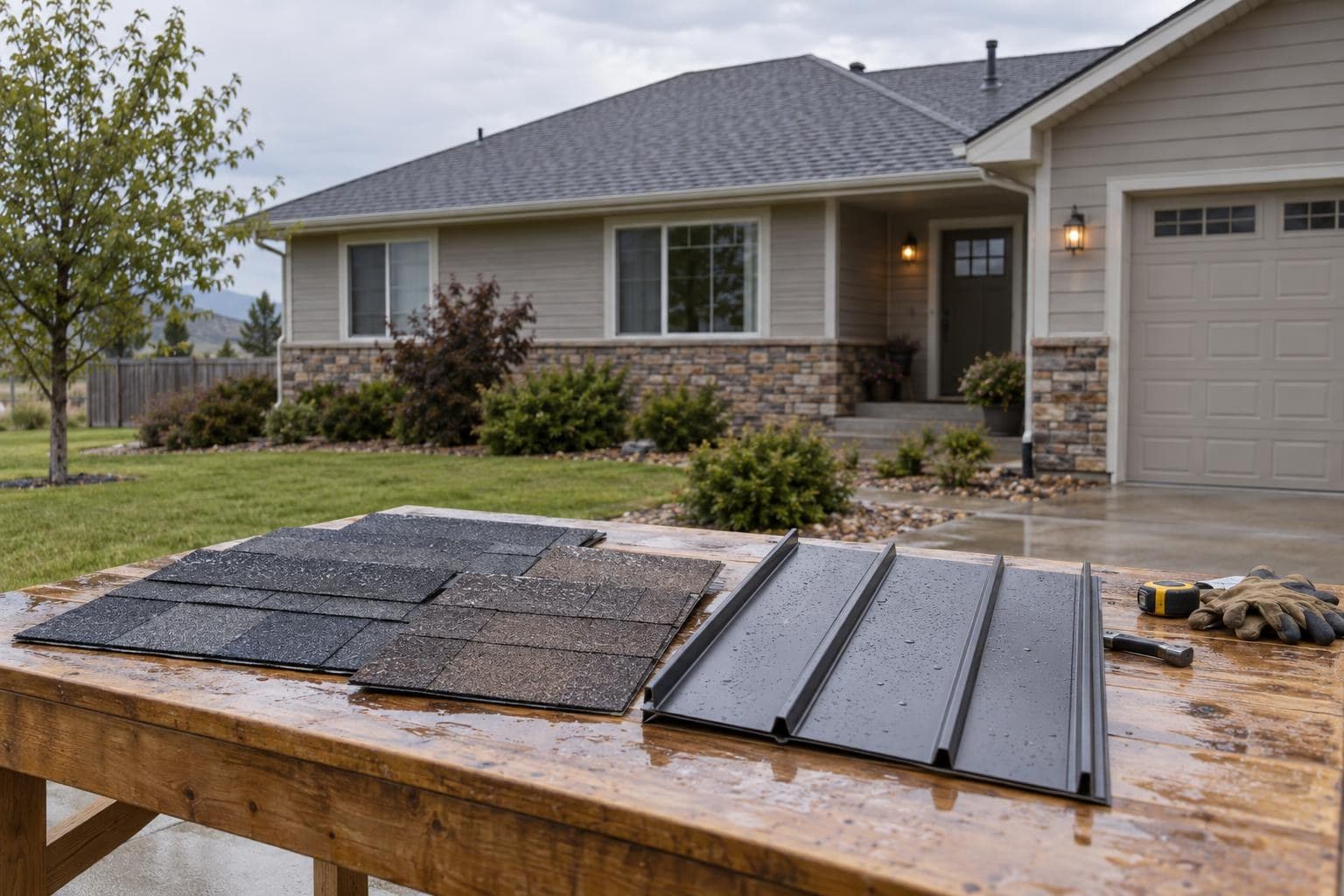
If you want the short answer, shingles win on lower upfront cost, and standing seam metal wins on long-term durability. In Colorado, that tradeoff matters more because hail, wind, UV, snow, and freeze-thaw all work a roof hard. For many homeowners, the real choice is not just metal versus shingles. It is whether Class 4 shingles give you enough hail resistance for far less money than metal.
How much does a metal roof cost versus shingles in Colorado?
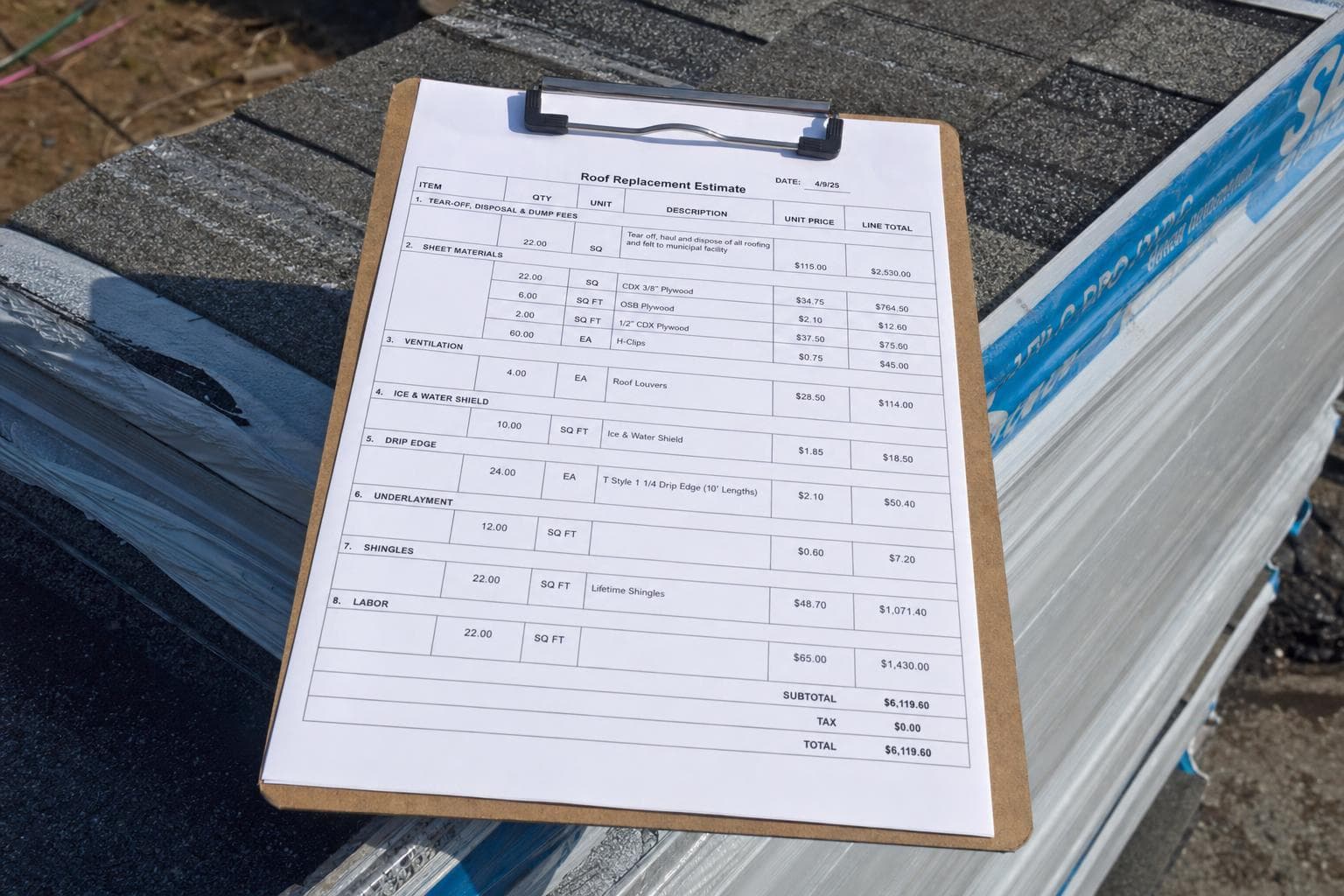
The direct answer is that standing seam metal costs much more upfront than either Class 3 or Class 4 shingles. For current Colorado planning prices related to metal vs shingle roof, use the cost guide and calculator, then compare the contractor's property-specific written scope. For metal vs shingle roof in Colorado, treat a steep or difficult-to-access roof as a scope variable that the contractor should measure and price explicitly. For a lot of homeowners, that means metal is not really competing with basic shingles on price. It is competing with the idea of paying more now to avoid more wear and tear later.
If you want a broader view of what roofs cost across materials and home sizes, full local pricing lives on the Colorado cost page and the calculator. Those tools help you frame whether the jump from shingles to metal fits your budget before you get into product details.
Which roof handles Colorado weather better?
The answer is that it depends on which weather your home actually sees, but hail is usually the first thing to judge. Colorado roofs fail where the weather hits hardest, and hail leads the list. Spring and summer storms along the Front Range drive granule loss, bruising, and outright punctures, and storms producing very large hail have grown more common in recent years. High winds add the next layer of stress: downslope chinooks and foothills gusts can top highway speeds and peel shingles and underlayment off the edges and ridges. On top of that, thin high-altitude air filters out less UV, so intense sun ages asphalt shingles faster than at lower elevations, heavy mountain and plains snow loads and constant freeze-thaw work on flashing and seals, and homes near the foothills carry real wildfire exposure. The right roof for your home depends on which of these your area actually sees.
- If hail is your main concern, Class 4 shingles are worth a hard look before you jump to metal.
- If high sun and long ownership matter most, metal can make more sense.
- If wind catches your roof edges or ridges, installation quality matters as much as material choice.
- If snow, flashing movement, and freeze-thaw are common at your home, detail work around penetrations and transitions matters a lot.
Are Class 4 shingles the best middle ground?
For many Colorado homes, yes. Class 4 shingles often hit the sweet spot between upfront cost and hail-focused performance. They cost more than Class 3, but far less than standing seam metal.
They can also matter on insurance. For metal vs shingle roof in Colorado, any insurance credit depends on the carrier, policy, address, and exact product; get the amount and documentation requirements from the insurer in writing. That does not mean every product gets a credit or that every carrier handles it the same way. Verify the exact product's current UL 2218 classification, the starter and ridge components, and the rest of the proposed assembly. The rating does not guarantee freedom from all damage or establish a policy credit. Ask the carrier in writing whether the product qualifies, which premium portion is affected, and what documentation it requires before using any savings in the budget.
Talk to a roofer today
Planning ranges, scope details, and a direct path to request a roofing quote.
Does metal last long enough to justify the price?
If you plan to own the home for a long time, metal can justify the price more easily. If your ownership horizon is shorter, shingles usually make the math easier. That is the clearest way to think about it. The higher upfront cost of standing seam is real, so it tends to fit owners who want a long-term roof strategy, care about lower repeat damage risk, or simply do not want to revisit the decision soon.
Shingles still make sense for a lot of owners because the entry cost is lower and repair options are usually simpler. If you expect to sell sooner rather than later, or you want better hail resistance without doubling your budget, Class 4 shingles are often the cleaner answer.
Which roof wins if you plan to move in a few years?
Shingles usually win for a shorter owner horizon. Many homeowners in that situation would rather put the smaller amount into a strong asphalt system and keep more cash available for other upgrades or repairs.
- Choose Class 3 if you need the lowest upfront cost.
- Choose Class 4 if hail exposure is meaningful and you want a stronger value play.
- Choose standing seam if you expect to keep the home long enough for the higher upfront spend to feel worthwhile.
What should you know before signing a Colorado roofing contract?
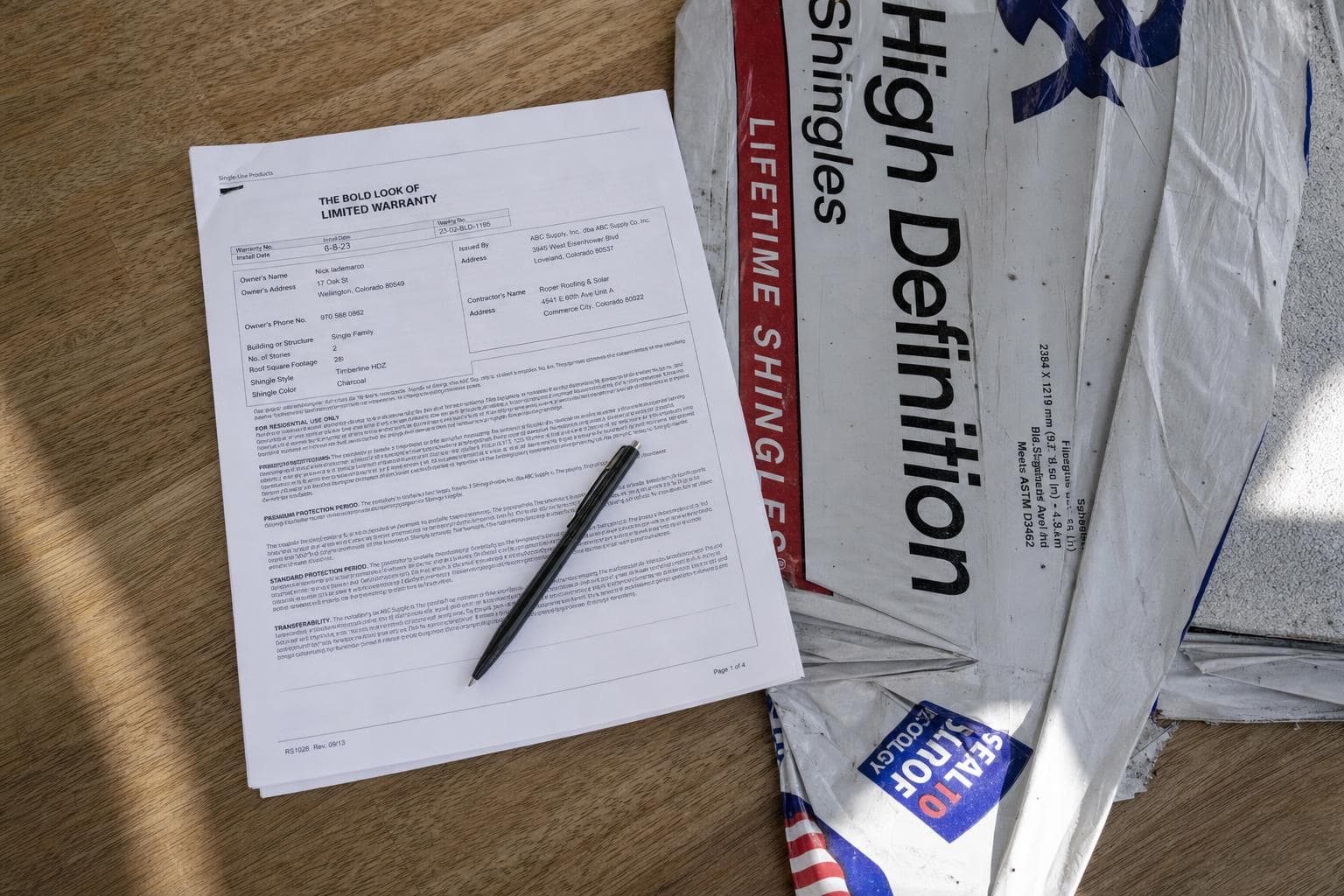
The main answer is that your contract rights matter a lot in Colorado. Colorado's residential roofing law gives you two ways out of a roofing contract. You can rescind any residential roofing contract within 72 hours of signing it, and if the work is to be paid from insurance proceeds, you can also rescind within 72 hours after your insurer notifies you in writing that the claim is denied in whole or in part. When you cancel, the roofer has to return your deposit and any payments, less the cost of any materials already delivered. So you are never locked into paying out of pocket just because the claim falls through.
You also need to know that under the same law, a Colorado roofing contractor cannot pay, waive, rebate, or even promise to pay, waive, or rebate all or part of your insurance deductible on an insurance-funded job. Your contract has to state this in writing. A roofer pitching a free roof by eating your deductible, or quietly inflating the estimate to cover it, is steering you toward insurance fraud, not handing you a deal, so treat it as a red flag and walk away.
There is also no state roofing license in Colorado. That makes contract disclosures and local verification more important. Roofing is regulated city by city, so confirm your roofer is registered or licensed in your jurisdiction and that it pulls a local permit before work begins. Ask for proof of current general-liability and workers'-compensation insurance. Then look for a real local track record, such as references, recent addresses you can drive past, and manufacturer certifications.
So, is metal or shingles better for your Colorado home?
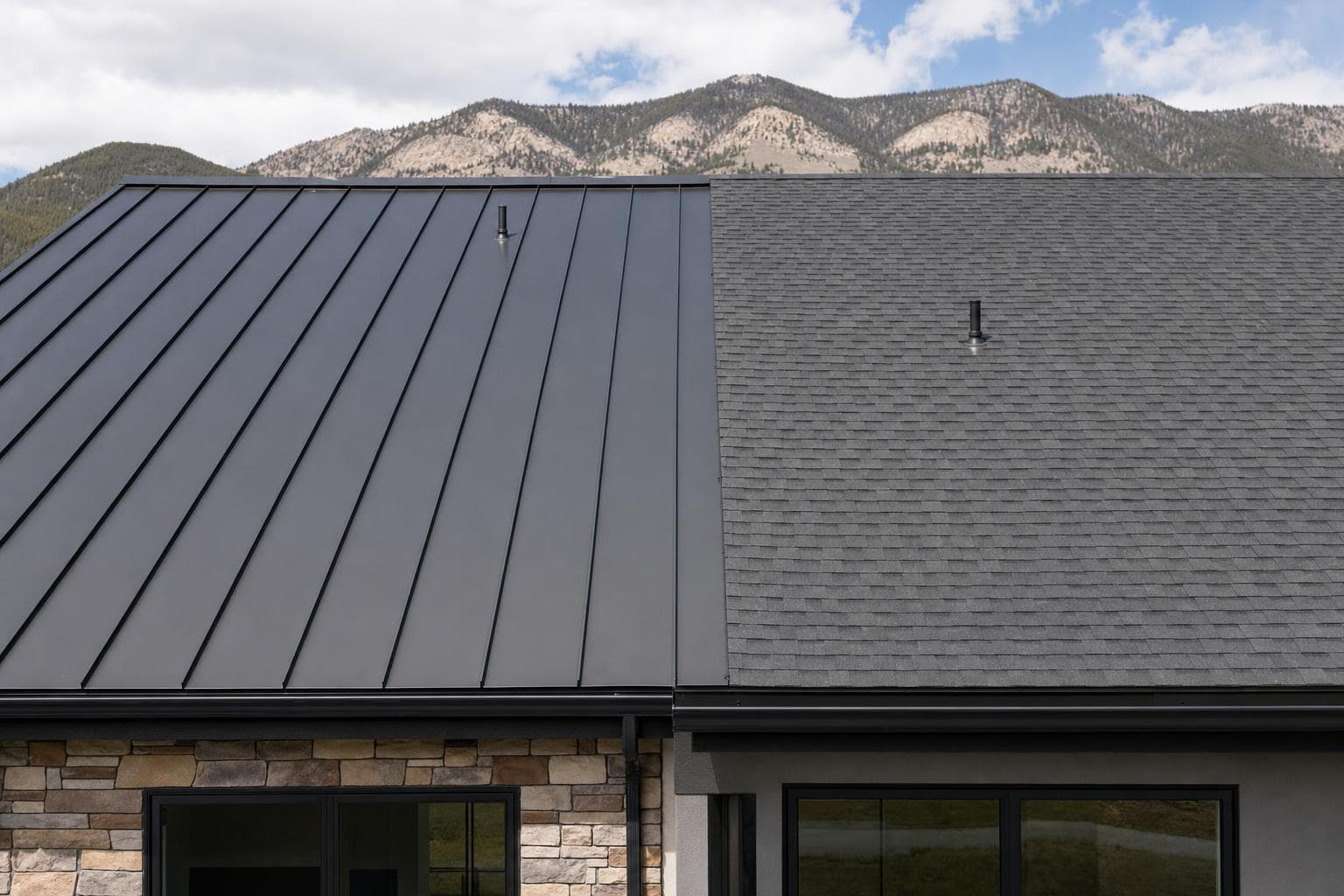
The simple answer is this: shingles are better for budget and shorter ownership, standing seam metal is better for long-term durability, and Class 4 shingles are often the smartest middle ground in Colorado. If your main goal is the lowest upfront cost, Class 3 gets you there. If your main goal is balancing cost with better hail positioning, Class 4 is usually the strongest value. If your main goal is to spend more now for a longer-view solution, standing seam metal deserves a serious look.
How do snow shedding and rooftop equipment affect the choice?
A smooth metal roof can release snow differently from an asphalt shingle roof, which matters above entries, walkways, patios, lower roof sections, and mechanical equipment. Ask whether the design needs engineered snow-retention details and how those attachments will be integrated without creating leak paths. Also map vents, skylights, solar mounts, and future equipment service before choosing a system. Shingles and metal can both perform well, but the proposal should explain penetration flashing, compatible fasteners, repair access, and how snow and drainage will move across the actual roof.
Sources reviewed
- Colorado Attorney General: Preventing Home Repair and Roofing Fraud
- Colorado Division of Insurance / DORA (action to lower homeowners rates; resilient roofs)
- UL Solutions: UL Solutions and IBHS Drive Trust in Residential Roofing Shingles
- Asphalt Roofing Manufacturers Association: Residential Asphalt Roofing Manual: Ventilation Best Practices
- Insurance Institute for Business & Home Safety: Natural Weathering and Hazard Exposure
Plan with current pricing
Related services
Updated July 27, 2026
3D Roofs Editorial Team
Editorial Standards