Updated July 10, 2026

3D Roofs Editorial Team
Editorial Standards
If you are deciding between a metal roof and asphalt shingles in New Mexico, shingles usually win on upfront cost, while metal usually wins for owners planning to stay longer and absorb a much higher initial price. In this state, that choice matters because roofs face intense UV exposure, dry heat, wind-driven rain, hail, mountain snow in some areas, and wildfire conditions in many parts of the state. That mix can dry out roofing materials, stress sealants and flashing, and make small weak spots turn into leaks after a storm.
Compare measured metal and shingle scopes in New Mexico
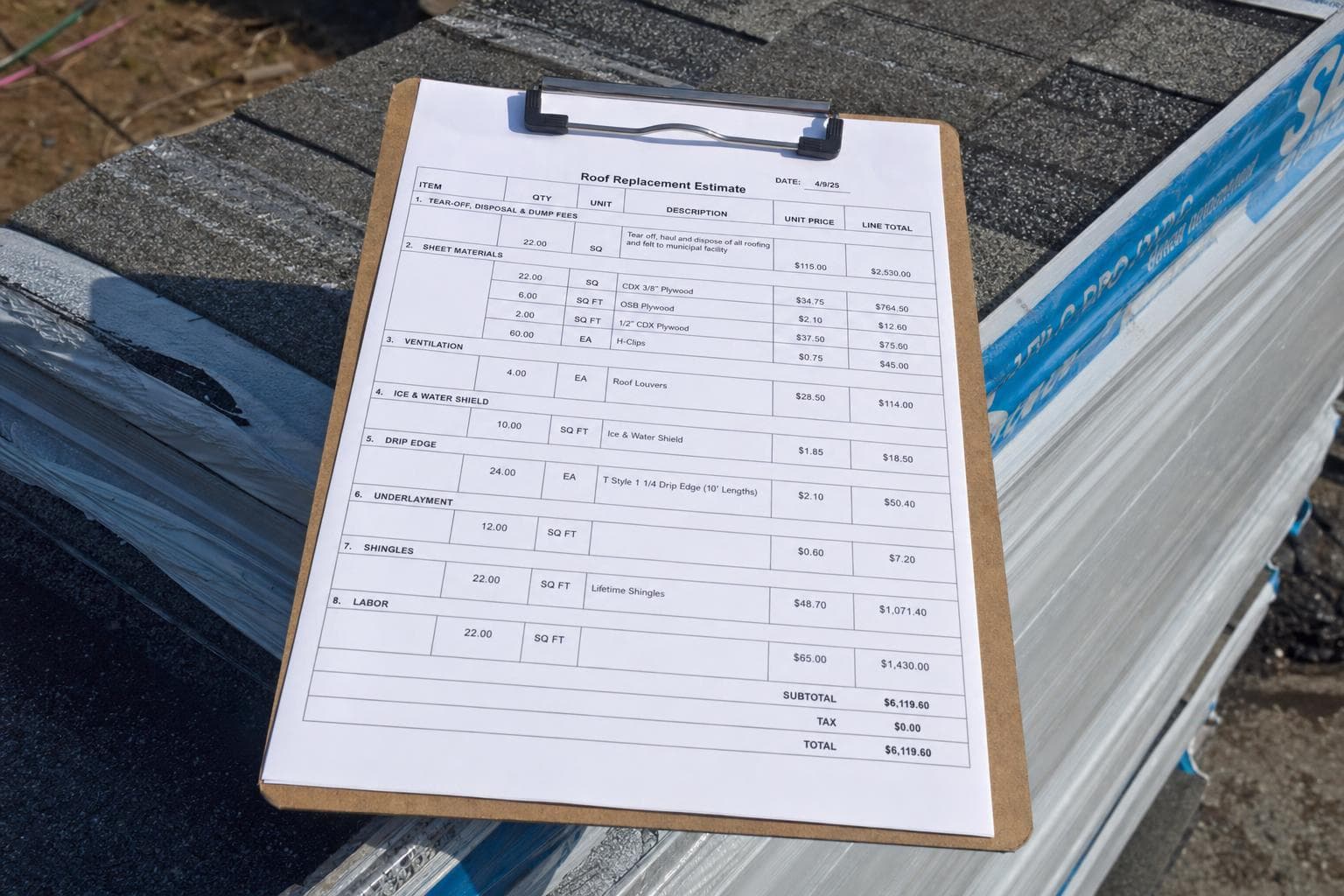
Shingles cost much less upfront. For an early budget on a metal-versus-shingle comparison in New Mexico, compare the New Mexico cost page with a proposal that identifies measurements, products, accessories, and exclusions. Installed price differences for a metal-versus-shingle comparison in New Mexico vary with roof geometry, assembly details, access, and local labor, so compare complete measured proposals instead of assuming a fixed multiple.
When lower initial disruption matters to the owner
For a short ownership timeline, shingles usually make more sense. If you expect to move in the next several years, the lower upfront cost is the main reason. A Class 3 or Class 4 shingle roof can solve an aging-roof problem, improve appearance, and lower your immediate out-of-pocket cost compared with standing seam metal. In plain terms, if your goal is to replace a worn roof without tying up far more cash than needed, shingles are usually the cleaner fit.
When a serviceable metal system may fit the ownership plan
If you plan to stay long term, metal becomes easier to justify, but only if you are comfortable with the higher entry price. New Mexico weather is hard on roofs. Strong sun, heat, wind, hail, and seasonal storm exposure can punish weak details over time. Owners who expect to stay put often look at metal because they want a roof system built around long-run durability and lower appetite for repeat replacement cycles. Still, the price gap is real, so the better answer depends on whether you would rather preserve cash now or spend more upfront to pursue a longer-horizon plan.
Talk to a roofer today
Planning ranges, scope details, and a direct path to request a roofing quote.
Where impact-rated shingles fit between the two systems
For many homeowners, yes, Class 4 shingles are the middle-ground choice. They cost more than Class 3, but much less than standing seam metal. If hail is one of your bigger concerns, Class 4 often lands in the sweet spot because it can improve impact resistance without pushing your budget into metal territory. When comparing a metal-versus-shingle comparison in New Mexico, use a written insurer response rather than a sales estimate for any impact-resistant roof credit. That said, do not assume a Class 4 label automatically changes your premium. Ask your carrier directly before you buy, what documentation is required, and whether any benefit applies at issue or renewal.
What matters more in New Mexico, material choice or installation details?
Installation details matter just as much as the material, and sometimes more. In New Mexico, small weak spots can turn into leaks after a storm. That is why flashing, sealants, underlayment transitions, ventilation, and edge details deserve as much attention as the roof covering itself. A good material can still underperform if the details are sloppy. Before you sign, ask your roofer to explain the exact scope, materials, ventilation changes, flashing details, permit needs, cleanup plan, and who will handle any inspection steps. You should also verify your roofer through the state license lookup before you sign anything.
How do repairs and replacement timing compare?
The basic answer is that both roof types can still need service, and replacement timing is usually similar at the project level. The schedule for a metal-versus-shingle comparison in New Mexico should explain access, material staging, weather protection, inspections, and the process for discovered deck work. The proposal for a metal-versus-shingle comparison in New Mexico should price steep-slope access and slower material handling directly instead of hiding them in a standard percentage. For homeowners comparing metal and shingles, this matters because the purchase decision is not only about the day of installation. It is also about how you want to handle future repair risk, storm wear, and maintenance conversations as the roof ages.
Does New Mexico insurance change the metal vs shingle decision?
Yes, insurance can influence the decision, especially if your current roof is older, storm-worn, or surrounded by combustible debris. The state homeowners guidance highlights winter storm, flood, wildfire, and wind and hail readiness, which lines up with the risks many homeowners plan around. If coverage or underwriting is part of your decision, ask questions before you choose a material. If you are considering Class 4 shingles, ask your carrier whether your policy offers any discount, credit, or underwriting benefit, and what proof they require. If you run into trouble with a claim, policy issuance, or cancellation, the Consumer Assistance Bureau says it assists consumers who are having difficulty with an insurance issue.
- New Mexico's consumer Assistance Bureau says companies shall give policyholders at least ten days notice prior to the date of cancellation and 30 days notice prior to the date of non-renewal.
- New Mexico's consumer Assistance Bureau says cancellation and non-renewal are different.
- If you cannot get coverage in the normal market, the homeowners insurance guidance says there is a FAIR Plan path for qualified applicants in New Mexico.
Build the final New Mexico decision from two complete scopes
If wildfire exposure and combustible debris are part of your situation, you should look beyond the roof surface alone and think about the whole property condition. The state context makes clear that wildfire conditions affect many parts of New Mexico, and older roofs or debris around the home can affect both performance and insurability. That does not mean one material is automatically right for every house. It means your decision should include roof condition, surrounding vegetation or debris, flashing details, and what your insurer is willing to write. If you have wildfire-preparedness documentation, the state guidance says homeowners may share a wildfire preparedness certificate with their insurance agent or insurance company to ask if any discounts, credits, or other benefits may be available.
Build the final New Mexico decision from two complete scopes: 9
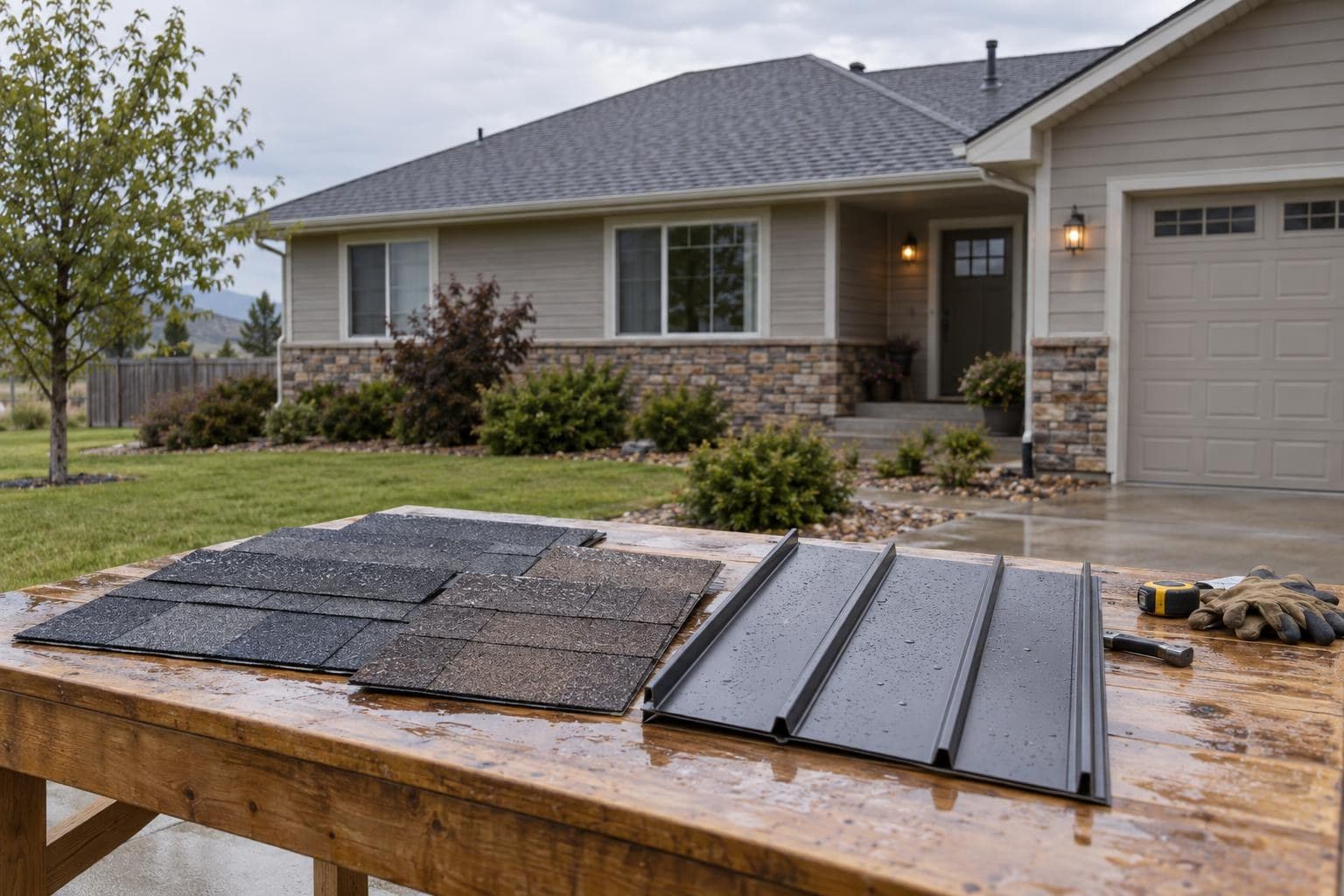
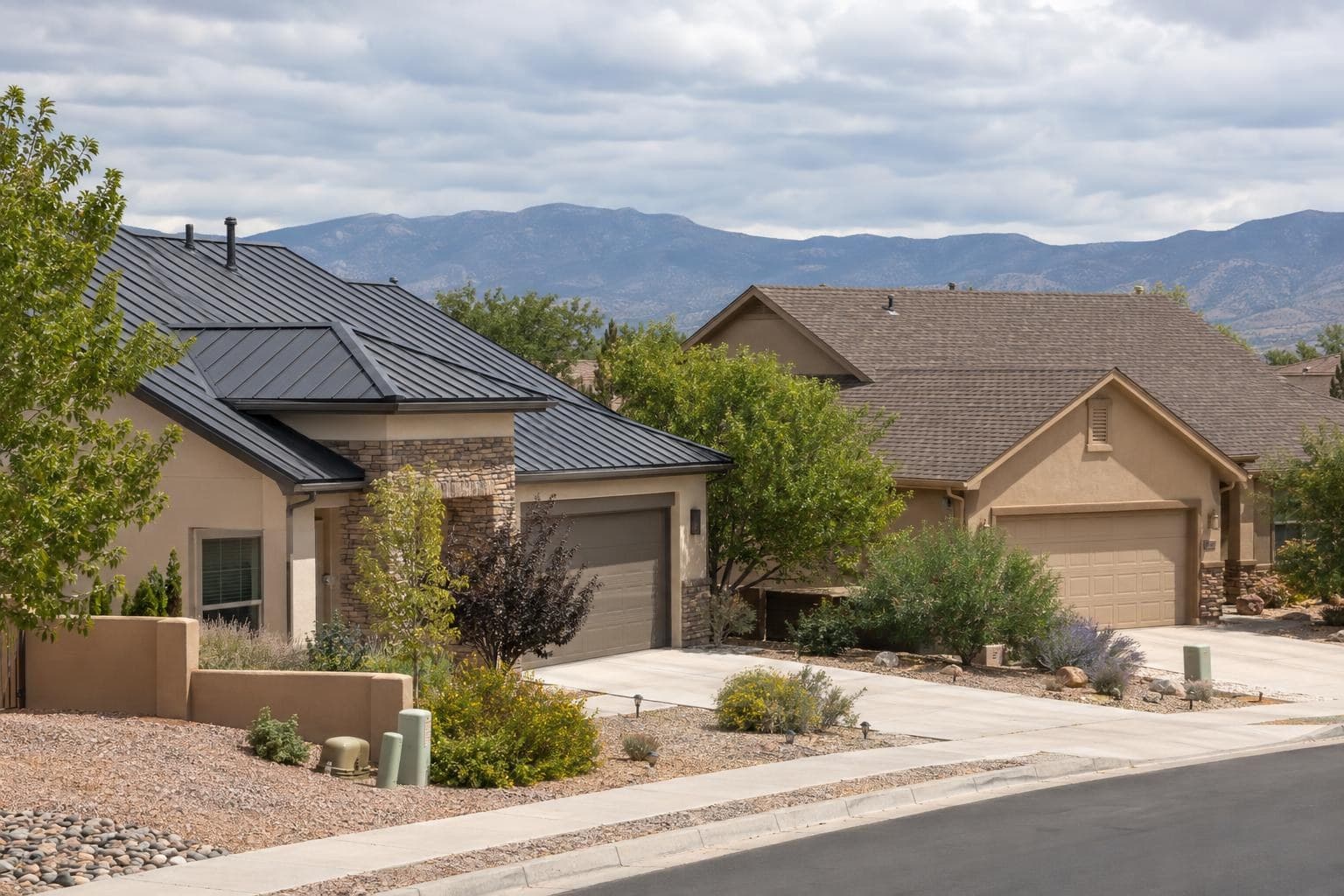
If your priority is lower upfront cost, shingles win. If you want the strongest budget-conscious option, Class 3 is the entry point. If you want a more storm-focused middle ground, Class 4 is often the practical choice in New Mexico because it balances price and hail-minded performance better than jumping straight to standing seam. If you expect to stay long term, want to spend more now, and prefer a higher-end path built around a longer ownership horizon, standing seam metal can make sense. The right choice is less about picking a universal winner and more about matching the roof to how long you will own the home, how much cash you want tied up today, and how you want to handle weather risk over time.
Sources
Reviewed technical references for New Mexico
Related New Mexico roofing guides
Related services
Updated July 10, 2026
3D Roofs Editorial Team
Editorial Standards