Updated July 27, 2026

3D Roofs Editorial Team
Editorial Standards
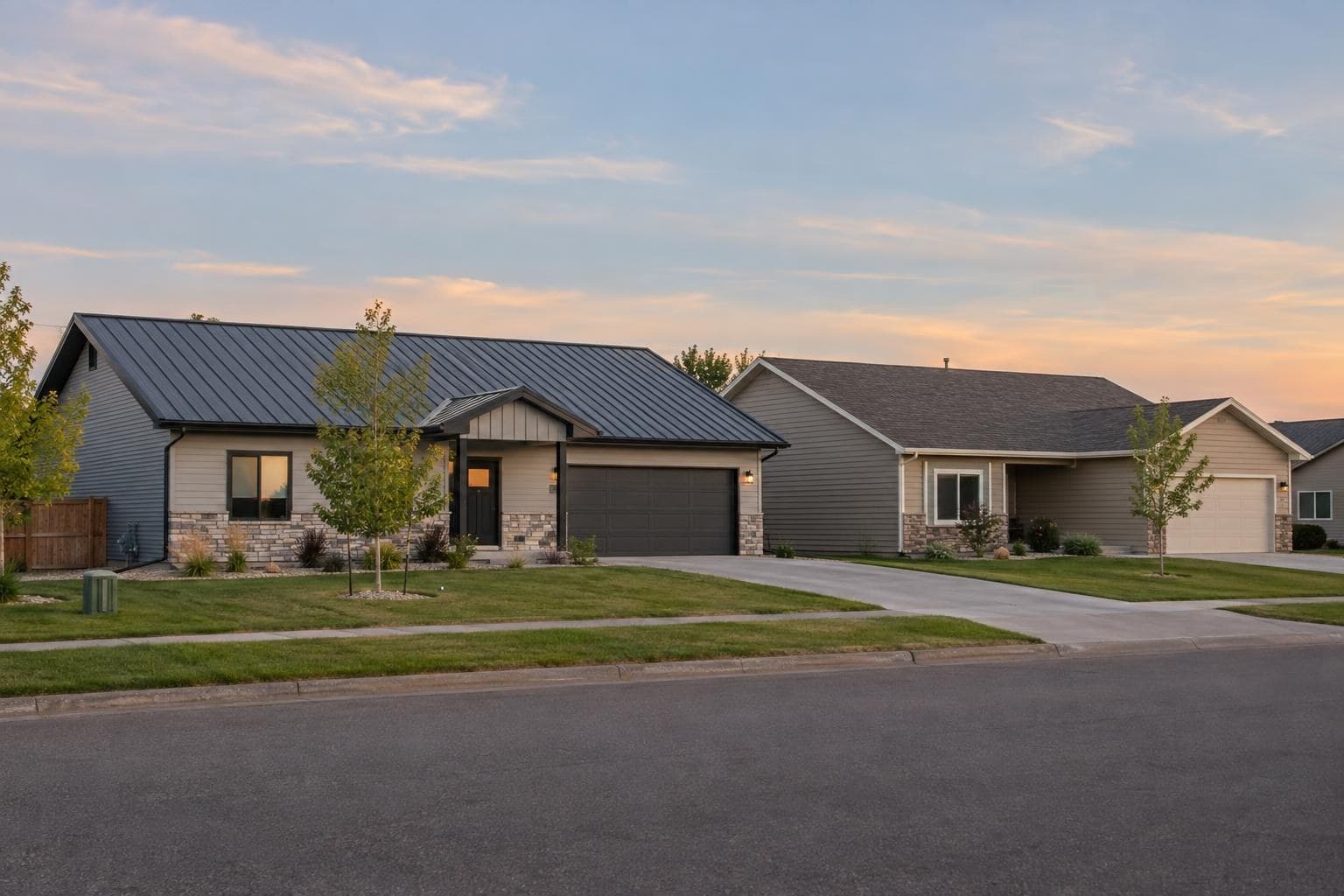
If you are choosing between metal and shingles in North Dakota, the right answer is usually simple: shingles cost much less up front, while metal costs much more but may make sense if you plan to stay put for a long time. North Dakota roofs are exposed to hail, strong wind, heavy storms, and long winter weather, so the best material is not just about looks. It is about what you can spend now, how long you expect to own the home, and how much repair risk you are willing to accept over time.
How much does a metal roof cost vs shingles in North Dakota?
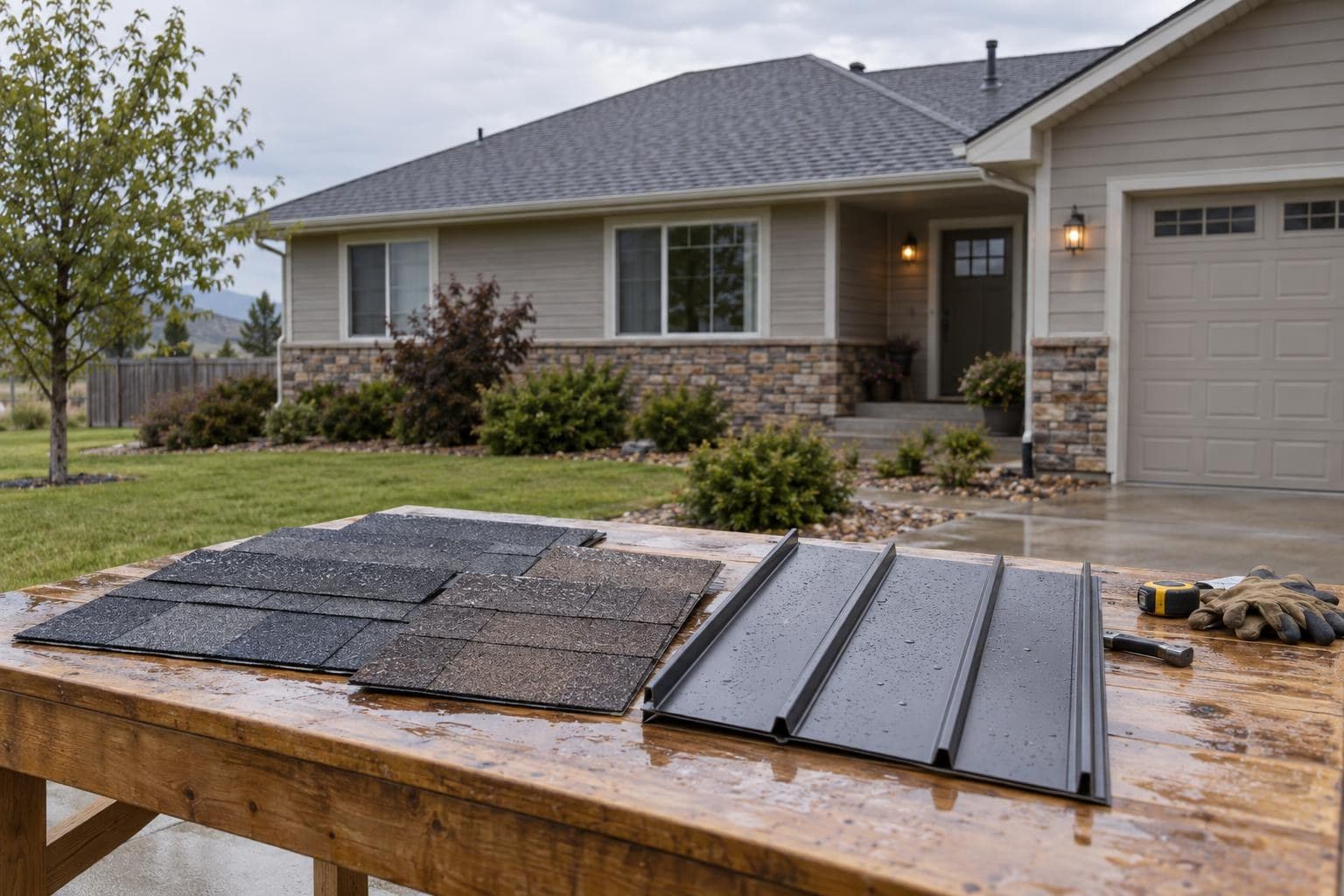
Shingles are the lower-cost option, and standing seam metal is the premium-priced option. For current North Dakota planning prices related to metal vs shingle roof, use the cost guide and calculator, then compare the contractor's property-specific written scope. That means metal is roughly double the cost of Class 4 shingles and far more than Class 3. If your first priority is keeping the replacement budget under control, shingles usually win.
Pitch matters too. For metal vs shingle roof in North Dakota, treat a steep or difficult-to-access roof as a scope variable that the contractor should measure and price explicitly.
Which roof type makes more sense for a short ownership horizon?
Shingles usually make more sense if you expect to move in the near to mid term. The reason is straightforward: your upfront spend is much lower. For many owners, it is hard to recover that price gap through a shorter stay.
- Choose Class 3 if your goal is the lowest upfront replacement cost.
- Choose Class 4 if you want a lower upfront cost than metal, but want a tougher shingle option to discuss with your carrier.
- Choose metal only if the higher initial spend fits your budget and your ownership plan is long enough for that investment to feel worth it.
Which roof type wins if you plan to stay in the home for many years?
Metal can make more sense for a long ownership horizon, but only if you are comfortable with the higher upfront cost. In North Dakota, hail, wind, storms, and long winter weather can punish exposed roof components and turn small problems into bigger ones if repairs wait. That climate pressure is one reason some owners lean toward a premium material for a house they expect to keep for many years. Still, the practical answer is this: if spending an amount that must be confirmed for the written scope strains the project, a good shingle roof is usually the smarter move than overbuying.
Class 4 shingles often land in the middle. They cost more than Class 3, but much less than standing seam metal. They can be a useful fit if you want something more impact-focused than a standard shingle without jumping all the way to metal pricing.
Talk to a roofer today
Planning ranges, scope details, and a direct path to request a roofing quote.
Are Class 4 shingles the best middle ground in North Dakota?
For many homeowners, yes, Class 4 shingles are the most balanced choice. They split the difference between basic shingle pricing and metal pricing, and they fit the reality of North Dakota weather better than treating all shingles as the same.
There is also a possible insurance angle. For metal vs shingle roof in North Dakota, any insurance credit depends on the carrier, policy, address, and exact product; get the amount and documentation requirements from the insurer in writing. That does not mean every policy saves the same amount. North Dakota consumer guidance says premiums vary by company, so you should ask your carrier what it offers and what proof it wants before installation, such as product identification and the final invoice from your roofer. If you want better hail resistance without paying metal prices, Class 4 is often the first option to price seriously.
How do repairs and replacement timing compare?
Neither option removes the need for repair after severe weather, but quick action matters with either one. In North Dakota, hail, wind, heavy storms, and winter weather can damage shingles, flashing, and exposed roof components, and a small leak or impact point can grow if repairs wait. That means your real decision is less about avoiding all future work and more about choosing the material and price point that fit your risk tolerance.
After a storm, document the damage, protect the property from further loss, and keep records of repair expenses. The North Dakota Insurance Department says you should notify your insurance agent or company as soon as possible, and submit proof of loss when requested. If a company asks for proof of loss, North Dakota says you should submit it within 60 days from the company's request, or in the case of a National Flood Insurance Program policy, within 60 days from the date of loss.
Will insurance cover a metal or shingle roof after hail or wind damage?
Usually, standard homeowners coverage includes the roof for covered wind and hail losses, but you should read your policy carefully. The North Dakota Insurance Department says standard homeowners insurance typically includes dwelling coverage that protects the physical structure of your home, including walls, roof, and attached structures, from covered perils like fire, wind, and hail. Policies may have limits and exclusions, so you should review the coverage details carefully before a loss happens.
Flood is different. State consumer guidance says flood damage is a common exclusion under standard homeowners policies. Homeowners can purchase separate flood insurance through the National Flood Insurance Program. If roof damage happens during a broader flood event, do not assume your standard policy handles the whole loss. If you disagree with claim handling or claim value, the North Dakota Insurance Department says insurers must respond promptly and make a good faith effort to settle fairly. If needed, you can work up through the supervising claims manager and file a complaint with the North Dakota Insurance Department.
How should you choose the right roofer for a North Dakota roof replacement?
Start with the business details, not just the sales pitch. North Dakota says when the cost, value, or price of a job exceeds an amount that must be confirmed for the written scope, the person doing the work must be licensed as a contractor in North Dakota, and you can search registered contractors to see if the license is in good standing. For a roof replacement or major repair, ask your roofer for the exact business name they use for registration, confirm their North Dakota contractor status, and make sure your contract matches that business name.
Also keep the insurance side in perspective. The North Dakota Insurance Department says workmanship is generally between you and the contractor after claim settlement, so do not treat insurance approval as a quality guarantee for the repair itself. A roofing contractor you are considering should be able to explain the scope clearly, show you the material options, and help you compare Class 3, Class 4, and standing seam pricing for your actual roof shape.
So, which roof wins in North Dakota?
Shingles win on upfront value. Metal wins for owners who want a premium option and expect to stay long enough for the higher investment to feel worthwhile. If you want the clearest practical breakdown, use this rule: choose Class 3 when your budget is tight, choose Class 4 when you want a stronger middle-ground option with possible insurance savings, and choose standing seam metal when the higher initial cost fits your finances and your ownership horizon is long. If you want to compare your home more closely, check the North Dakota cost page and the calculator for local pricing by size and material.
North Dakota roofing costs
Sources reviewed
- North Dakota Insurance Department, Homeowners & Renters
- North Dakota Insurance Department, How to Submit a Claim
- UL Solutions: UL Solutions and IBHS Drive Trust in Residential Roofing Shingles
- Asphalt Roofing Manufacturers Association: Residential Asphalt Roofing Manual: Ventilation Best Practices
- Insurance Institute for Business & Home Safety: Natural Weathering and Hazard Exposure
Related services
Updated July 27, 2026
3D Roofs Editorial Team
Editorial Standards