Updated July 27, 2026

3D Roofs Editorial Team
Editorial Standards
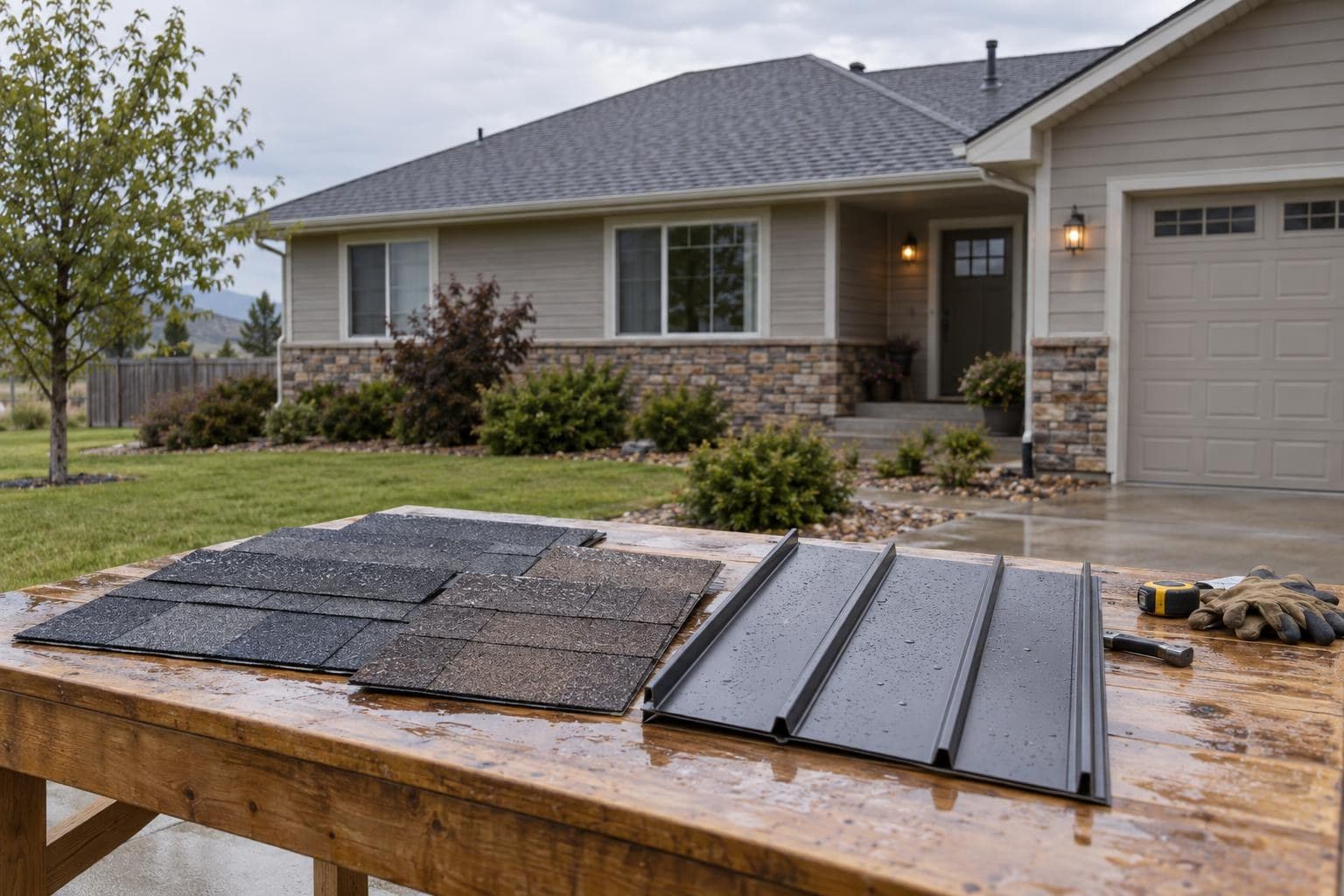
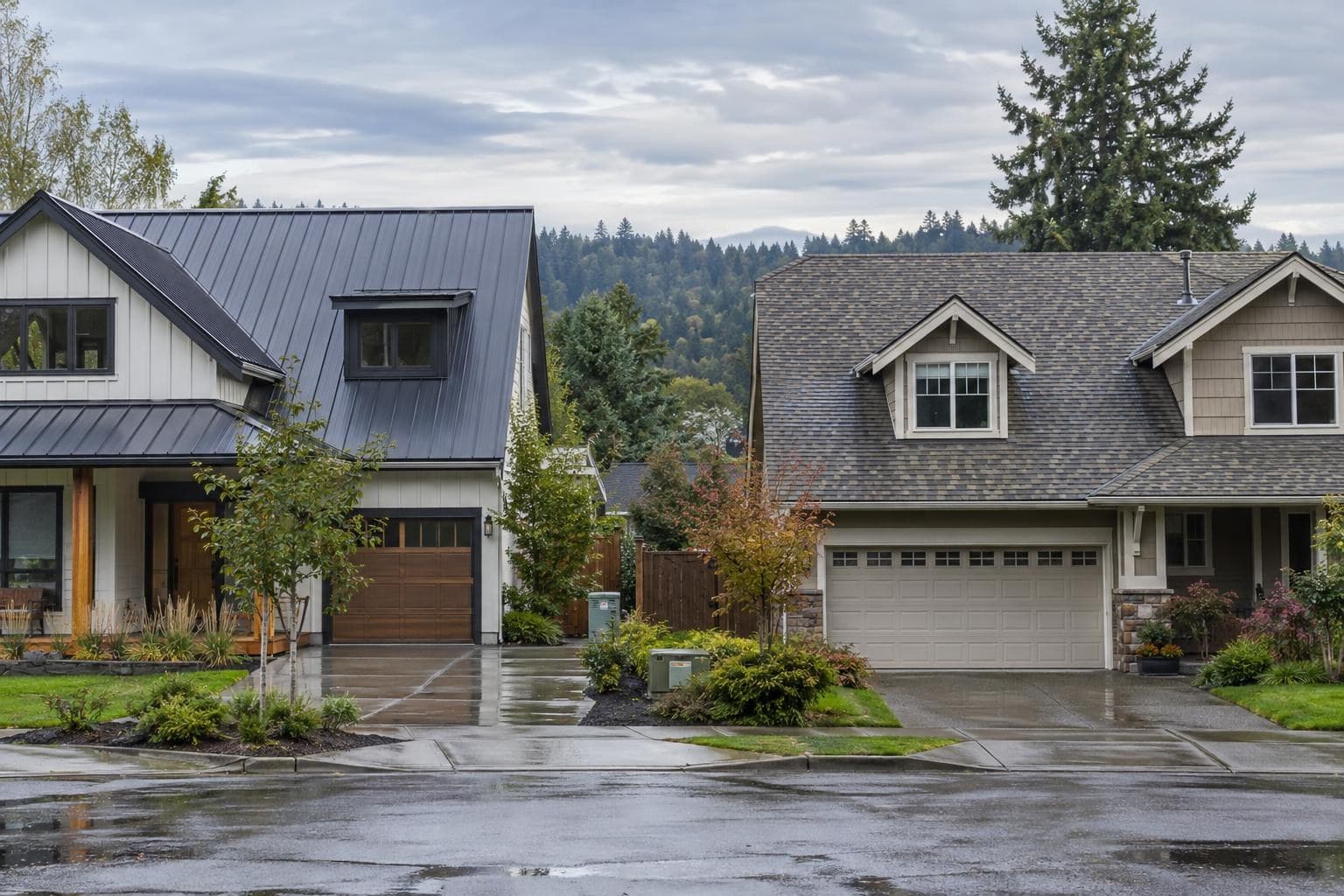
If you own a home in Washington, shingles usually win on upfront cost, while metal usually wins on long-term durability. The right choice depends on your ownership horizon. If you plan to move in a few years, a shingle roof often makes more sense. If you plan to stay long term and want fewer weather-related headaches, metal can be worth the higher buy-in.
Which roof is cheaper in Washington, metal or shingles?
Shingles are cheaper upfront by a wide margin. For current Washington planning prices related to metal vs shingle roof, use the cost guide and calculator, then compare the contractor's property-specific written scope. That means metal costs far more at the start, so if your main goal is the lowest replacement bill today, shingles are the easier fit.
What lasts longer in Washington weather, metal or shingles?
Metal usually holds up better over time in Washington because constant moisture, wind-driven rain, debris, and in some areas snow and ice, put steady stress on roofing materials. Washington roofs deal with frequent rain, damp conditions, wind-driven moisture, debris, and in some areas snow and ice. Even when damage does not look dramatic from the ground, constant moisture can shorten the life of shingles, underlayment, sealants, and roof penetrations. Moss and algae can also hold moisture against the roof surface. In higher elevations and colder parts of the state, snow load and freeze-thaw cycling can add stress around edges, valleys, and flashing details. If your roof is older or already has weak spots, Washington weather tends to turn small problems into leaks faster than you want.
Which roof is better if you plan to move soon?
Shingles usually win if you expect to sell in the near term. You spend much less upfront, you still get a fresh roof on the home, and you avoid tying up a much larger amount of cash in a roof you may not own long enough to fully benefit from. For many Washington homeowners, that points to Class 3 shingles when budget matters most, or Class 4 shingles if you want a tougher shingle and want to ask your carrier about possible insurance savings.
Talk to a roofer today
Planning ranges, scope details, and a direct path to request a roofing quote.
Which roof is better if you plan to stay for the long haul?
Metal usually wins for long-term owners who want durability and are comfortable paying more now. In Washington, ongoing damp conditions can wear on vulnerable roof components over time, and a stronger long-term system can be appealing if you want to reduce the chances that small weak spots turn into leak problems. Standing seam is the highest-cost option in the provided pricing, but it can make sense if you expect to stay put and want to invest once instead of choosing the cheapest path today.
Should you choose Class 3 shingles, Class 4 shingles, or standing seam metal?
- Choose Class 3 shingles if your top priority is the lowest upfront cost.
- Choose Class 4 shingles if you want a step up in impact resistance and you plan to ask your insurance carrier whether it offers a discount for a Class 4 rated product.
- Choose standing seam metal if you expect to own the home long term and you are willing to pay much more upfront for a more durable roofing material.
Can Class 4 shingles help with insurance in Washington?
Yes, they can in some cases, but you need to confirm the details with your carrier before you buy. For metal vs shingle roof in Washington, any insurance credit depends on the carrier, policy, address, and exact product; get the amount and documentation requirements from the insurer in writing. If you are considering impact-resistant roofing materials, ask your insurance carrier whether it offers a discount for a Class 4 rated product. Discount availability and underwriting treatment can vary by carrier, so the key step is to confirm the terms with your insurer before you buy. Your roofer can help you identify product options and documentation to discuss with the carrier.
What repair and replacement realities should you expect in Washington?
For metal vs shingle roof in Washington, treat a steep or difficult-to-access roof as a scope variable that the contractor should measure and price explicitly. Those basics matter when you compare metal and shingles. A lower-cost shingle roof can still become more expensive over time if Washington moisture leads to repeated repairs. A more expensive roof can still be the wrong choice if the upfront cost strains your budget today.
What should you know if insurance is part of the decision?
If storm damage or a leak may lead to a claim, keep control of the process. The Washington Office of the Insurance Commissioner says that as a policyholder, you are entitled to a clear explanation of what is covered, a prompt response from the insurance company, timely payments and a claim decision, and an appraisal if you disagree with the amount of your loss. The Washington Office of the Insurance Commissioner says your insurer is obligated to respond to your claim. Within 15 business days, after receiving your fully completed forms, the company should accept, deny, or advise you if it needs more time to review the claim. Within 30 days, it should complete the claim investigation if possible. If the claim investigation is not completed within 30 days, the insurer must notify you within 45 days after you file a claim and explain why it needs additional time.
You can also choose your own contractor. After covered damage is identified, you have the right to select your own contractor to complete the work on your home. Your insurance company may recommend contractors, but it is not required to provide you with a list of contractors. Be careful with assignment of benefit forms. The Washington Office of the Insurance Commissioner warns that if a contractor asks you to sign an assignment of benefit, it could affect your rights. The form could allow the contractor to negotiate, make decisions, and settle the claim directly with the insurance company without your approval. The agency says to talk to your agent or company before you sign this form.
How do you choose the right roofer in Washington?
Start by asking the roofing contractor you choose for the business name and contractor registration number, then confirm that registration through the state verification tool referenced by L&I. Make sure the business name matches the registration record, because L&I says the contractor must use the exact business name on registration documents. If insurance is involved, read every authorization before you sign it and keep control of claim decisions.
So, which roof wins for your ownership horizon?
If you want the lower upfront cost and may not stay in the home for many years, shingles usually win. If you want better long-term durability in Washington’s wet climate and plan to stay put, metal usually wins. If you want a middle path, Class 4 shingles give you a higher-cost shingle option than Class 3, and they may be worth discussing with your insurer. The smart move is to match the roof to your budget, your timeline, and how much future maintenance risk you want to carry.
Washington roofing costs
Sources reviewed
- Washington Department of Labor & Industries, Register as a Contractor
- Washington Office of the Insurance Commissioner, Filing a homeowner insurance claim
- UL Solutions: UL Solutions and IBHS Drive Trust in Residential Roofing Shingles
- Asphalt Roofing Manufacturers Association: Residential Asphalt Roofing Manual: Ventilation Best Practices
- Insurance Institute for Business & Home Safety: Natural Weathering and Hazard Exposure
Related services
Updated July 27, 2026
3D Roofs Editorial Team
Editorial Standards