Updated July 27, 2026

3D Roofs Editorial Team
Editorial Standards
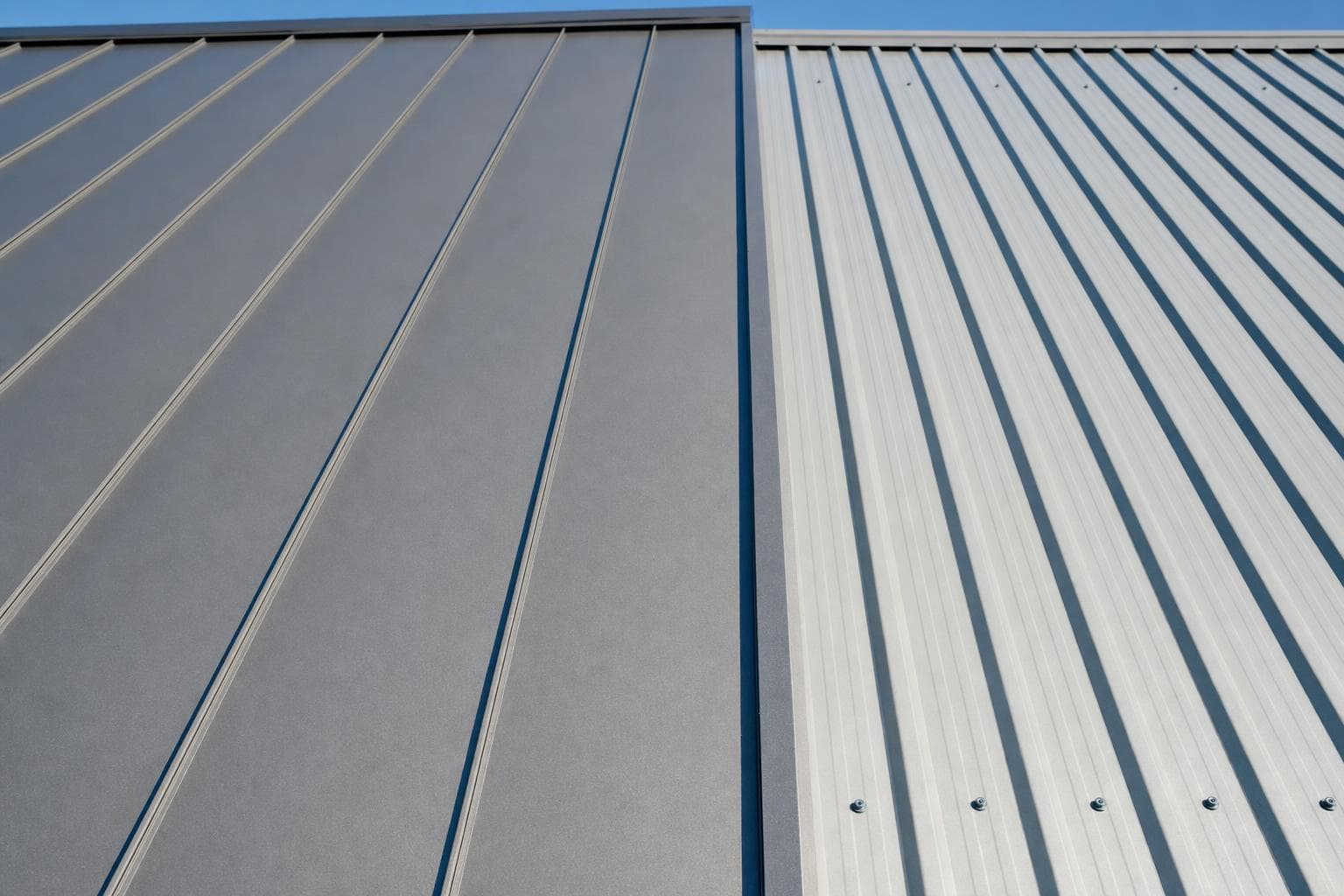
When homeowners say 'I want a metal roof,' they're usually choosing between two very different systems: R-panel (exposed fastener) and standing seam (concealed fastener). For an early budget on a roofing decision, compare the cost page with a proposal that identifies measurements, products, accessories, and exclusions. That gap buys real engineering differences. Compare the complete system details.
The fastener difference is the whole story
R-panel screws through the face of the metal into the decking or purlins, thousands of penetrations, each sealed by a rubber-washered screw. Those washers are the system's clock: UV and thermal cycling degrade them, and in 10–20 years the roof needs a re-screw or washer replacement, or it starts seeping at fasteners. Standing seam panels attach with concealed clips under the seams, zero face penetrations in the field of the roof. No washers to age, nothing for the sun to attack, nothing to back out.
Thermal movement: floating vs pinned
Metal moves, a 40-foot panel can expand and contract meaningfully through a hot day. Standing seam clips let panels float through that cycle. R-panel is pinned tight by its screws, so the movement works the fastener holes, slowly elongating them. For a roofing decision, compare product-specific warranties, maintenance requirements, local repair support, and documented assembly details instead of assuming one material will equal a fixed number of replacements.
Cost, looks, and the homes each fits
- Clean, utilitarian look. Great for simple rooflines, shops, barns, and budget-conscious homes in heat and wind country.
- Standing seam may fit long ownership plans or projects that prioritize concealed clips and fewer exposed fasteners, but geometry, coastal exposure, tested assemblies, maintenance, and installer capability still control the specification.
- Both: reflect heat far better than asphalt, shed snow and rain, and carry strong wind ratings when installed right.
Talk to a roofer today
Planning ranges, scope details, and a direct path to request a roofing quote.
Compare complete roof assemblies, not material labels
A metal-versus-shingle decision is easy to distort when one bid describes only the visible covering. The roof you buy also includes the deck, underlayment, attachment method, flashing, ventilation, penetrations, edge metal, and the plan for concealed damage. Two bids using the same material name can perform very differently when those details change. Require each contractor to name the product and assembly, then compare what is included, excluded, and allowed as an extra. For the standing-seam-versus-R-panel comparison, make the contractor connect the chosen surface material to attachment, drainage, flashing, ventilation, and future repair access on this roof.
- Match the product to the roof slope, geometry, valleys, penetrations, and any low-slope transitions.
- Ask how the assembly handles water that reaches beneath the outer covering and where that water can drain.
- Compare attachment and flashing details for the site's wind, temperature movement, and moisture exposure.
- Price future access and repairability around chimneys, skylights, solar equipment, vents, and additions.
- Review the written manufacturer and workmanship warranties separately, including exclusions and transfer terms.
- For the standing-seam-versus-R-panel comparison, add one line showing why the selected assembly fits this roof's exposure and difficult details.
Use your area exposure to break a close tie
The useful comparison starts with the roof's actual exposure, geometry, deck, attic assembly, drainage paths, and repair history rather than a national average alone. Start by eliminating assemblies that do not fit the roof's slope or exposure. Then compare the remaining choices on installed scope, maintenance access, noise and insulation expectations, local repair support, and total cost rather than showroom appearance alone. A more expensive material can still be the weaker purchase if the bid omits the details that keep water out; a less expensive system can be the better value when it is well specified and easier to maintain.
Sources
The questions that protect you either way
- 1Which profile and what gauge, exactly?
- 2What underlayment goes under the metal? (High-temp synthetic is the right answer.)
- 3How are ridge, valleys, eaves, and wall transitions detailed? Trim, closures, transitions, and edge details can become failure points when the scope does not define materials, laps, sealants, fastening, and movement.
- 4Who installs, a metal crew, or a shingle crew that occasionally does metal?
- 5On R-panel: what's the fastener service expectation, and is a re-screw priced anywhere?
- 6What's the panel finish warranty vs the workmanship warranty?
R-panel is a great roof with a maintenance schedule. Standing seam is a great roof without one.
Related reading and source material
Compare the complete assembly rather than the product label: Standing seam metal roof vs. r panel
Review slope, deck, underlayment, attachment, flashings, edges, penetrations, ventilation or unvented design, drainage, maintenance, local stock, repair access, and warranties. A surface product cannot correct an incomplete water-control path. Apply that record to the standing seam metal roof vs. r panel decision and identify which property finding or written term would change the answer.
Verify testing and warranty limits: Standing seam metal roof vs. r panel
Use the exact manufacturer and product, understand what a laboratory classification does and does not evaluate, and separate material, finish, wind, impact, algae, weathertightness, and workmanship provisions. Record registration, maintenance, labor, and transfer conditions.
Additional reviewed references
Related roofing resources
Related services
Updated July 27, 2026
3D Roofs Editorial Team
Editorial Standards