
Updated July 10, 2026

3D Roofs Editorial Team
Editorial Standards
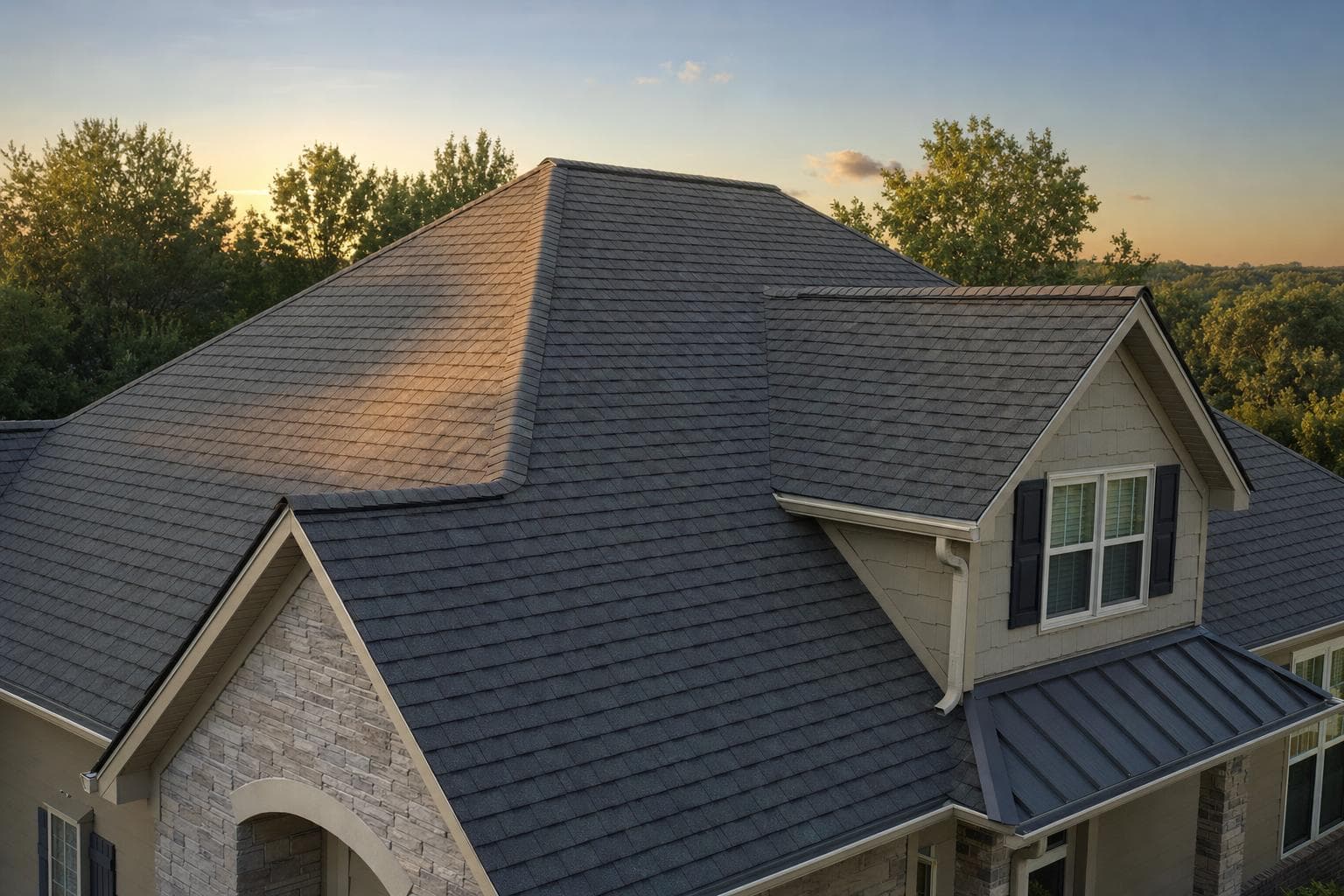
Shingle roofing in Dripping Springs should be compared as a complete system. The exact shingle, underlayment, flashing, starter, ridge, ventilation, and deck work all affect performance and price. Dripping Springs roofs face Central Texas heat, hail-prone spring storms, and the hill country and open ranch exposure typical of western Hays County. The proposal should name the exact shingle and compatible accessory system, then define deck work, underlayment, leak barriers, edges, flashing, fasteners, ventilation, concealed-work rules, and closeout records.
How to compare shingle roof systems in Dripping Springs
The shingle is only the visible layer. A fair comparison uses the same product line and includes compatible starter, ridge, underlayment, leak barriers, flashing, fasteners, ventilation, deck preparation, and installation method.
Compare the exact product
Name the shingle line, color, tested impact and wind classifications, accessory system, and warranty requirements. Broad labels such as architectural or Class 4 do not tell you which product or installation is included.
Fit the assembly to Dripping Springs
Dripping Springs roofs face Central Texas heat, hail-prone spring storms, and the hill country and open ranch exposure typical of western Hays County. The proposal should explain how underlayment, flashing, valleys, starter, ridge, ventilation, fastening, and a recommendation such as class 4 impact-resistant shingles for hail-prone dripping springs neighborhoods respond to the conditions documented on the home. Ask which details are required by the selected product and which are optional upgrades.
Keep hidden work visible in the contract
Require tear-off, deck evaluation, unit prices for concealed carpentry, permit responsibility, cleanup, product registration, and workmanship coverage in writing. Those details make two shingle prices comparable. They also establish how photographs and approvals will be handled if tear-off exposes additional damage.
What shingle roofing costs in Dripping Springs
On a 2,000 sq ft reference roof in Dripping Springs, Class 3 architectural shingles are about $12,226 and Class 4 impact-resistant shingles are about $14,295. Compare exact product lines and the complete supporting assembly before treating the difference as an upgrade price.
- Class 3 architectural shingles
- $6.00 per sq ft on a 2,000 sq ft reference roof
- $12,226
- Class 4 impact-resistant shingles
- $7.25 per sq ft on the same reference roof
- $14,295
Cost ranges are estimates developed from standardized project scopes and reviewed pricing inputs. Government labor and regional cost data are used where applicable. See our Pricing Methodology for the exact sources, calculations, and review date. Actual prices vary by property, scope, materials or equipment, location, and provider.
For a deeper breakdown, open the shingle roof cost guide. Use the Class 3 and Class 4 totals as reference-roof planning numbers. A property quote should replace those assumptions with measured area, exact product, accessory system, removal layers, pitch, access, geometry, deck and flashing work, ventilation, permits, disposal, and the written upgrade difference.
Shingle Roofing options for Dripping Springs homes
Material choice should follow the roof, the neighborhood, and the weather exposure, not just the first color someone likes. Compare the common systems, then use the swatches to narrow the conversation before a roofer prices the final scope.

Architectural asphalt category
Class-3 Shingles
Use Class 3 as a product-comparison category, then confirm the exact shingle's current impact report, wind documentation, required accessories, and written warranty.
- Confirm the impact test report
- Check wind eligibility by assembly
- Name starter and ridge products
- Read warranty requirements
Class-3 Shingles colors

Dual Black

Weatherwood

Dual Brown

Dual Grey

Dove White

Charcoal Grey

Earthtone Cedar
Final availability, warranty, color match, and installation details depend on the home, the roof structure, local requirements, and the participating roofing contractor.
What a shingle roof specification should settle in Dripping Springs
The field shingle is only the visible layer. A proposal for Dripping Springs should define the complete compatible system, show how it responds to the roof and local exposure, and control the deck or flashing work that may be found after tear-off.
Product and assembly details to compare
The proposal should account for hail damage on shingle and metal systems on dripping springs custom homes. It should also test wind damage on exposed hill country slopes. Those local conditions help prioritize features, but the exact shingle and installation details determine wind eligibility, impact classification, appearance, repairability, and warranty terms.
- Manufacturer, product line, color, impact and wind classifications, and availability
- Underlayment, specified leak barriers, starter, hip and ridge, drip edge, and fasteners
- Flashing, pipe boots, vents, valleys, walls, skylights, chimneys, and penetrations
- Deck evaluation, ventilation, tear-off, cleanup, permits, and closeout records
What the shingle label does not answer
Class 3, Class 4, architectural, designer, and warranty-tier labels do not describe the whole Dripping Springs roof. Compare the tested product, complete assembly, accessory requirements, fastening, slope, deck, ventilation, upgrade price, written exclusions, and whether matching material is likely to remain available for future repair.
- Product classification versus real-property exposure and roof geometry
- Material warranty versus contractor workmanship responsibility
- Optional upgrade cost versus maintenance, ownership, and insurer-specific eligibility
Two shingle prices are comparable only when they name the same roof measurements, removal scope, product line, accessory system, flashing, ventilation, concealed-work process, and closeout responsibility.
How Dripping Springs exposure changes a shingle roof system
Dripping Springs sits in Central Texas hail country with significant hill country wind exposure that drives material and fastener choices on custom homes.
NOAA storm reports logged 42 hail events, 27 damaging thunderstorm-wind events, and 2 tornadoes in Hays County from 2020 through 2025.
Wind classifications depend on installation details
Dripping Springs sits in Central Texas hail country with significant hill country wind exposure that drives material and fastener choices on custom homes. Review the exact shingle, starter, ridge, fastener type and pattern, deck, slope, edge details, and written installation requirements. A product label does not correct an incomplete edge, flashing, or attachment scope.
Impact classifications have limits
Class 3 and Class 4 describe results in a defined product impact test. They do not make shingles hail-proof, predict every event, or guarantee a policy credit. Compare the exact product, installed premium, full assembly, local exposure, and insurer documentation requirements.
Heat and moisture involve the attic and deck
Dripping Springs roofs face Central Texas heat, hail-prone spring storms, and the hill country and open ranch exposure typical of western Hays County. Product, orientation, ventilation, insulation, air leakage, deck condition, moisture, tree cover, and maintenance all affect field performance. The proposal should document the actual assembly instead of assigning one lifespan to every shingle in the market.
Using shingle classifications in Dripping Springs without assuming coverage
A tested shingle classification can be part of the product decision, but it does not guarantee an insurance credit or a storm outcome. Verify the exact product and documentation with the insurer. Keep any elective upgrade separated from the construction scope associated with a reported loss.
Dripping Springs hail claims should document damage across all slopes.
Hill country wind exposure may need separate documentation in claim scope.
Track storm dates carefully in active hail seasons.
What Texas rules mean before ordering shingles
Confirm permit and inspection responsibility, product approval, local wind or fire requirements, association rules, and any required documentation before ordering. The contractor should also verify slope, deck, ventilation, and accessory requirements for the selected shingle system.
Your roofer can't pay your deductible, and shouldn't offer to
In Texas it is a crime for a contractor to waive, rebate, or absorb your insurance deductible (Business and Commerce Code Sec. 27.02). Any roofing contract of $1,000 or more tied to an insurance claim has to state in writing that you are responsible for paying it. A roofer pitching a "free roof" by eating your deductible is breaking the law, so treat it as a red flag, not a deal.
The roofer doing the work can't also be your claims adjuster
Texas law (Insurance Code Sec. 4102.163) bars a contractor from acting as a public adjuster, negotiating or settling your claim, on a job they are also doing. The Texas Supreme Court upheld this in 2024. If a roofer offers to "handle the whole claim with your insurance company," that crosses a legal line.
Your insurer is on a clock
Hail and wind claims fall under Insurance Code Chapter 542A (from HB 1774). Your insurer generally has to accept or reject the claim within 15 business days of getting everything it needs to finalize the loss, with a possible extension, and a little more time after a declared catastrophe. If a weather claim ever heads to court, you have to give the insurer written notice at least 61 days first.
Choosing a shingle-roof contractor in Dripping Springs
Texas does not issue a statewide roofing license, so "licensed roofer" means little here on its own. Vet a Texas roofer on what you can actually verify: current general-liability and workers'-compensation insurance, a real local track record and references, manufacturer certifications, and a written scope that spells out tear-off, decking, underlayment, flashing, ventilation, and cleanup. Knowing the deductible and adjuster rules above is half the battle.
Class 4 shingles are worth comparing on Texas homes with meaningful hail exposure. UL 2218 Class 4 is the highest classification in that impact test, but it does not make a roof damage-proof or establish how a policy treats cosmetic damage. Ask your carrier in writing whether the exact product qualifies for a credit, which part of the premium is affected, and what documentation it requires. Texas does not set one statewide credit amount.
Sources: Texas Dept. of Insurance (roofing & insurance law) · Texas Dept. of Insurance (impact-resistant roof discounts) · Texas Windstorm Insurance Association (coverage eligibility)
Paying for your Dripping Springs roof
Financing helps Dripping Springs homeowners cover deductibles, upgrade to impact-resistant materials, or replace aging custom roof systems.
Shingle roofing questions Dripping Springs homeowners ask
How much does a shingle roof cost in Dripping Springs?+
On the 3D Roofs 2,000 sq ft reference roof, Class 3 architectural shingles are about $12,226 in Dripping Springs and Class 4 impact-resistant shingles are about $14,295. A property quote should replace those assumptions with measured area, exact product, accessory system, removal layers, pitch, access, geometry, deck and flashing work, ventilation, permits, disposal, and the written upgrade difference.
What is the difference between Class 3 and Class 4 shingles in Dripping Springs?+
Class 3 and Class 4 describe results in a defined product impact test, with Class 4 the higher classification. Neither makes a roof hail-proof or predicts every storm. Compare the exact product, complete accessory system, installed premium, local availability, warranty limitations, and insurer-specific documentation before treating the classification or a possible policy credit as part of the value.
What should a complete shingle-roof quote include in Dripping Springs?+
It should identify measured roof area, removal and disposal, deck evaluation, exact shingle line and color, underlayment, specified leak barriers, starter, hip and ridge, drip edge, flashing, pipe boots, vents, valleys, fasteners, ventilation, cleanup, permit responsibility, concealed-work pricing, completion photographs, and separate manufacturer material and contractor workmanship warranty terms.
Which shingle system fits Dripping Springs weather?+
Class 4 impact-resistant shingles for hail-prone Dripping Springs neighborhoods. Dripping Springs roofs face Central Texas heat, hail-prone spring storms, and the hill country and open ranch exposure typical of western Hays County. Treat that as a starting point. The selected product, starter, ridge, fastening, deck, underlayment, flashing, ventilation, and edge details should respond to property-specific conditions such as hail damage on shingle and metal systems on dripping springs custom homes, rather than assuming a broad marketing tier solves the local exposure.
How do attic ventilation and decking affect a shingle roof in Dripping Springs?+
Shingle performance depends on more than the visible product. Deck condition and attachment, intake and exhaust paths, insulation, air leakage, moisture, roof slope, orientation, and the manufacturer's written requirements all matter. The proposal should document the existing assembly and explain any correction instead of promising that a vent count or one accessory guarantees service life or warranty coverage.
How long should asphalt shingles last in Dripping Springs?+
There is no dependable citywide lifespan. Exact product, installation, slope, orientation, ventilation, deck condition, heat, moisture, wind, hail, tree cover, maintenance, and repairs all affect field service. Use the written warranty for its stated terms, then inspect the roof by condition and repairability rather than converting a marketing label into a guaranteed number of years.
What should I know about shingle warranties and insurance credits?+
Read the manufacturer material warranty separately from the contractor workmanship warranty, including registration, accessory or ventilation requirements, exclusions, transfer rules, claim contact, and available remedies. Any insurance credit depends on the exact product, carrier, policy, state, and documentation. Verify the annual amount directly before using a possible credit to justify an upgrade.
