Updated July 10, 2026

3D Roofs Editorial Team
Editorial Standards
The first 48 hours after a damaging storm are not a race to select shingles or sign a replacement contract. They are a controlled sequence: wait until the hazard has passed, identify immediate life-safety problems, limit additional interior loss when it is safe, preserve a clear record, notify the insurer as required, and authorize only the temporary work you understand. Permanent repair and replacement decisions can follow after the roof has been inspected and the responsibilities are in writing.
Do not begin until the weather and property are safe
Follow National Weather Service warnings and local emergency instructions. Severe thunderstorms can bring hail, damaging wind, lightning, fallen trees, flooding, broken glass, and downed lines. Stay away from the roof during the event and do not climb onto wet, steep, loose, punctured, or unfamiliar roofing afterward. A roof that looks stable from the ground can have displaced material, hidden openings, damaged decking, or unsafe debris.
- Treat every fallen or low electrical line as energized and keep people and equipment away until the utility or emergency authority clears it.
- Leave the structure and call emergency services when there is collapse, major movement, fire, gas odor, a tree through occupied space, or another immediate hazard.
- Keep people away from rooms with bulging ceilings, sagging materials, standing water near electricity, broken glass, or falling debris.
- Do not operate a breaker while standing in water or touching wet equipment; contact the utility, fire department, or a qualified electrician when electrical safety is uncertain.
Limit interior damage without creating a second hazard
If the building is safe to occupy, move people, pets, furniture, electronics, and valuables away from active drips. Use containers, absorbent materials, and floor protection where they can be placed safely. Do not puncture a ceiling bulge, enter a wet attic, pull saturated material overhead, or improvise electrical work based on a general article. Those conditions can involve stored water, weakened finishes, wiring, contaminated insulation, or unstable debris.
For an opening in the roof, contact an emergency roofing or mitigation provider. Ask what temporary system will be installed, which roof areas will be accessed, how it will be attached, how long it is intended to remain, and who will remove it. Temporary work should reduce additional entry without covering more evidence or damaging more of the roof than necessary. Photograph conditions before and after whenever it can be done safely.
Build a condition record before cleanup changes the scene
Documentation should show location and sequence, not just dramatic close-ups. Begin with the property and each building elevation, then move to specific exterior and interior observations. Record the date and approximate time of the weather and where that information came from. Weather reports establish context; they do not by themselves prove what happened to each roof component.
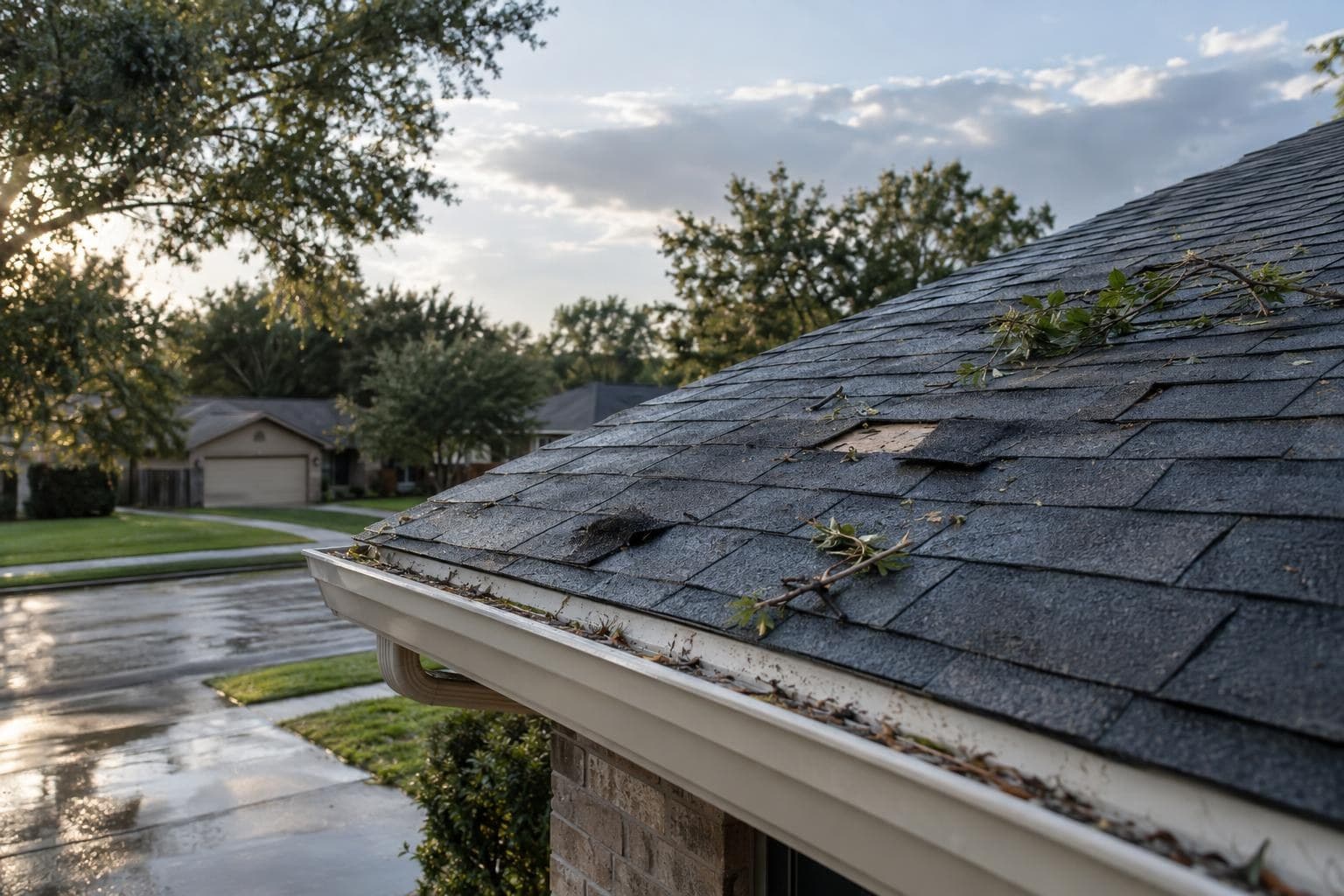
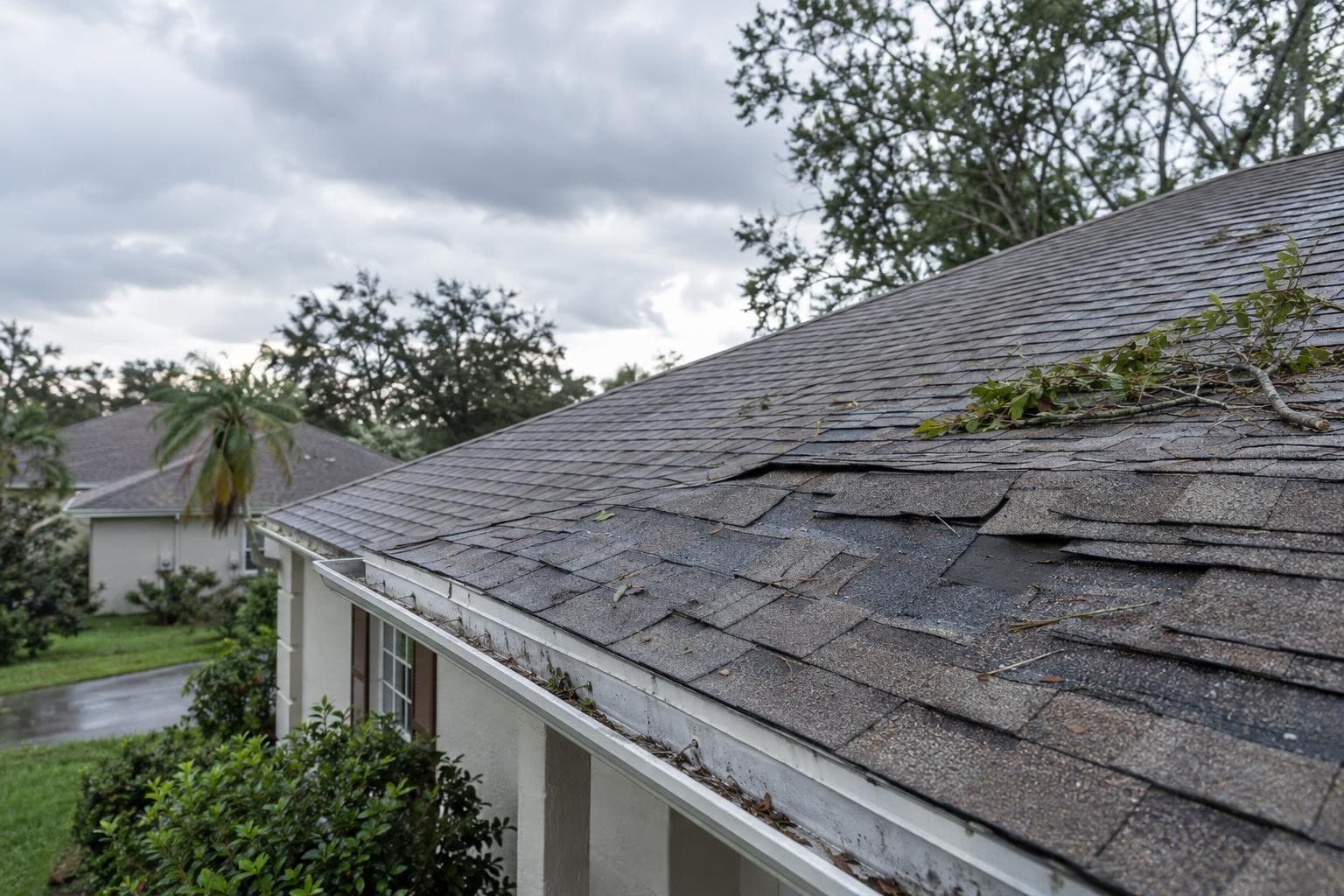
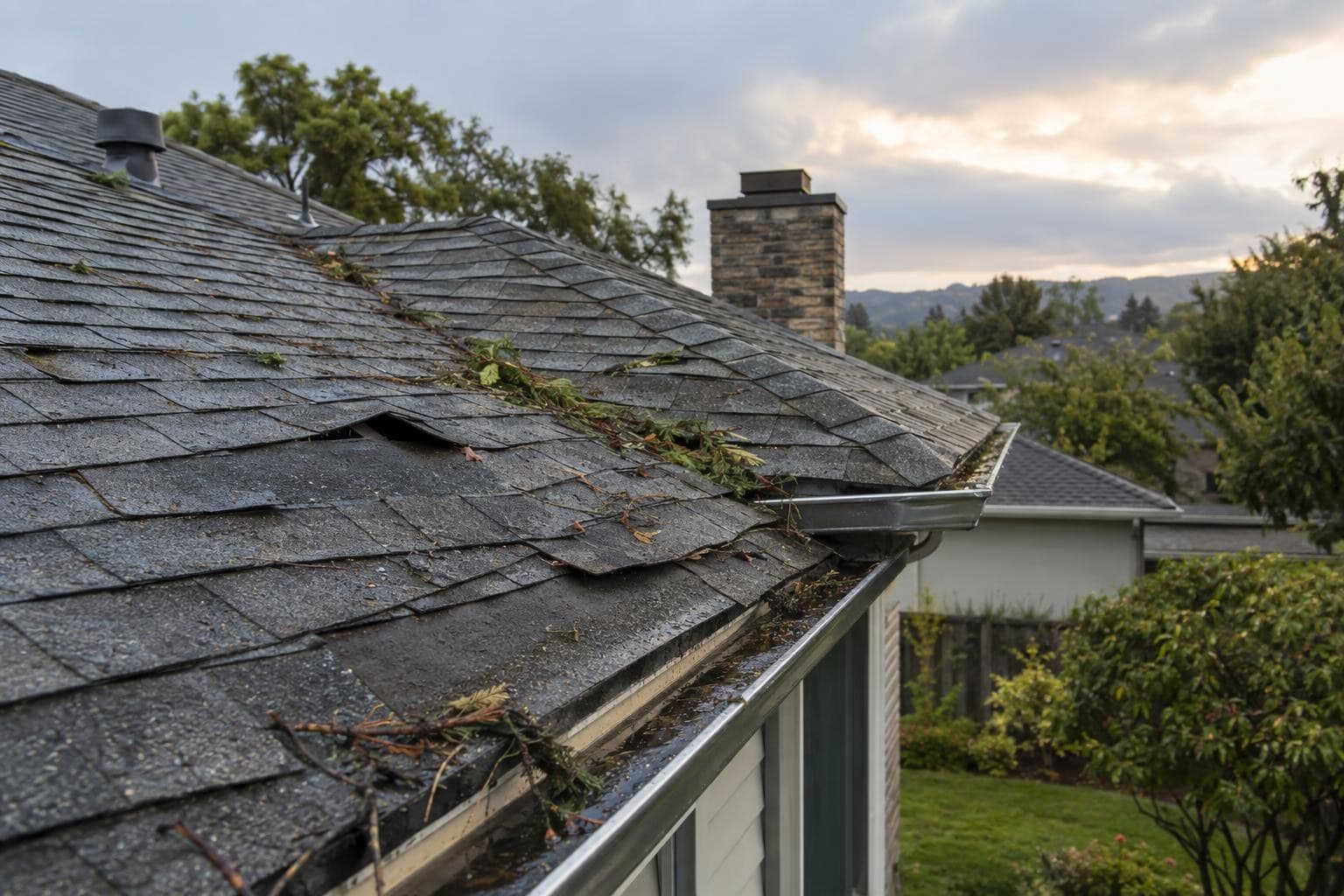
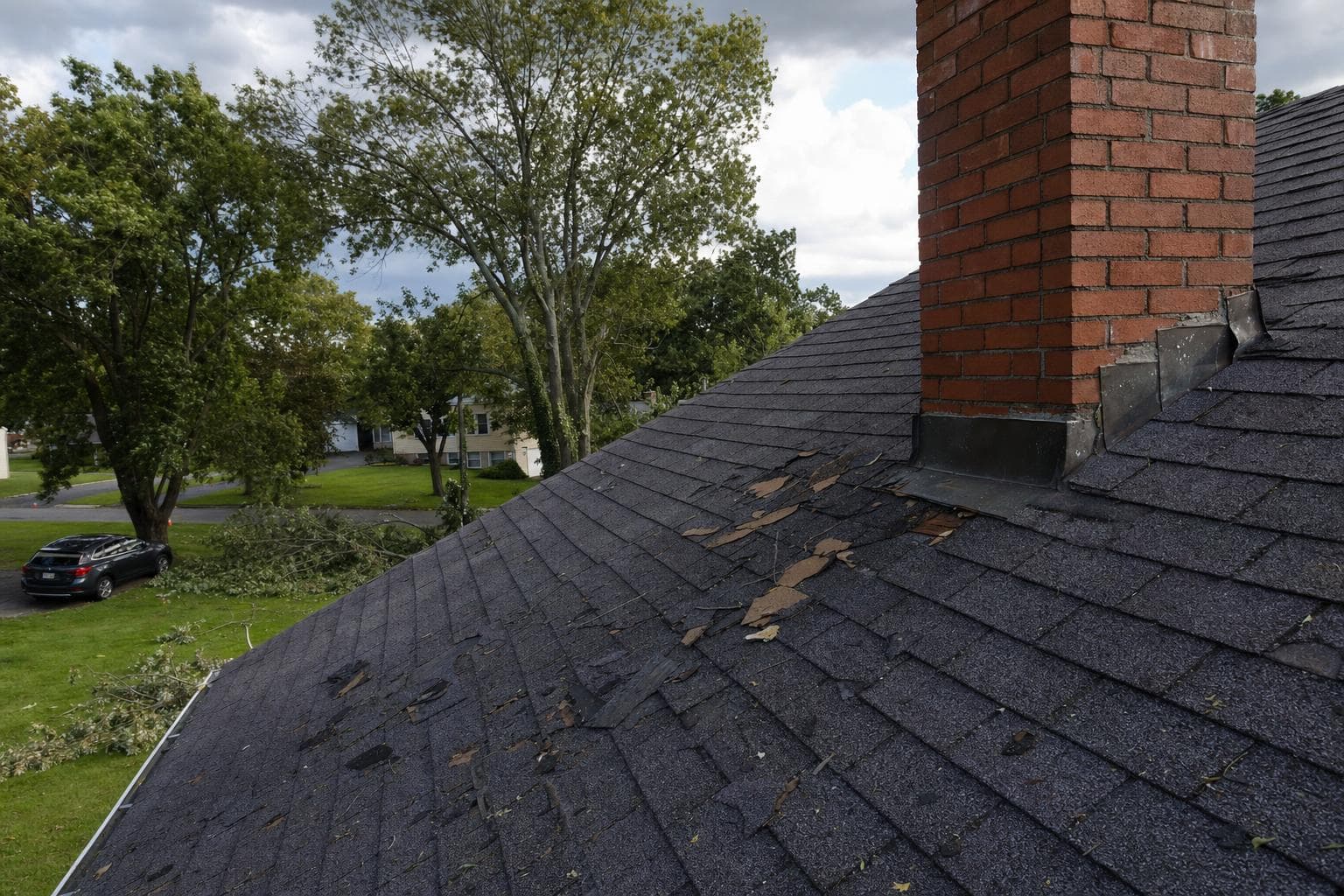
- Photograph missing or displaced material, debris, fallen branches, damaged exterior components, temporary openings, and visible roof areas from the ground.
- Photograph each affected room before moving contents, then record stains, wet finishes, flooring, belongings, and the roof area or feature above when known.
- Keep damaged material that can be stored safely, or photograph it in place with enough context to identify where it came from before disposal.
- Create a simple log for calls, visits, names, company information, commitments, claim references, temporary work, and documents received.
- Save receipts and invoices for reasonable emergency measures and related expenses without assuming that every item will be covered.
Talk to a roofer today
Planning ranges, scope details, and a direct path to request a roofing quote.
Notify the insurer and ask process questions
The NAIC advises homeowners to document damage, know the deductible, contact the insurer, and take reasonable steps to prevent further damage. Follow the notice requirements in the policy rather than waiting for a contractor to predict whether a claim is worthwhile. Ask what temporary work is permitted, what photographs or receipts are needed, whether damaged material should be retained, who will inspect, and how to submit later construction estimates.
Read the declarations and relevant endorsements for deductible, valuation, exclusions, duties after loss, and any special wind, hail, hurricane, or cosmetic provisions. The insurer should answer coverage questions and issue decisions under the policy. A roofer can document roof condition and estimate construction, but should not guarantee approval, settlement amount, or the owner's final responsibility.
Keep emergency authorization narrow
A temporary-service authorization should identify the work, price or pricing method, access, materials, photos, payment responsibility, removal, and whether later work requires a separate agreement. Read any assignment, direction-to-pay, claim-assistance, or cancellation language before signing. Do not let an emergency tarp authorization quietly become an open-ended restoration contract or permission to negotiate matters outside the contractor's role.
- Temporary protection reduces exposure while the permanent cause and scope are still being investigated.
- A permanent repair corrects a diagnosed failure and ties new work into sound surrounding material.
- Replacement addresses a broader documented condition when a smaller boundary cannot reliably restore the roof system.
- Each decision should have its own written scope, price, authorization, and explanation of what remains unresolved.
Verify contractors even when demand is high
The FTC recommends checking identification, licenses where required, insurance, references, written estimates, contracts, and payment demands after a weather-related disaster. Verify the credential required for the work at your address through the responsible government database. Confirm the legal business name and insurance independently. A local address, out-of-state plate, door knock, or large online review count is not a substitute for those checks.
Do not pay the full project amount upfront. Deposit and cancellation rules vary by jurisdiction and contract, so confirm them for the property. Slow down for guaranteed claim promises, pressure to sign before an inspection, a free-roof pitch, blank scope language, unexplained financing, or a request to sign away rights you have not reviewed. Storm demand can affect scheduling; it does not make a vague contract safer.
Require an inspection organized by roof area
A useful inspection identifies roof materials, areas, edges, flashing, penetrations, drainage, accessories, attachment, prior repairs, and relevant interior or attic evidence. Findings should be located on photographs or a diagram and should distinguish storm-related evidence from installation defects, long-term weathering, and uncertain conditions. Ground-level dents or a weather report can support event context without establishing that the roof covering failed.
- 1Name the observed physical condition and the component where it appears.
- 2Explain why the proposed cause fits and what alternative causes were considered.
- 3State whether the finding affects water shedding, attachment, serviceability, appearance, or another function.
- 4Describe the smallest durable work boundary and whether surrounding material can accept the tie-in.
- 5List inaccessible areas, uncertainty, temporary needs, maintenance items, and findings that require further investigation.
Use the second day to organize, not to rush
By the end of the first two days, the goal is a safe property, reasonable temporary protection, a dated evidence file, an insurer contact, and scheduled inspections. It is normal for the permanent scope, coverage decision, material choice, and final price to remain open. Compare complete written proposals once the cause and work boundary are understood, and keep every revision tied to photographs, measurements, or newly exposed conditions.
The first 48 hours are for protecting people, limiting further loss, and preserving facts. A permanent roof decision deserves more evidence than a storm deadline or a door-step promise.
Sources
- National Weather Service: Severe Thunderstorm Safety
- National Association of Insurance Commissioners: What You Need to Know When Filing a Homeowners Claim
- Federal Trade Commission: Four Ways to Avoid Scams After a Weather-Related Disaster
- Insurance Institute for Business & Home Safety: Natural Weathering and Hazard Exposure
Related roofing resources
Updated July 10, 2026
3D Roofs Editorial Team
Editorial Standards