Updated July 27, 2026

3D Roofs Editorial Team
Editorial Standards
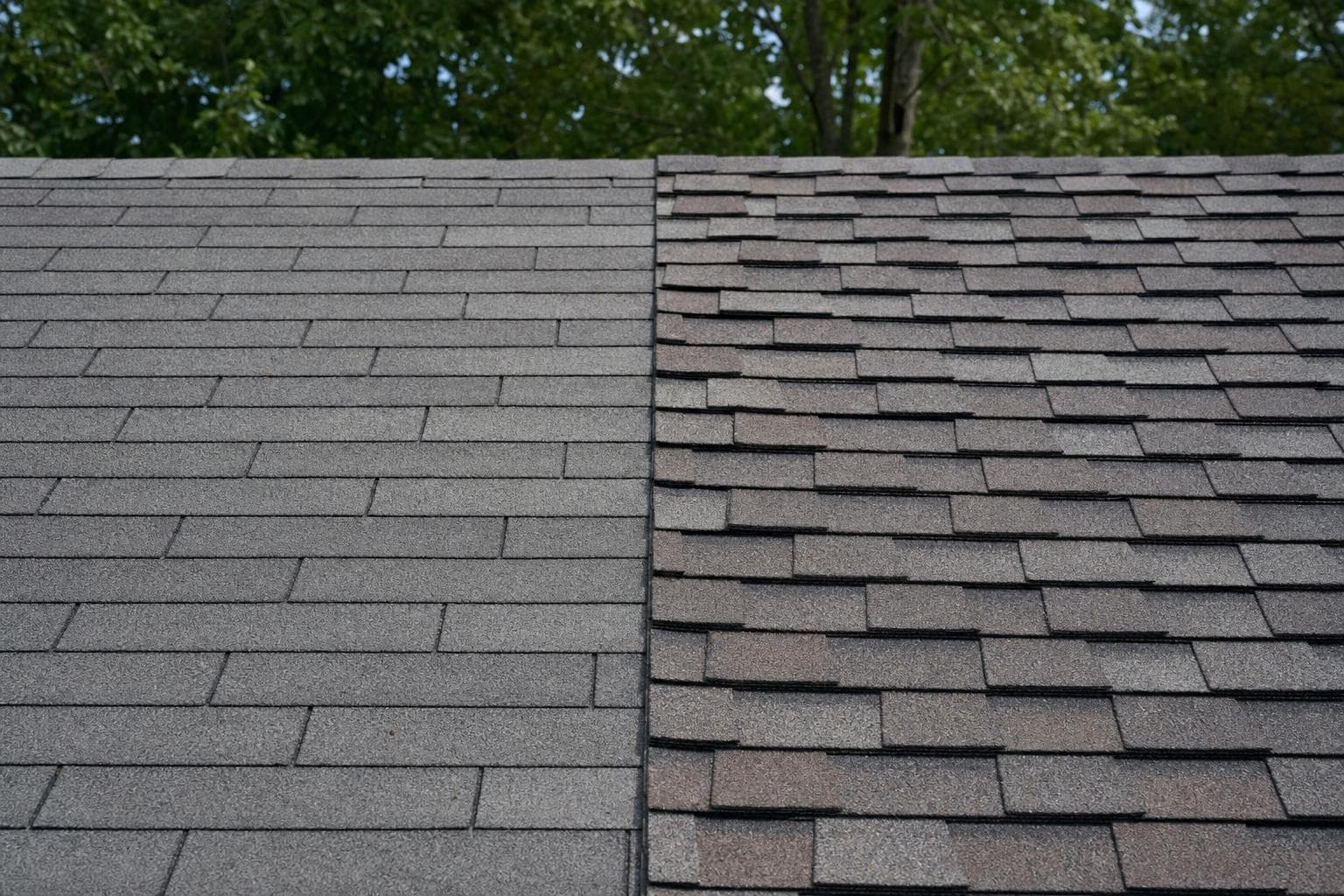
Walk any neighborhood built before the 2000s and you'll see 3-tab shingles, flat, uniform, single-layer asphalt with the classic cutout pattern. Architectural shingles are widely offered for residential replacement, while three-tab availability and use vary. Confirm current products and lead times in the local market. That shift isn't marketing; it's physics and economics. Three-tab may remain available for particular budgets, matching needs, specifications, or accessory uses. Compare exact products instead of treating either family as automatically correct.
The construction difference
A 3-tab shingle is one layer of asphalt-coated mat with cutouts creating the tab look, light, flat, and uniform. An architectural shingle laminates two or more layers, creating a thicker, heavier shingle with a dimensional shadow-line profile. Product construction, mass, seal design, reinforcement, fastening, deck, starter, edges, ventilation, and installation all affect performance. Compare manufacturer documentation for the exact line.
Where the gap shows
- Wind: ratings and required fastening vary by exact product and installation method. Verify the current manufacturer report, local design requirements, deck, starter, edge, and warranty instructions. One thunderstorm outflow makes the case.
- Lifespan: 3-tab runs 15–20 real-world years; architectural runs 25–30, and ages more gracefully.
- Warranty: 3-tab carries short prorated terms; architectural lines carry 'lifetime' (typically 50-year prorated) coverage.
- Looks and resale: dimensional profiles read as a newer, higher-value roof, appraisers and buyers both notice.
- Impact options: Class 4 hail-rated products live almost entirely in architectural lines.
The honest case for 3-tab
Price per square is genuinely lower, and on the right project that matters: a rental being held short-term, a shed or detached garage, matching an existing 3-tab roof after partial damage, or any roof with a planned demolition date. Some HOAs in older communities even require the flat profile for consistency. If the roof needs to last past a decade on a home you care about, though, architectural shingles may offer better long-term value, but actual service life still depends on the product, assembly, exposure, and maintenance.
Talk to a roofer today
Planning ranges, scope details, and a direct path to request a roofing quote.
Same roof, different math
Labor, underlayment, flashing, and tear-off cost the same regardless of which shingle goes down, the shingle itself is a minority of the project. Saving a few hundred dollars per square on material while paying full price for everything else, then doing it all again 8–10 years sooner, is how 3-tab ends up the expensive option on primary homes. Run the per-year cost, not the per-square cost.
Compare complete roof assemblies, not material labels
A metal-versus-shingle decision is easy to distort when one bid describes only the visible covering. The roof you buy also includes the deck, underlayment, attachment method, flashing, ventilation, penetrations, edge metal, and the plan for concealed damage. Two bids using the same material name can perform very differently when those details change. Require each contractor to name the product and assembly, then compare what is included, excluded, and allowed as an extra. For the architectural-versus-3-tab comparison, make the contractor connect the chosen surface material to attachment, drainage, flashing, ventilation, and future repair access on this roof.
- Match the product to the roof slope, geometry, valleys, penetrations, and any low-slope transitions.
- Ask how the assembly handles water that reaches beneath the outer covering and where that water can drain.
- Compare attachment and flashing details for the site's wind, temperature movement, and moisture exposure.
- Price future access and repairability around chimneys, skylights, solar equipment, vents, and additions.
- Review the written manufacturer and workmanship warranties separately, including exclusions and transfer terms.
- For the architectural-versus-3-tab comparison, add one line showing why the selected assembly fits this roof's exposure and difficult details.
Use your area exposure to break a close tie
Compare architectural and 3-tab shingles as complete installed systems. Require the exact field shingle, starter, hip-and-ridge product, underlayment, flashing, ventilation, edge metal, fastener pattern, and wind-rating instructions on both bids. Ask whether the roof's slope, valleys, penetrations, and exposure create a reason to prefer one product, and verify that matching repair material is available locally. The useful difference is not appearance alone; it is how each specified assembly fits the roof, the budget, future repairs, and the written warranties.
Sources
3-tab is cheaper per square. Architectural is cheaper per year. Pick the math that matches how long you're staying.
Related reading and source material
Compare the complete assembly rather than the product label: Architectural shingles vs. 3 tab
Review slope, deck, underlayment, attachment, flashings, edges, penetrations, ventilation or unvented design, drainage, maintenance, local stock, repair access, and warranties. A surface product cannot correct an incomplete water-control path. Apply that record to the architectural shingles vs. 3 tab decision and identify which property finding or written term would change the answer.
Additional reviewed references
Related roofing resources
Related services
Updated July 27, 2026
3D Roofs Editorial Team
Editorial Standards