Updated July 27, 2026

3D Roofs Editorial Team
Editorial Standards
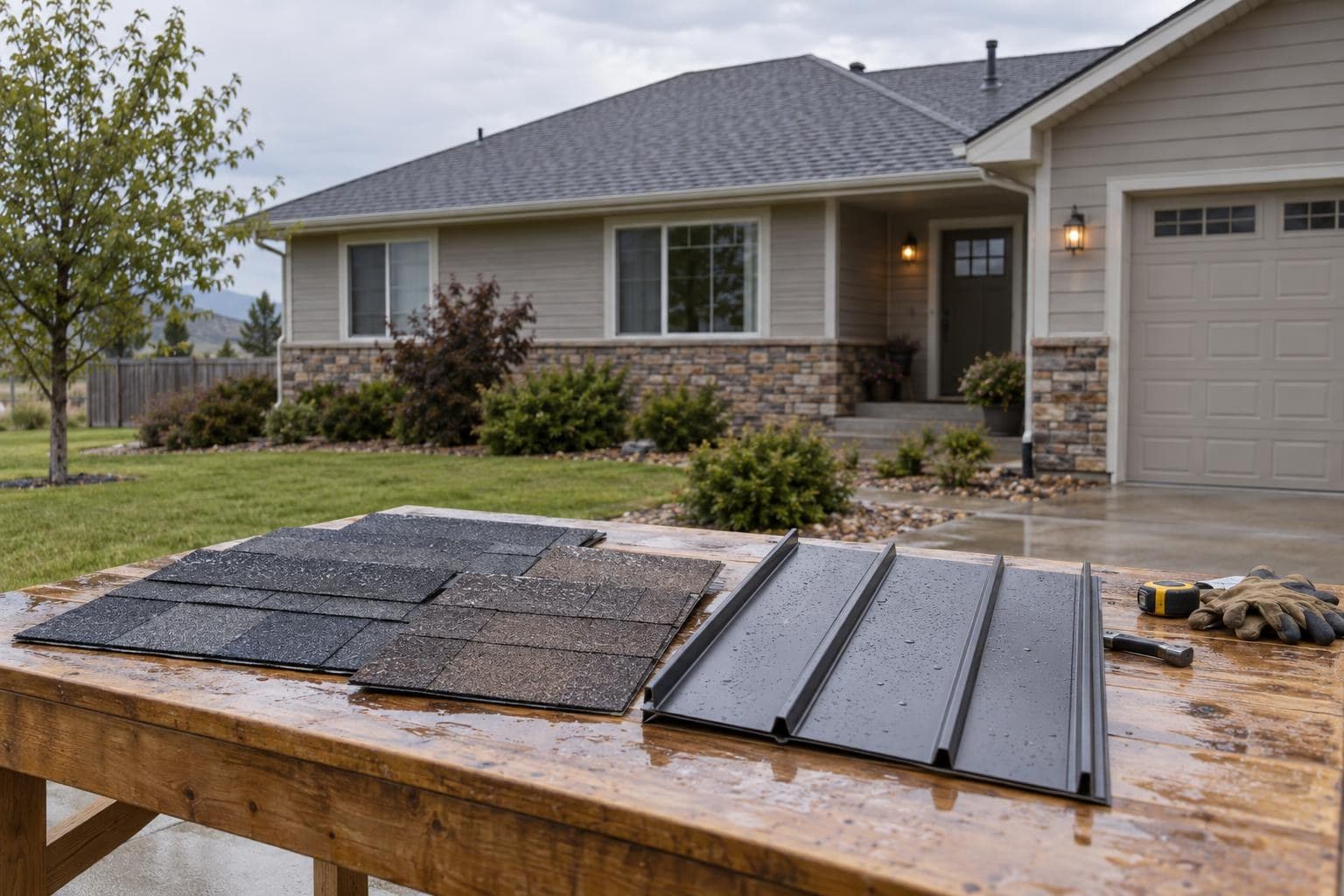
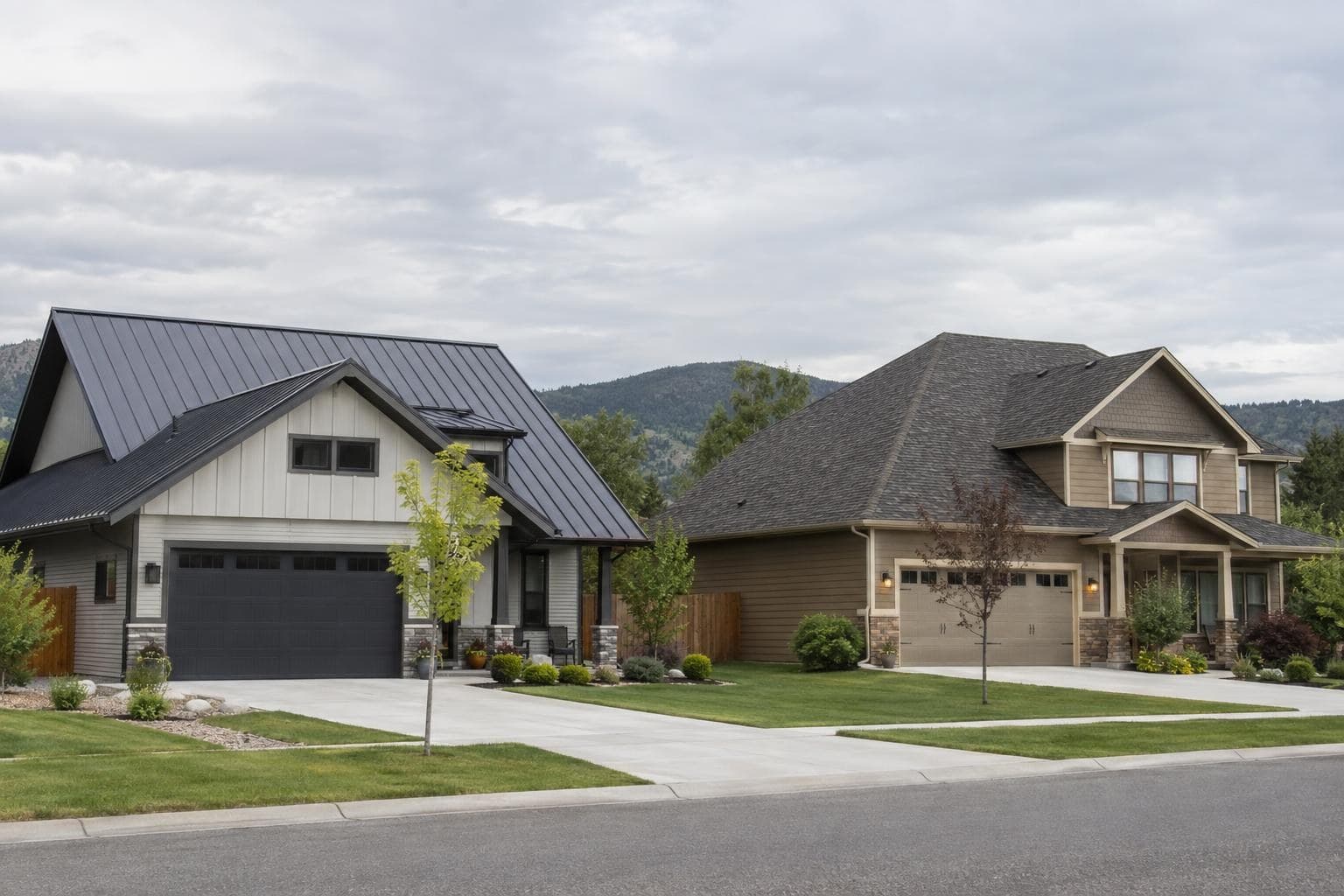
If you are deciding between a metal roof and asphalt shingles in Montana, shingles usually win on upfront cost, and metal can win on long-term ownership if you plan to stay put and want fewer replacement cycles. For a metal-versus-shingle comparison in Montana, start with current Montana cost data, then test the planning range against a measured proposal that names the complete roof assembly. That puts metal at roughly double the cost of Class 4 shingles on a typical roof, so your timeline matters more than anything else.
Compare measured metal and shingle scopes in Montana
Shingles are cheaper in Montana, by a wide margin. If your main goal is to replace a roof at the lowest reasonable upfront cost, asphalt shingles are the clear winner. For a metal-versus-shingle comparison in Montana, steep or complex areas should be priced from measured geometry, safety setup, staging, labor, and material handling rather than a flat surcharge. For many homeowners, that means metal is not really a direct apples-to-apples budget option, it is a longer-horizon investment decision.
When lower initial disruption matters to the owner
If you expect to move in the near to mid term, shingles usually make more sense. The reason is simple: you pay far less upfront, and you may not stay in the house long enough to fully benefit from metal's longer service life. In that shorter ownership window, Class 3 is the budget play, while Class 4 can be the smarter upgrade if you want better impact resistance and may be able to qualify for an insurance discount. For a metal-versus-shingle comparison in Montana, treat any impact-resistant roof credit as unconfirmed until the insurer identifies the eligible product, required documentation, premium portion, and amount in writing.
Build the final Montana decision from two complete scopes
If you plan to stay in your home for a long time, metal gets more attractive. The upfront price is much higher, but the value case is about avoiding another full replacement as soon. That said, not every long-term owner should jump to metal. If the extra upfront cost would strain your budget, a Class 4 shingle roof can be a strong middle ground in Montana. You spend much less than standing seam metal, you still get a roof built for impact resistance, and you may also lower part of your insurance cost depending on your carrier.
Talk to a roofer today
Planning ranges, scope details, and a direct path to request a roofing quote.
How does Montana weather change the metal vs. shingle decision?
Montana weather pushes many homeowners toward durability-minded choices. your roof in Montana can be exposed to hail, wind-driven rain, and fast-moving storms. Hail is a standout risk in the state guidance, and even when damage looks minor from the ground, it can leave bruising, punctures, lifted roofing materials, and openings that let water in later. That is why many homeowners compare Class 4 shingles against metal, not just basic shingles against metal. If hail risk is top of mind, Class 4 often gives you a more affordable way to improve impact performance without jumping all the way to the price of standing seam.
Where impact-rated shingles fit between the two systems
For many Montana homeowners, yes, Class 4 shingles are the sweet spot. They cost more than Class 3, but far less than standing seam metal. That makes Class 4 the option many owners should look at first when they want a practical balance of price and storm-readiness. It is not automatically the right choice for every home, but it often fits the real-world budget better than metal.
What should you do after hail or storm damage in Montana?
Start by documenting the damage, protecting the home from further damage, and contacting your insurance company before you let anyone rush you into a contract. Montana's insurance regulator says you should take photos and document damage before you begin to clean up or repair. It also says you should take steps to prevent further destruction of the property, including covering broken windows and holes in roofs and placing coverings over areas that could get water or wind damage. State guidance also says you should contact your insurance company and get the claims process started, then review your policy to understand your deductible, what is and is not covered, and your responsibilities.
How do you avoid overpaying or getting pressured after a storm?
The best move is to slow down and insist on written details. Montana warns homeowners about high-pressure sales tactics, "storm chasers," and unsolicited offers from contractors. The guidance says not to feel rushed to sign a repair contract, to get multiple bids, to check references, and to choose a contractor who will work with you and your insurance adjuster to assess damage and repair costs. State guidance also says to always get written bids before authorizing work to begin, get a written contract, and never pay in full for work before it is completed. It also says to pay with a check or credit card, never cash, and not to pay for work that has not yet been completed.
- Get photos and notes before cleanup or repairs
- Use temporary protection to stop more water intrusion
- Start the claim with your insurer and review your policy
- Get multiple written bids
- Use a written contract with scope, materials, timing, and payment terms
- Do not pay in full before the work is completed
What about repairs, timing, and local pricing?
For a metal-versus-shingle comparison in Montana, require the written schedule to account for roof geometry, access, weather protection, material handling, inspections, and possible deck work. Those numbers help when you are deciding whether to patch, replace with shingles, or make the jump to metal. For a broader look at material and project costs, check the Montana cost page. If you want to compare your home size and roof shape, use the calculator for a more tailored estimate based on current planning prices.
Build the final Montana decision from two complete scopes: 9
Choose shingles if you want the lower upfront cost, especially if you may move sooner. Choose Class 4 shingles if you want the strongest balance of price and storm-focused value. Choose standing seam metal if you expect to stay for years, can handle the much higher upfront cost, and want to invest for the long haul. For many homeowners in Montana, the real decision is not basic shingles versus metal. It is Class 4 shingles versus metal. That is the comparison that usually gives you the clearest answer for your budget, your risk tolerance, and how long you plan to keep the home.
Sources
Reviewed technical references for Montana
Related Montana roofing guides
Related services
Updated July 27, 2026
3D Roofs Editorial Team
Editorial Standards