Updated July 27, 2026

3D Roofs Editorial Team
Editorial Standards
If you are choosing between metal and shingles in Nevada, shingles usually win on lower upfront cost, while metal usually wins on long-term durability and lower replacement frequency. Your best pick depends on how long you plan to own the home, how much you want to spend now, and whether you want the lowest entry price or the longest runway before another roof decision.
Is metal or shingle roofing better for Nevada homes?
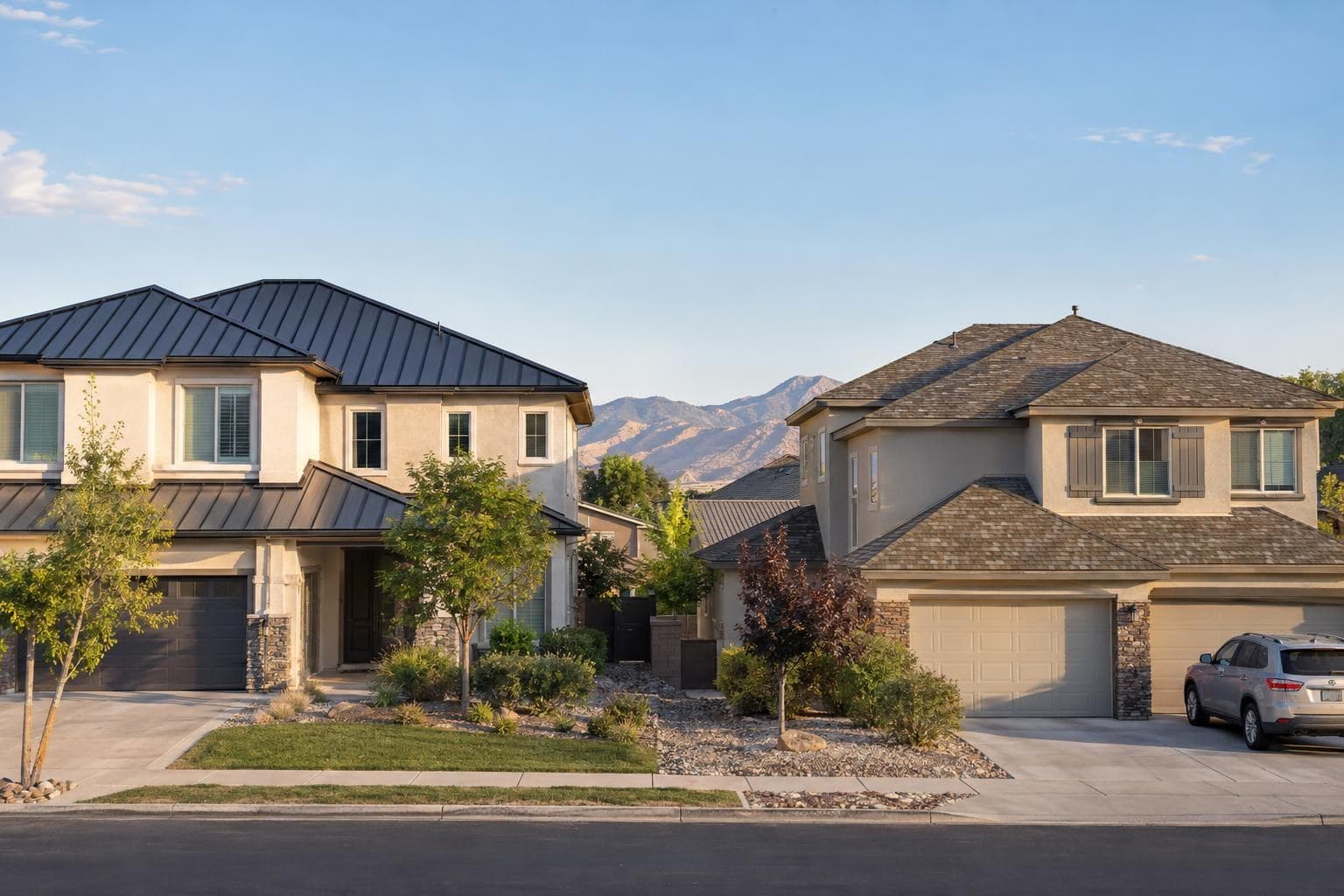
For most Nevada homeowners, both can work, but they solve different problems. Nevada roofs take a steady beating from intense sun, dry heat, and wind. Over time, UV exposure can age shingles, dry out roofing components, and wear down sealants. Wind can lift edges, move tiles, and turn small roof weaknesses into leaks. In that setting, metal appeals to owners who want a tougher long-term material, while shingles appeal to owners who want a more affordable replacement now and a familiar look that fits most neighborhoods.
Compare measured metal and shingle scopes in Nevada
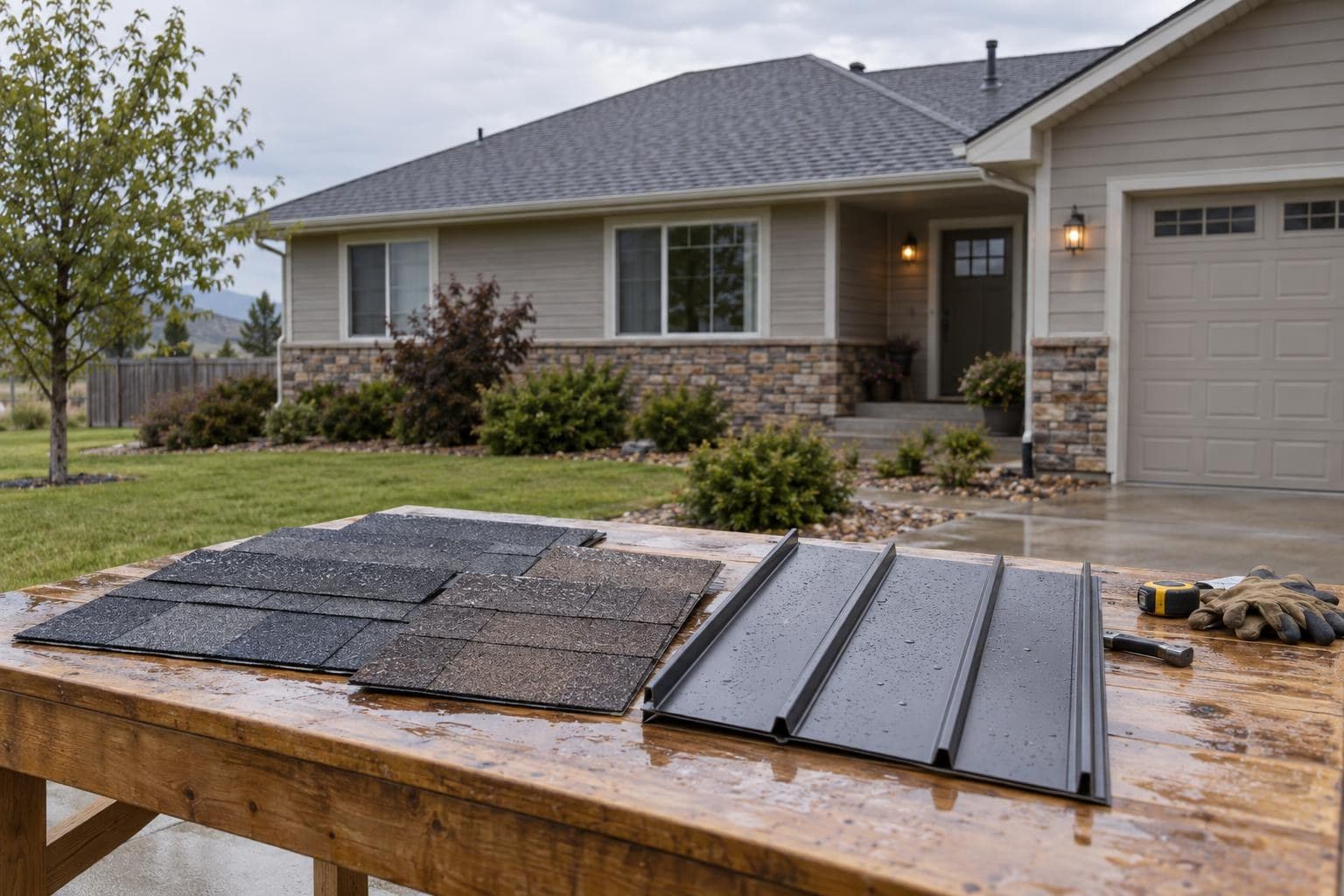
The direct answer is that metal costs much more upfront. Check current Nevada cost data for a metal-versus-shingle comparison in Nevada, then replace the range with an assembly-specific proposal based on measured conditions. That means standing seam metal is a major jump over either shingle option, so the case for metal usually depends on your ownership horizon and how much value you place on durability, appearance, and fewer future replacement cycles.
When lower initial disruption matters to the owner
If you expect to move in the next several years, shingles usually give you the better value. The reason is simple: you avoid the much higher upfront cost of standing seam metal, and you still get a complete new roof that protects the home. For a shorter ownership horizon, many homeowners care more about controlling immediate project cost than paying extra now for benefits they may not use for decades. In that case, Class 3 is the budget-first choice, and Class 4 is the step-up option if you want stronger impact resistance and want to ask your carrier about possible premium savings.
Talk to a roofer today
Planning ranges, scope details, and a direct path to request a roofing quote.
When a serviceable metal system may fit the ownership plan
If this is your long-term home, metal becomes easier to justify. The main reason is not that it is cheap, because it is not, but that long-term owners often care more about durability, lower replacement frequency, and peace of mind than the lowest day-one price. In Nevada, with constant sun, dry heat, and wind exposure, that can matter. A homeowner planning to stay put may decide that paying more now is worth it to avoid another major roof replacement decision later.
Where impact-rated shingles fit between the two systems
- Pick Class 3 shingles when the lowest upfront installed price is the priority, then verify the current Nevada rate and complete assembly on the cost guide and measured proposal.
- Pick Class 4 shingles if you want a middle ground between entry price and upgraded impact resistance.
- Pick standing seam metal if you are comfortable with a much higher upfront investment and you are focused on long-term ownership, durability, and a different look.
There is also an insurance angle for Class 4. A Class 4 rating does not establish a policy credit in Nevada; the carrier and policy determine eligibility, documentation, and savings. That does not make the roof free, and savings vary by carrier, but it is one reason some Nevada homeowners see Class 4 as the most balanced choice. The state context also says that if you are considering a Class 4 impact-resistant roof, ask your carrier whether it offers a homeowners insurance discount for that upgrade. Discounts are set by each carrier, and the state guidance does not give a Nevada-specific discount amount. a roofer whose credentials and written scope you checked can help you compare roof options, but your insurer decides eligibility and savings.
How do repairs and replacement timing compare?
For either material, minor to moderate roof issues are often cheaper to address than waiting. Before approving a metal-versus-shingle comparison in Nevada, have the bidder connect timing to roof complexity, crew access, material handling, weather, inspections, and concealed conditions. Have each bidder explain how pitch and roof complexity change crew setup, production, and measured price for a metal-versus-shingle comparison in Nevada. For a homeowner deciding between investing in repairs or replacing now, those numbers help frame the conversation. If your current roof is aging and you already know you will replace it soon, putting repair money into an older system may not be the best use of cash. If the problem is isolated and the roof still has solid life left, repair can buy you time.
What should you do after wind or storm damage in Nevada?
The answer is to document fast, protect the home, and avoid signing anything too soon. For metal vs shingle roof in Nevada, coverage depends on the policy language, cause of loss, exclusions, and the insurer's decision; verify those terms in your own documents. If you believe you have a claim, you should review your policy and immediately contact your agent to file and discuss the details of your claim. After damage, you should immediately report your claim to your insurance company or your local agent.
- Prevent further damage and keep records. Nevada says a policy provision requires that you prevent further damage or theft. You should make temporary repairs or arrange for a licensed professional to do so, save all receipts for your repairs, take photos of the damage, and keep records of expenses and receipts if you need other lodging. State guidance also says not to dispose of property until an insurance adjuster has reviewed it for your claim.
- Expect an adjuster visit at no cost. Nevada says your insurance company will send an insurance adjuster to survey the damage at no cost to you. State guidance also says you should not feel rushed or pushed to agree on a settlement.
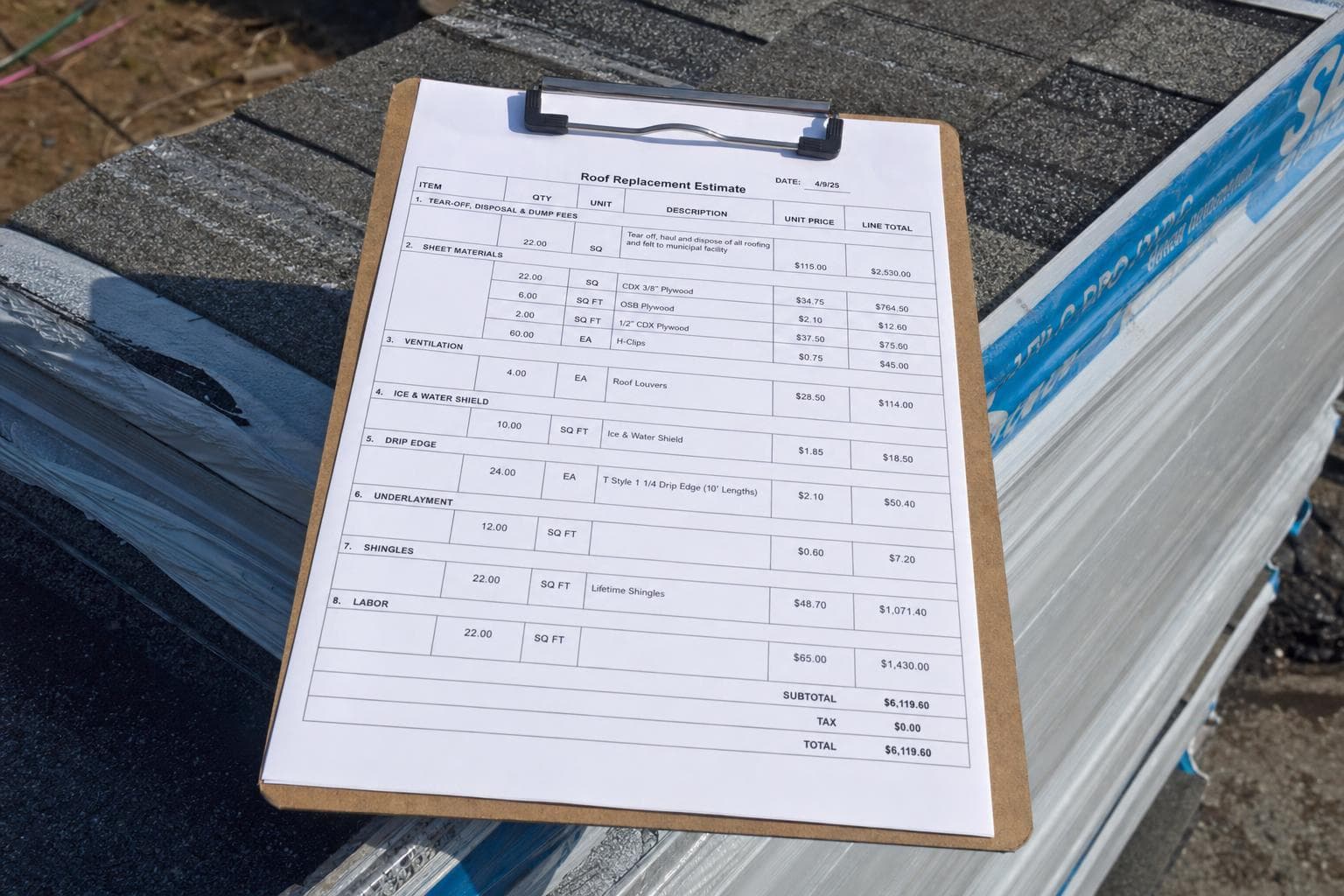
- Do not sign repair contracts before the adjuster examines the damage. Nevada consumer guidance says to always insist on a written estimate before repairs begin and do not sign any contracts before the adjuster has examined the damage. It also says not to pay a contractor the full amount up front or sign over your insurance settlement payment.
How do you choose the right roofer in Nevada?
The direct answer is to check the license details yourself and match the work to the proper classification. In Nevada, contractor licensing is a real consumer-protection issue. State guidance says all businesses or individuals who construct or alter any building or other structure in Nevada must be licensed by the Nevada State Contractors Board, and contractors, including subcontractors and specialty contractors, must be licensed before submitting bids. State guidance also says roofing and siding fall under Classification C-15. For you, that means you should check your roofer’s license status, confirm the work matches the license classification, and review disciplinary history using the state’s license and disciplinary search tools.
Build the final Nevada decision from two complete scopes
If you want the clearest answer, here it is: Class 3 shingles win for the lowest upfront cost, Class 4 shingles win for many homeowners who want a stronger middle-ground option, and standing seam metal wins for owners planning to stay long term and willing to pay much more now for a longer-view investment. In Nevada, the climate pushes every roof hard, so your decision should be less about hype and more about timeline. If you want the most affordable way to replace your roof now, shingles are hard to beat. If you want a more premium long-term play and the higher price fits your budget, metal deserves a serious look. Before you decide, compare your home’s numbers on the Nevada cost page and the calculator, then talk through the options with a local roofer you have vetted.
Sources
Reviewed technical references for Nevada
Related Nevada roofing guides
Related services
Updated July 27, 2026
3D Roofs Editorial Team
Editorial Standards