Updated July 10, 2026

3D Roofs Editorial Team
Editorial Standards
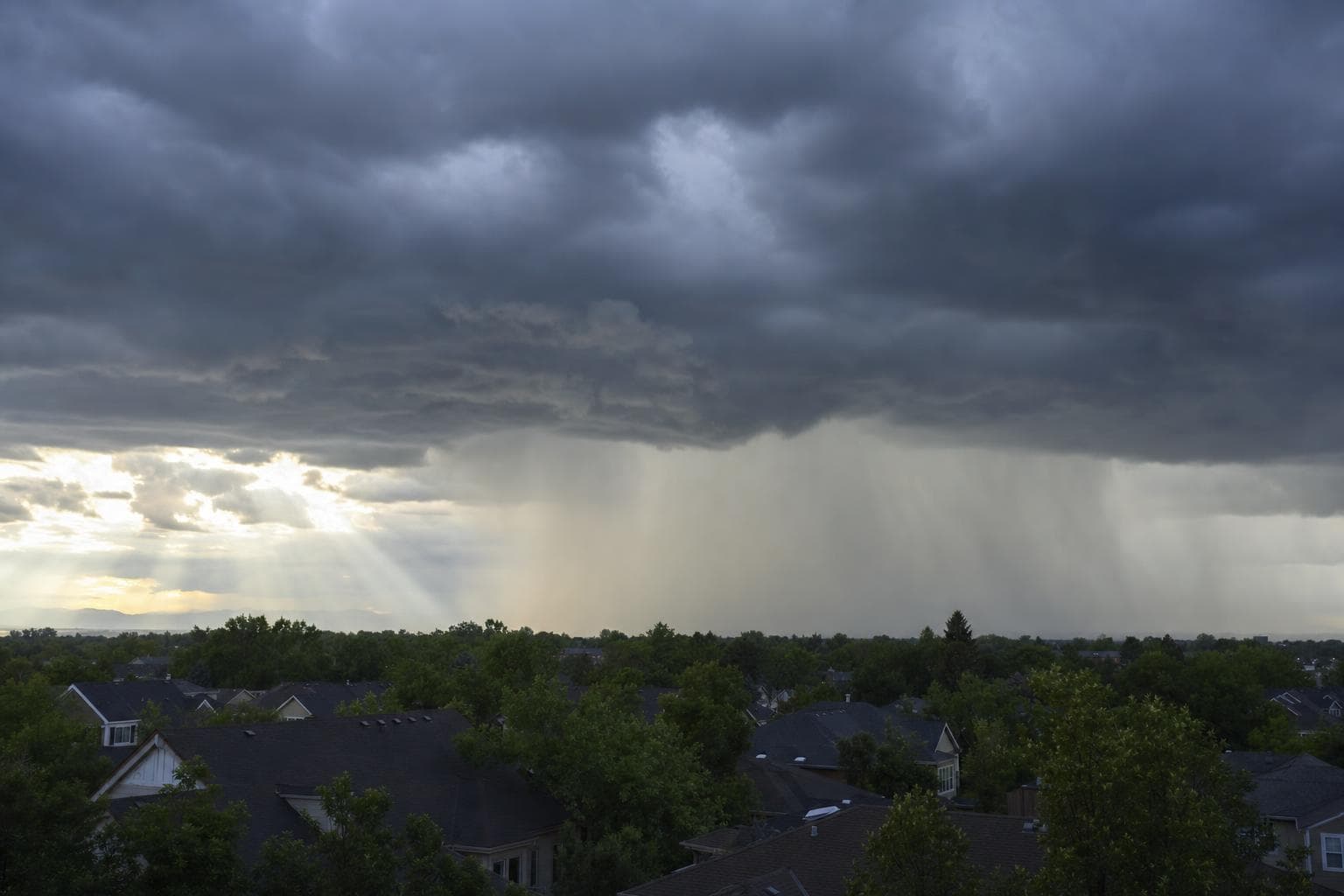
A regional label is useful for preparedness, but it does not diagnose a roof. The same property can face hail, straight-line wind, driven rain, freeze-thaw, tree debris, heat, and earlier installation defects in one year. A storm report establishes context; the roof still has to be inspected by area, component, and material response. Start with the hazards that actually reached the address, then ask what changed and whether that change affects water shedding, attachment, serviceability, or repairability.
Use regional risk to plan, not to preselect the conclusion
National and local weather information can help identify event timing, warning history, wind direction, hail reports, snow, and temperature cycles. Site conditions then refine the exposure: roof height and geometry, open terrain, adjacent buildings, trees, elevation, coast distance, orientation, shade, drainage, and earlier storm history. These inputs determine where to inspect more closely; they do not prove damage or dictate replacement.
- Save the source and timestamp for weather reports instead of copying an unsupported hail size or wind speed into the roof conclusion.
- Record which elevations and roof areas faced the reported weather and which were sheltered by geometry, terrain, or nearby structures.
- Identify prior repairs, known leaks, aged components, and earlier events so new observations are not automatically assigned to the latest storm.
- Separate immediate hazards and temporary protection from the later decision about permanent repair or replacement.
Wind starts at edges and tests every connection
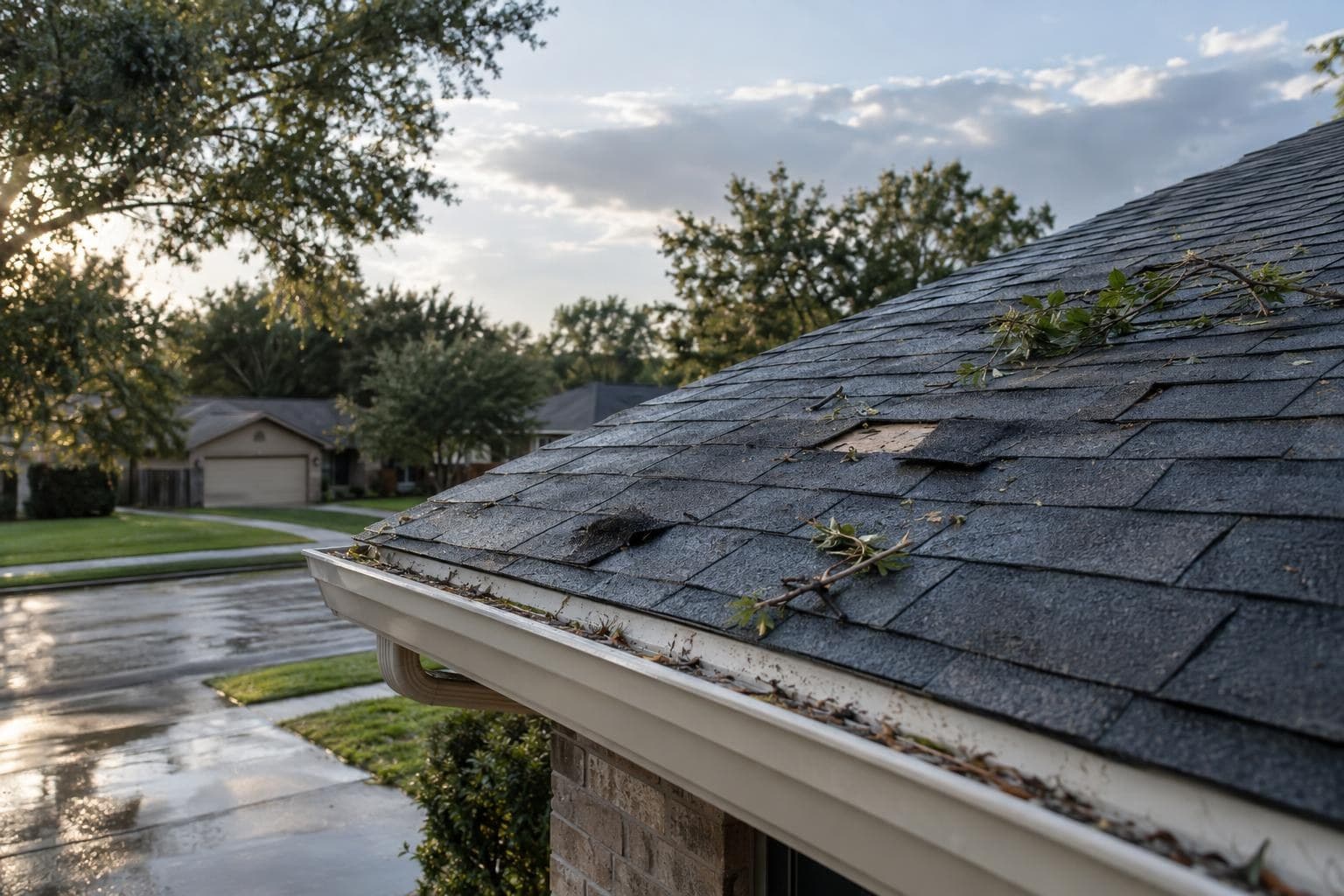
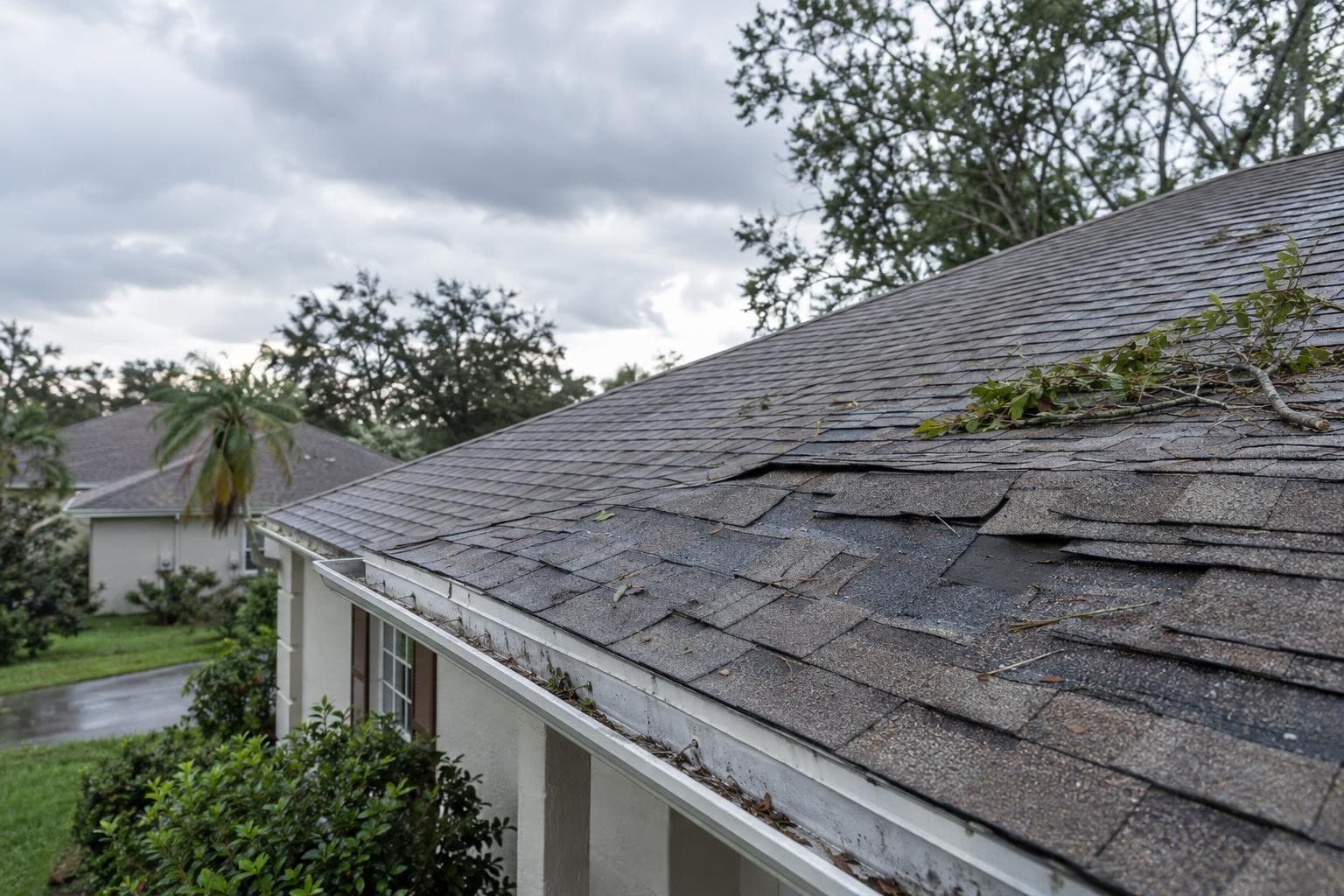
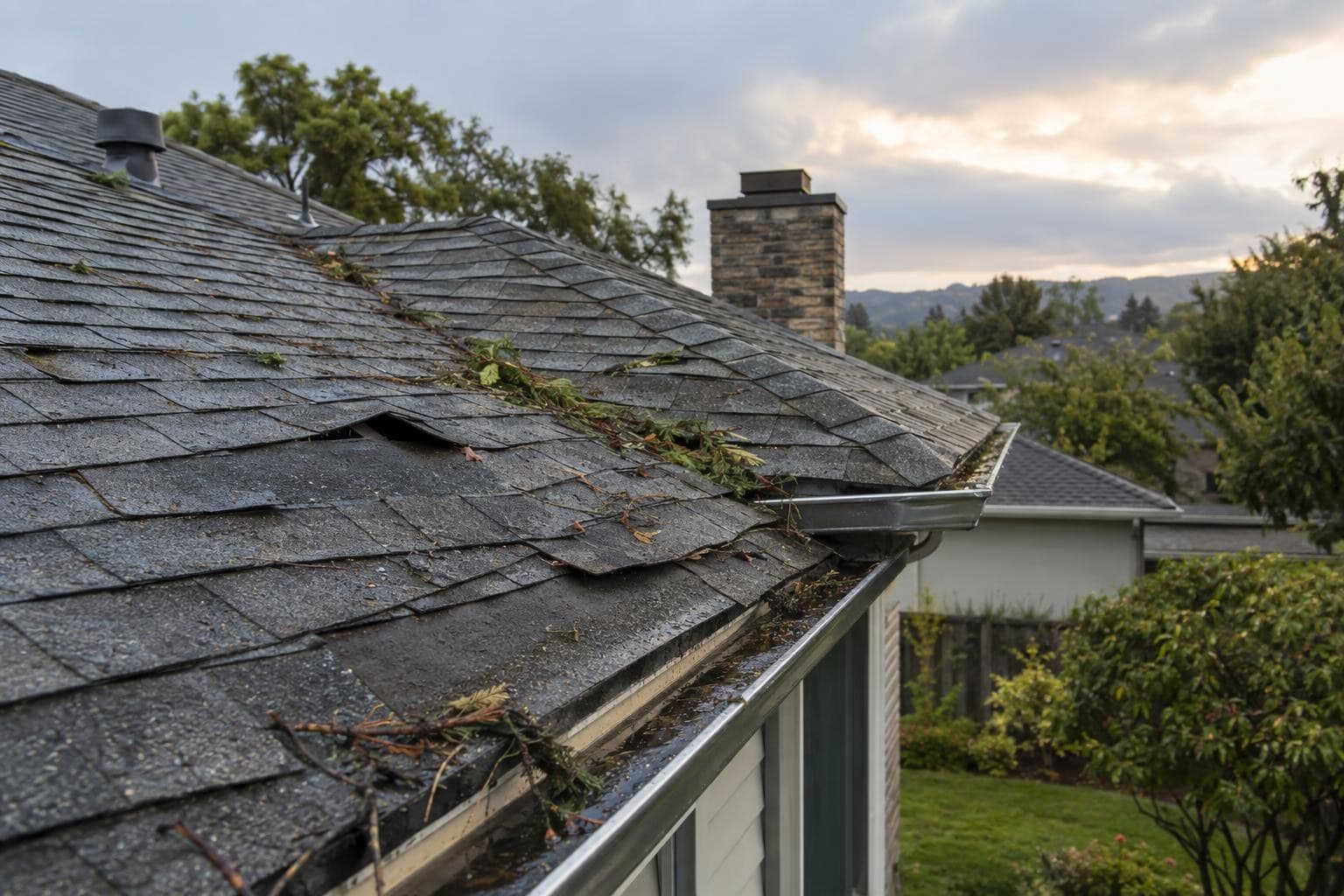
Wind pressure varies across the roof and can be more demanding at corners, perimeters, ridges, overhangs, and changes in geometry. Look for displaced or missing covering, unsealed or creased shingles, opened metal seams, moved caps, loose edge metal, failed fasteners, detached gutters, shifted flashing, and debris impact. The absence of missing material does not establish that attachments and seals remained unchanged.
A product's wind language is not the same as the performance of the installed assembly. Deck attachment, underlayment, starter, field fastening, edge details, clips, seams, accessories, substrate, roof shape, installation conditions, and maintenance all matter. When a contractor proposes a wind upgrade, require the exact tested or approved system and every component needed to reproduce it at the address.
Hail requires material-specific evidence
Ground-level dents on gutters, screens, equipment, vehicles, or other components can support event context without proving roof-covering damage or exact hail size. On the roof, document findings by area and material. Asphalt-shingle evaluation, for example, differs from metal, tile, slate, or membrane evaluation. Consider installation, weathering, foot traffic, tools, debris, blisters, corrosion, and prior events as alternative causes.
Class 4 under UL 2218 means the exact tested product met defined impact criteria; it does not make the roof hail-proof or forecast every natural event. UL Solutions notes that the standard does not account for every field effect such as denting or granule loss. Inspect the field covering, hips, ridges, flashings, vents, edges, and underlying response rather than allowing one product label to replace the condition report.
Talk to a roofer today
Planning ranges, scope details, and a direct path to request a roofing quote.
Driven rain exposes transitions and drainage weaknesses
Rain can accompany hurricanes, tropical systems, severe thunderstorms, winter storms, and ordinary weather. Wind changes how water reaches laps, walls, ridges, vents, soffits, windows, siding, and low-slope transitions. Inspect roof-to-wall flashing, chimneys, skylights, penetrations, valleys, edges, gutters, drains, scuppers, and earlier sealant repairs. Relate interior evidence to these features without assuming every stain is a field-covering failure.
On coastal or salt-exposed properties, add fastener, clip, panel, coating, flashing, equipment, and dissimilar-metal compatibility to the review. Corrosion can be localized and may predate the reported event. The construction scope should identify materials and finishes appropriate to the project exposure rather than advertising coastal grade without a product specification.
Snow and ice involve load, heat, drainage, and water backup
Snow accumulation can create structural and falling-snow hazards, while melting and refreezing can create ice dams and concentrated drainage. Sagging, cracking, unusual movement, heavy drifting, or roof distress requires qualified evaluation and may require occupants to leave the affected area. Do not climb an icy roof or stand below overhanging snow and ice.
For recurring eave ice, map where snow melts and refreezes. Inspect air leakage, insulation continuity, exhaust ducts, vented or unvented assembly design, eave membrane, flashing, gutters, valleys, and interior moisture. Adding vents, switching materials, or clearing one dam does not automatically correct the heat and water path that produced it.
Trees and airborne debris can create a different scope
A branch strike may puncture or displace covering, damage decking or framing, move gutters, and transfer force to a roof area that looks intact from the ground. Keep people away from hung branches, unstable trees, damaged electrical service, and structurally changed areas. After safe removal, document the impact location, framing and deck response, displaced layers, and the repair boundary needed to reach sound material.
Multi-hazard events need separate cause notes
One storm may bring wind, hail, rain, debris, and later interior moisture. Do not collapse those observations into a single storm-damaged label. A missing cap may relate to wind, a puncture to debris, water entry to an opened flashing, and dark attic decking to older condensation. Separating cause and age where the evidence allows leads to a cleaner repair scope and gives the insurer a clearer factual record for its own policy decisions.
Build the post-storm report by roof area
- 1Record weather context, methods, safety limits, accessible areas, and documents reviewed.
- 2Map every roof area, orientation, covering, edge, drainage path, transition, penetration, and accessory relevant to the event.
- 3Use overview and detail photographs to locate each observation rather than presenting isolated close-ups.
- 4Separate physical change, proposed cause, functional consequence, appearance, and coverage into distinct statements.
- 5Identify temporary protection, further investigation, maintenance, monitoring, focused repair, sectional work, and replacement as separate action categories.
- 6Explain the smallest durable work boundary and whether surrounding material can accept the new tie-in.
Keep preparedness, construction, and insurance separate
Preparedness includes understanding local warnings, safely maintaining drainage and trees, keeping records, and knowing how to contact qualified help. Construction includes material selection, attachment, water-shedding details, temporary protection, repairability, and replacement scope. Insurance includes the policy's covered causes, deductible, valuation, exclusions, endorsements, and claim procedure. Regional risk can inform all three, but it does not answer any of them by itself.
Inspection methods also have to fit the post-storm condition. A drone or ground camera can document geometry and obvious displacement without loading a fragile roof, while close access may be needed to evaluate laps, attachment, surface response, and repairability. Snow, height, wet material, electrical hazards, unstable trees, or structural concerns can leave areas uninspected. The report should state those limits and schedule the next safe method instead of converting incomplete access into a confident whole-roof conclusion.
Use the region to identify likely hazards. Use the property and roof evidence to decide what actually happened and what work is justified.
Sources
- National Weather Service: Severe Thunderstorm Safety
- Insurance Institute for Business & Home Safety: Natural Weathering and Hazard Exposure
- Insurance Institute for Business & Home Safety: Roof 101
- UL Solutions: UL Solutions and IBHS Drive Trust in Residential Roofing Shingles
- U.S. Department of Energy: Eaves Sealed in Cold Climates
Related roofing resources
Related services
Updated July 10, 2026
3D Roofs Editorial Team
Editorial Standards