Updated July 27, 2026

3D Roofs Editorial Team
Editorial Standards
If a storm just hit your Arizona roof, start with safety, then stop active leaks, then document everything before repairs move too far. In Arizona, roofs are exposed to extreme heat and UV long before a storm arrives. Roof surfaces can top 150 degrees in summer, and that thermal cycling and ultraviolet load break down shingles, sealants, coatings, and the elastomeric topcoat on foam roofs faster than almost anywhere else. Then the monsoon arrives, and microburst winds, wind-driven dust, and intense short downpours find any weak flashing, fastener, or seam, with some areas seeing hail too. That is why the first 48 hours are about two things: preventing more interior damage, and building a clear record of what the storm actually caused.
What should you do in the first 48 hours after a storm hits your Arizona roof?
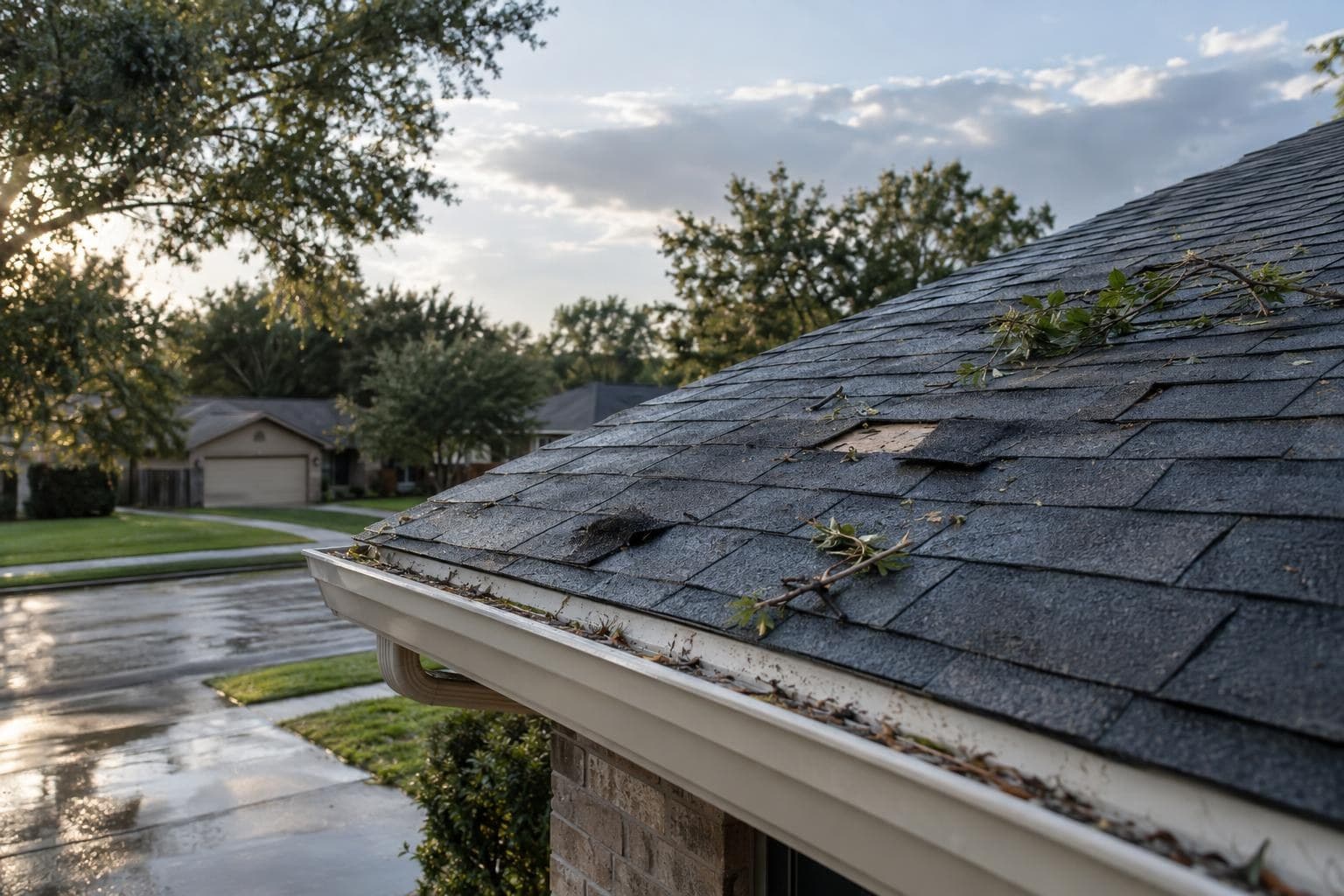
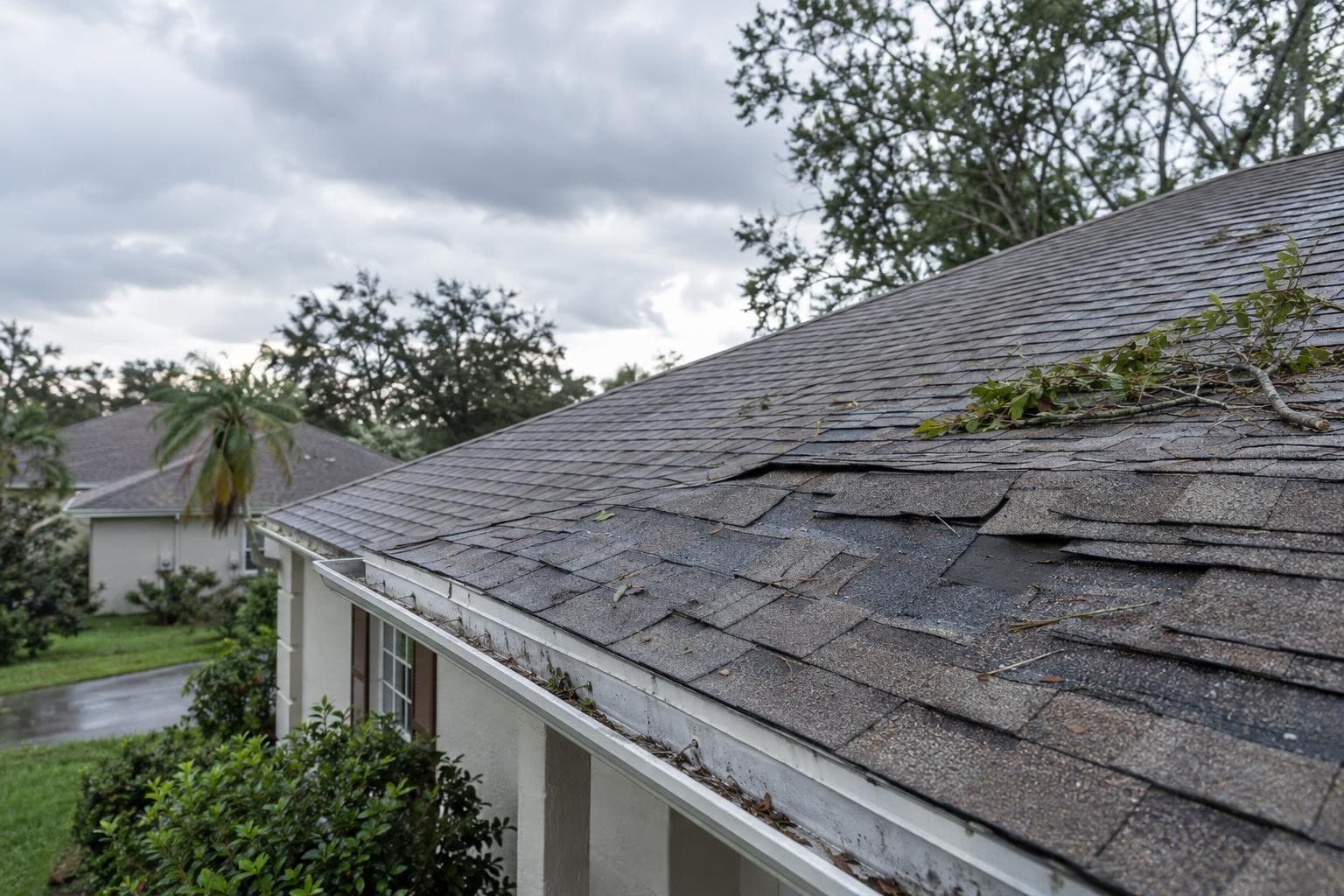
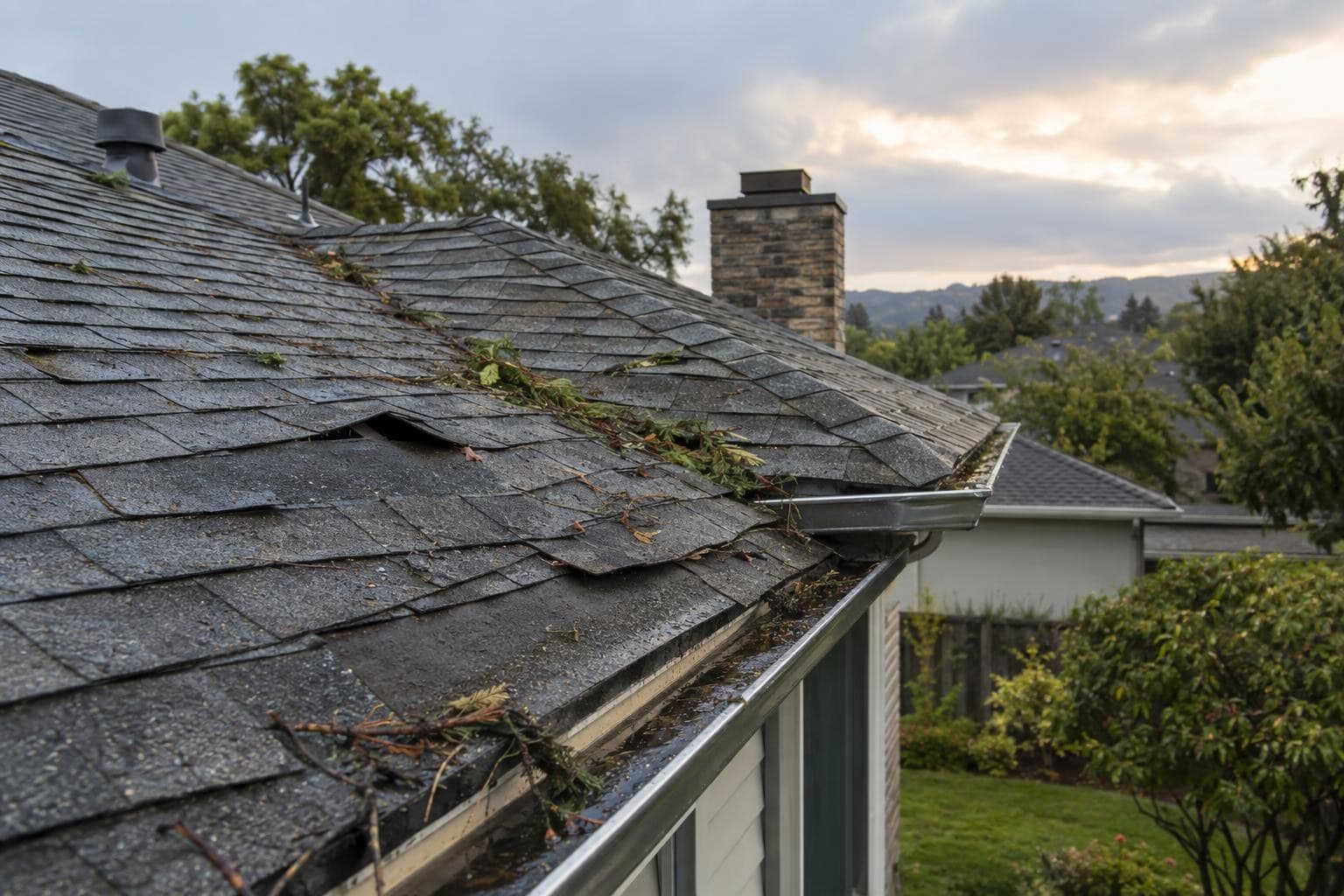
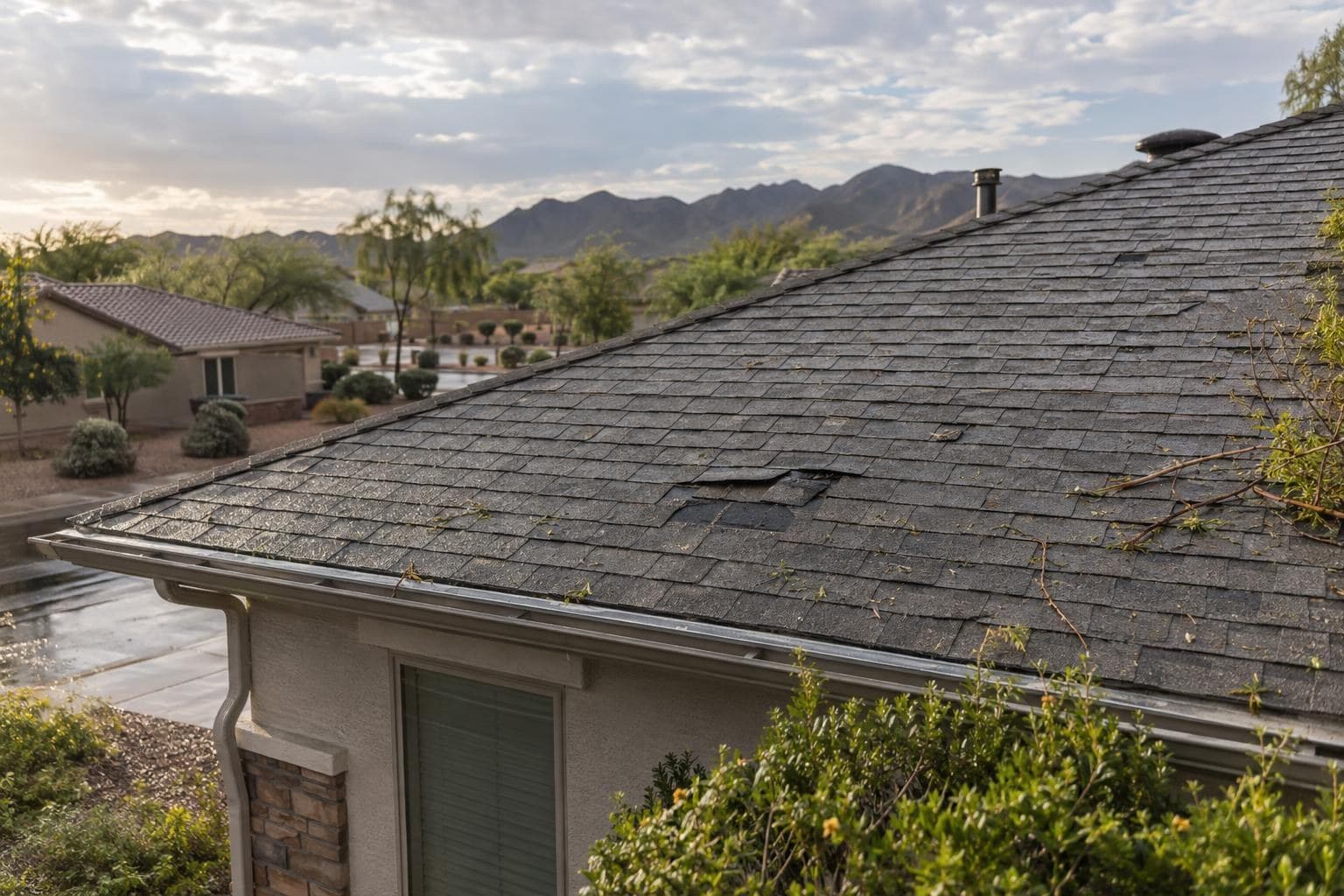
Start by protecting people and property, then make temporary moves only as needed to limit further damage. If water is coming in, move furniture, catch drips, and take photos before you disturb anything. If it is safe from the ground, look for obvious signs like missing shingles, lifted tile, metal panels out of place, fallen branches, bent gutters, or debris concentrated on one slope. Avoid climbing onto the roof right after a storm. Wet surfaces, damaged decking, loose tile, and storm debris can turn a quick look into an injury.
- Take wide photos of every roof slope you can see from the ground.
- Photograph interior stains, wet insulation, ceiling bubbles, damaged flooring, and any belongings affected by water.
- Write down the date of the storm and what you observed, such as high wind, hail, or heavy rain.
- Use temporary leak control if needed, such as containers, towels, and moving items out of the affected room.
- Contact your insurer before you start repairs. The state Department of Insurance and Financial Institutions says to document the damage and contact your insurer before you start repairs.
- Arrange a temporary tarp or emergency dry-in if water is actively entering the home.
Should you tarp the roof right away?
Yes, if the roof is actively leaking or visibly open, a tarp can help limit more damage, but it is a temporary step, not the repair itself. In Arizona, monsoon wind and short heavy downpours can turn a small opening into soaked insulation, stained drywall, and damaged decking fast. A tarp buys time while your claim and repair plan move forward. It also shows you took reasonable steps to prevent more loss.
The key is to keep the tarp temporary and well documented. Take photos before tarping, during tarping, and after tarping. Save receipts. Ask for a written note that describes what was covered and why. If a section is too steep or unsafe, leave it alone and let your roofer handle it. For storm damage roof in Arizona, treat a steep or difficult-to-access roof as a scope variable that the contractor should measure and price explicitly. For current Arizona planning prices related to storm damage roof, use the cost guide and calculator, then compare the contractor's property-specific written scope.
How do you document storm damage for an Arizona roof claim?
Use clear photos, notes, and a simple timeline. Good documentation makes it easier to separate fresh storm damage from older wear. Start outside, then move inside. On the roof exterior, capture missing materials, creased shingles, displaced tile, punctures, lifted flashing, exposed underlayment, damaged ridge caps, dented metal, foam coating splits, and debris impact points. On the interior, show the path of water from ceiling marks to wall staining to any damaged contents.
- Take overview photos first, then close-ups.
- Photograph all elevations of the house, not just the leak area.
- Include gutters, downspouts, vents, skylights, and chimney flashing if present.
- Save weather alerts, storm dates, and any hail photos from your property.
- Keep a list of every phone call, visit, and email related to the claim.
- Do not throw away storm-damaged pieces if they came off the roof, unless they are unsafe to keep.
For storm damage roof in Arizona, coverage depends on the policy language, cause of loss, exclusions, and the insurer's decision; verify those terms in your own documents. For storm damage roof in Arizona, review the declarations and endorsements for any wind, hail, hurricane, or named-storm deductible. Ask the insurer to show the policy-specific calculation in writing instead of relying on a generic percentage. For storm damage roof in Arizona, ask the insurer and state insurance regulator for the current notice, proof-of-loss, inspection, acknowledgment, and decision deadlines that apply to the claim.
Talk to a roofer today
Planning ranges, scope details, and a direct path to request a roofing quote.
How can you tell storm damage from normal roof aging in Arizona?
Look for pattern, direction, and fresh breakage. Storm damage usually shows a sudden, localized change that lines up with wind direction, impact, or a single weather event. Age shows up as broad, even wear from sun, heat, and time. In Arizona, this distinction matters more because extreme heat and UV wear out roofing materials fast even without one dramatic storm.
- Storm damage on shingles may show as torn tabs, sharp creases, missing sections, or fresh granule loss in a concentrated area.
- Age on shingles often looks more uniform, with widespread drying, brittleness, curling, and gradual granule wear.
- Storm damage on tile may show broken or shifted pieces in one exposure path, often with nearby impact or debris signs.
- Age on tile systems may show underlayment wear, slipped pieces over time, or cracking tied to movement and long-term heat stress.
- Storm damage on metal may show fresh dents, lifted seams, or edge details pulled by wind.
- Age on foam or coated roofs often appears as worn topcoat, cracking, seam issues, and UV breakdown that existed before the storm exposed it.
That said, a storm can still be the event that turns older wear into a real leak. Wind-driven dust and rain often find the weak flashing, fastener, or seam that heat already stressed. That is why the right question is not only, "Is this roof old," but also, "What did the storm newly change?" a roofing contractor you are considering can document those fresh changes and show where the failure started.
Does Arizona law change how you should choose a roofer after storm damage?
Yes. Arizona requires a contractor license from the Registrar of Contractors for any roofing job of an amount that must be confirmed for the written scope or more, or any job that needs a building permit, no matter the price. Roofing is its own classification: R-42 for residential work, C-42 for commercial, and CR-42 for both. Doing licensed-level work without a license is a Class 1 misdemeanor in Arizona, so a roofer who is not licensed for your job is not a deal, it is a risk.
Before you sign, look the contractor up on the ROC's free contractor search and confirm three things: the license is active, the classification covers roofing, and the bond is current. The same search shows the qualifying party and any complaint history. Arizona also runs a Residential Contractors' Recovery Fund, paid for by contractor assessments, that can reimburse an owner-occupant harmed by a licensed residential contractor's poor work, abandonment, or failure to perform, up to a statutory maximum, currently an amount that must be confirmed for the written scope per residence. It only covers contractors who were properly licensed when you signed, paid, or started.
Should you repair the storm damage or replace the whole roof?
Repair makes sense when the damage is limited and the rest of the roof still has solid life left. Replacement makes more sense when the storm damage is widespread, when age and heat have already weakened large sections, or when matching materials is unrealistic. Arizona roofs fail where the desert hits hardest, so the right answer depends on sun exposure, roof type, drainage, and how much water got below the surface.
Full local pricing lives on the Arizona cost page and the calculator. If monsoon hail is a concern, a verified Class 4 shingle may be worth comparing. For storm damage roof in Arizona, any insurance credit depends on the carrier, policy, address, and exact product; get the amount and documentation requirements from the insurer in writing.
What is the smartest next step after storm damage on an Arizona roof?
Get the roof documented, get leaks temporarily controlled, verify who you hire, and make the repair-versus-replace call based on fresh storm evidence, not guesswork. Arizona roofs deal with punishing heat first and storms second, so many homes have a mix of old wear and new damage. When you act quickly in the first 48 hours, you give yourself a better shot at protecting the home, supporting the claim, and choosing the right fix for how your roof actually failed.
How do monsoon dust and extreme heat complicate storm diagnosis?
Dust can hide small openings and clog drainage paths, while prolonged heat can make older sealants, underlayment, and asphalt materials brittle before a monsoon arrives. A storm may create fresh movement at an already stressed detail, so the inspection should document both the new change and the surrounding condition. Ask the contractor to check roof edges, penetrations, scuppers or drains, flashing transitions, lifted materials, and interior moisture patterns. The goal is to identify the actual water path and a durable repair, not to label every aged component as storm damage.
Sources reviewed
- Arizona DIFI (homeowners insurance, storms & claims)
- Arizona Registrar of Contractors (license classifications & requirement)
- National Weather Service: Severe Thunderstorm Safety
- Federal Trade Commission: Four Ways to Avoid Scams After a Weather-Related Disaster
- Georgia Attorney General Consumer Protection Division: Beware of Roofers Scamming Storm Victims
Plan with current pricing
Related services
Updated July 27, 2026
3D Roofs Editorial Team
Editorial Standards