Updated July 27, 2026

3D Roofs Editorial Team
Editorial Standards
If a storm just hit your Louisiana roof, your first job is to protect the house, document what changed, and avoid making the damage harder to prove. Louisiana roofs take year-round stress from strong storms, wind-driven rain, long humid seasons, and intense sun. That mix can wear shingles faster, expose weak flashing, and turn small leaks into bigger decking or interior problems if you wait. In low-lying and storm-prone areas, you also need to think about how roof condition affects your ability to protect the home before and after major weather.
What should you do in the first 48 hours after roof storm damage?
Start with safety, then stop active water intrusion, then create a clear record. If you can do it from the ground, take wide photos of every roof slope, fallen branches, gutters, downspouts, siding, screens, vehicles, and anything else the storm hit. Inside, photograph water spots, wet insulation, bubbling paint, ceiling stains, and damaged belongings. Put buckets under leaks, move valuables away from wet areas, and save any pieces of shingle, flashing, or metal that blew off. If the roof is actively leaking, arrange emergency tarping with a local roofer you have vetted. Do not climb a wet roof to inspect it yourself.
- Take date-stamped photos and short videos from the ground and inside the attic or living space
- Write down when the storm hit, when the leak started, and which rooms are affected
- Keep receipts for tarping, dry-out supplies, and other emergency steps
- Save loose roofing material if it is safe to collect from the yard
- Call your carrier after you have basic documentation and temporary protection in place
How do you document roof storm damage so an insurance claim is easier to understand?
Use simple, organized evidence that shows cause, location, and timing. A good file includes overview photos of the whole roof area, close photos of specific damage, interior leak photos, and notes that connect each issue to the storm event. If a bedroom ceiling started dripping the same night wind lifted shingles over that area, write that down. If a tree limb hit one slope but another slope just looks old, keep those issues separate. Your homeowners policy only pays for covered perils. The Louisiana Department of Insurance says homeowners insurance covers the structure of your home, your property, and personal liability, but you are covered only if the loss is caused by a peril your policy covers. That means you need to read the policy carefully and make sure you understand what kinds of roof damage are and are not covered before you file a claim.
Should you tarp a storm-damaged roof right away?
Yes, if the roof is letting water in or is likely to leak with the next rain, tarping is usually the right first move. Tarping is not the final repair. It is a temporary step that helps limit interior damage while your roofer documents the roof and you decide on repair or replacement. In Louisiana, that matters because long humid seasons can push a small opening into soaked decking, stained ceilings, mold concerns, and damaged insulation fast. Ask your roofer to photograph the roof before and after tarping when possible, so you have a clean record of the storm damage and the emergency protection work.
Talk to a roofer today
Planning ranges, scope details, and a direct path to request a roofing quote.
How can you tell storm damage from normal roof aging?
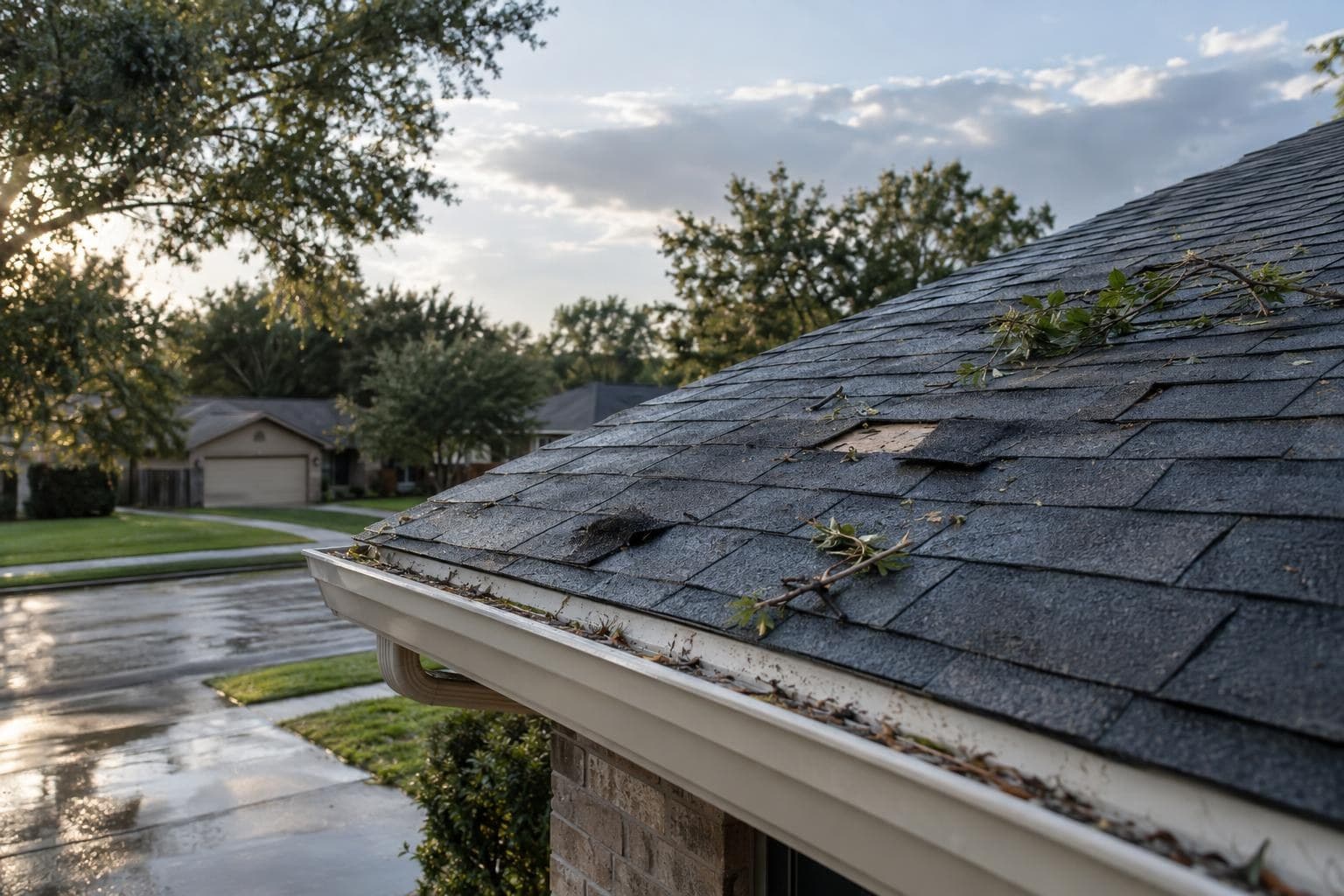
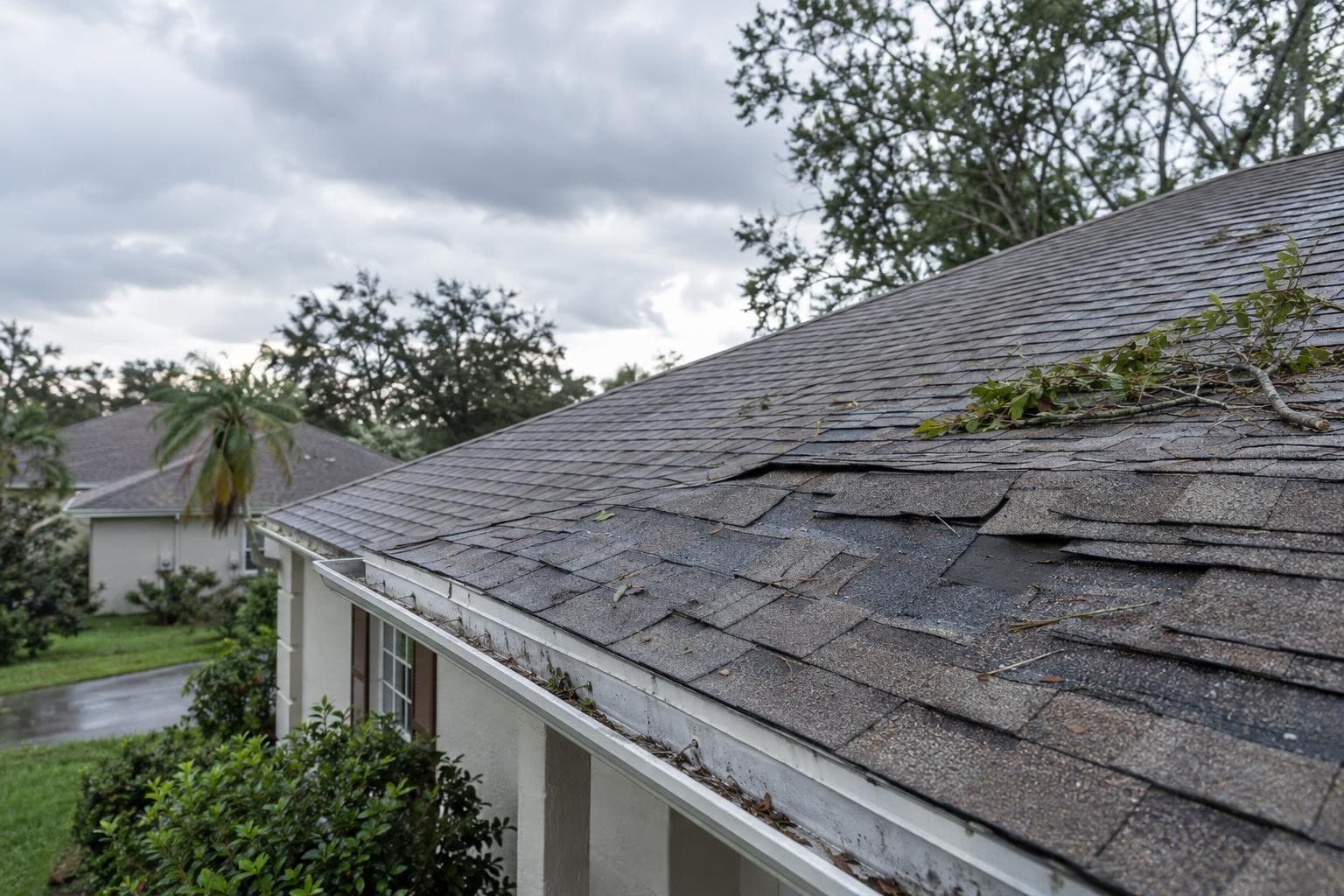
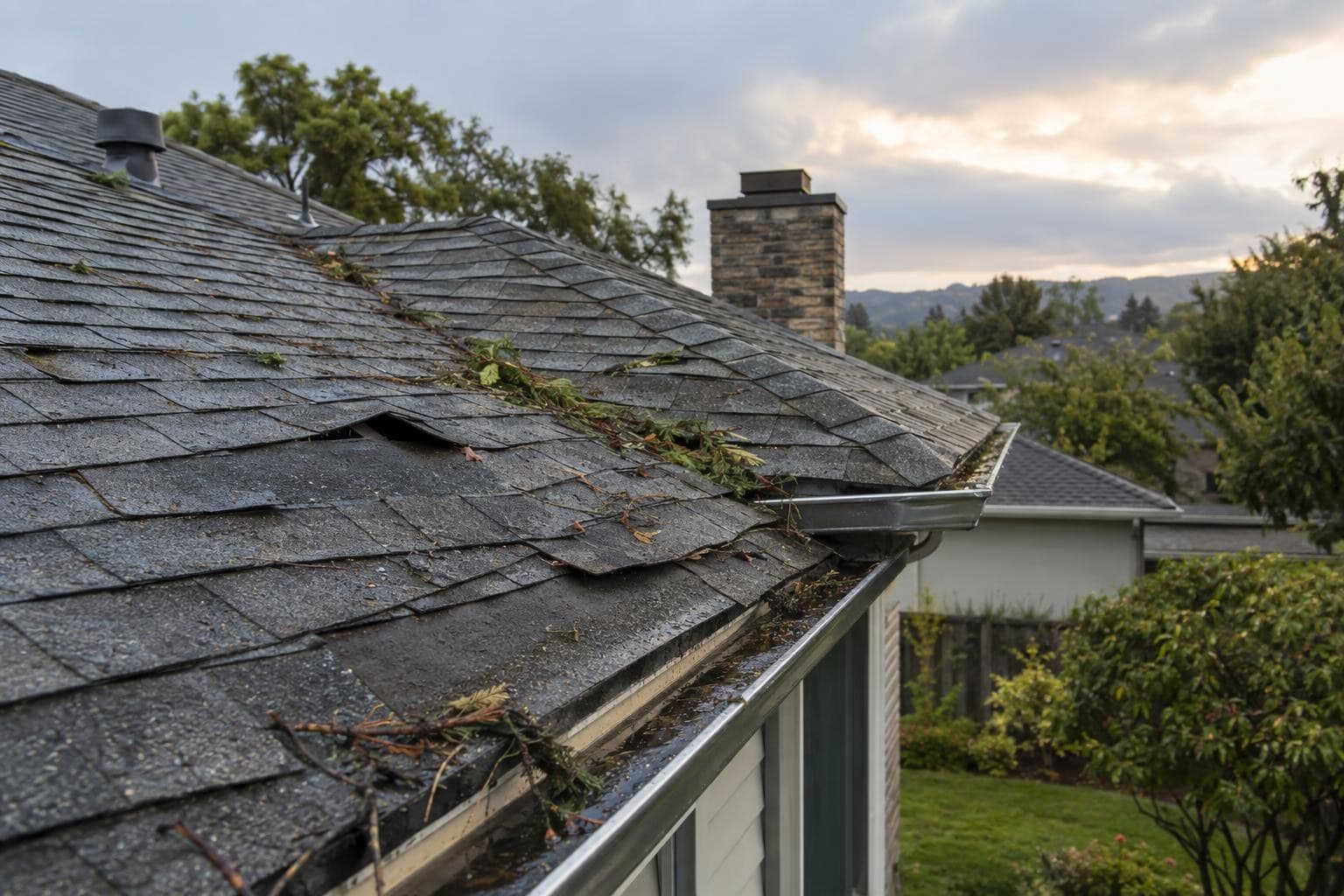
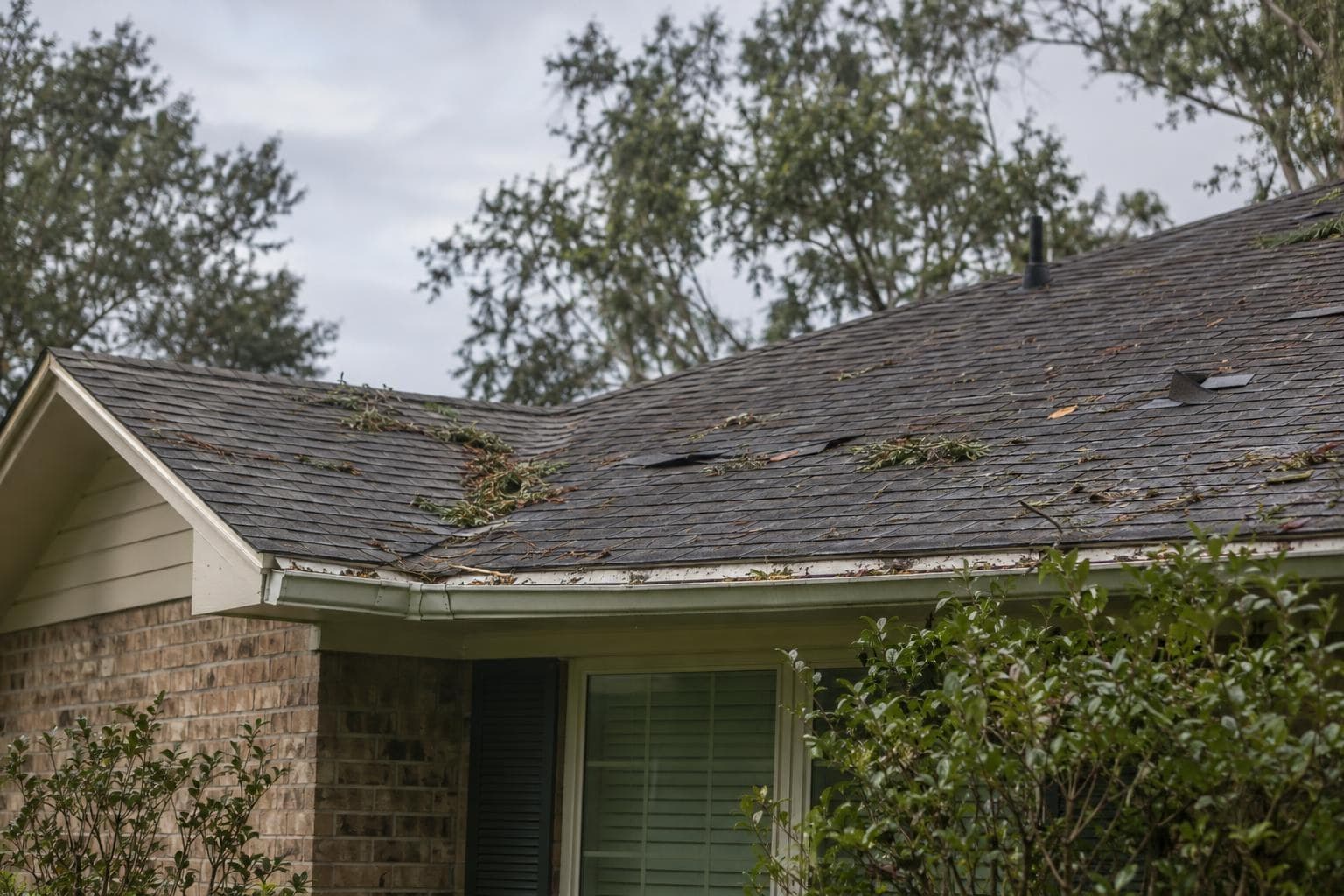
Storm damage usually looks directional, sudden, or localized. Age-related wear usually looks even, gradual, and spread across the roof. Wind damage often shows missing shingles, lifted tabs, creased shingles, torn seal strips, exposed underlayment, bent flashing, or damage concentrated on one slope or edge. Hail or impact damage may leave sharp bruises, punctures, granule loss in distinct spots, or dents on soft metal components. Older roofs, by contrast, often show general granule loss, widespread fading, brittle shingles, cracking from long sun exposure, and uniform wear at the end of service life. Louisiana's mix of storms, humidity, and intense sun can make that line harder to see, which is why a roof inspection with photo documentation matters. If the roof already had weak flashing or aging shingles, a storm may still be the event that turned a manageable condition into a leak.
What roof problems after a Louisiana storm mean you should call a roofer now?
Call now if you see active leaks, ceiling stains that are spreading, shingles in the yard, bent or detached flashing, sagging areas, visible decking, fallen limbs on the roof, or water entering around vents, chimneys, skylights, or wall intersections. You should also call if your attic smells damp or you spot wet insulation after heavy wind-driven rain. Some storm damage is easy to miss from the ground, especially along ridges, valleys, and flashing lines. A qualified local roofing contractor can document whether you are looking at a repairable section or broader damage that points toward replacement.
- Missing or lifted shingles after high wind
- Leaks that started during or right after the storm
- Dented metal roofing, vents, gutters, or flashing
- Sagging roof sections or soft spots
- Granules washing into gutters after impact or tear-off of aging shingles
- Tree or debris strikes, even if the leak has not started yet
Will homeowners insurance cover storm damage to your roof in Louisiana?
It may, but only when the damage comes from a covered peril under your policy. For storm damage roof in Louisiana, coverage depends on the policy language, cause of loss, exclusions, and the insurer's decision; verify those terms in your own documents. The Louisiana Department of Insurance says most homeowners policies do not cover flood insurance, which is administered by the National Flood Insurance Program. If your roof damage happens as part of a flood event, you should not assume a standard homeowners policy will respond the same way it would for other covered damage. If a claim stalls or does not make sense to you, the Louisiana Department of Insurance says you can submit a complaint form online, and its Office of Consumer Services can also help with questions about your policy.
Is it better to repair the storm damage or replace the whole roof?
It depends on how concentrated the damage is, how old the roof is, and whether the storm exposed broader weakness. For a storm-damage roof project in Louisiana, begin with documented damage, the policy deductible, and a property-specific repair or replacement scope. Replacement is often the smarter long-term move when multiple slopes are affected, leaks show up in several places, or the roof already had heavy wear before the storm. For a storm-damage roof project in Louisiana, require the written schedule to account for roof geometry, access, weather protection, material handling, inspections, and possible deck work.
What does storm-related roof replacement cost in Louisiana in current local pricing?
For a storm-damage roof project in Louisiana, start with current Louisiana cost data, then test the planning range against a measured proposal that names the complete roof assembly. Those numbers help you frame the decision if a storm pushes an older roof past the point where patching makes sense. If your house sees repeated hail or wind exposure, it is worth asking whether an upgrade changes both durability and insurance treatment.
Should you consider a Class 4 roof after storm damage?
Yes, it is worth asking about if you are replacing the roof after a storm. Louisiana homeowners should ask their carrier whether a Class 4 impact-resistant roof qualifies for a premium discount. The Louisiana Department of Insurance includes wind mitigation incentives in its homeowners insurance resources, but your savings, if any, depend on the insurer and policy. For a storm-damage roof project in Louisiana, treat any impact-resistant roof credit as unconfirmed until the insurer identifies the eligible product, required documentation, premium portion, and amount in writing. Your roofer can help document the roof system you install, and your carrier can tell you what credits it recognizes. If private coverage is hard to place because of roof age or storm exposure, the Louisiana Department of Insurance says that if you are unable to secure homeowners insurance through the private market, you should ask your agent about Louisiana Citizens Property Insurance Corporation, the homeowners insurer of last resort for Louisiana property owners.
How do you choose a roofer after a Louisiana storm without creating more problems?
Start by slowing the process down enough to verify who you are hiring. Ask your roofer for the exact business name they use on contracts, then check that name in the Louisiana State Licensing Board for Contractors Contractor Search. You can also ask who will actually perform the work and make sure the contract matches the company you checked. If problems come up, the board provides a way for consumers to file a complaint against a contractor online. For you, that means a cleaner paper trail before work starts and fewer surprises once materials arrive. After a storm, the best move is usually simple: document everything, tarp active leaks fast, separate storm damage from old wear, and get a clear scope from a local contractor whose credentials you verified before small problems turn into bigger repairs.
Sources
Reviewed technical references for Louisiana
Related Louisiana roofing guides
Related services
Updated July 27, 2026
3D Roofs Editorial Team
Editorial Standards