Updated July 27, 2026

3D Roofs Editorial Team
Editorial Standards
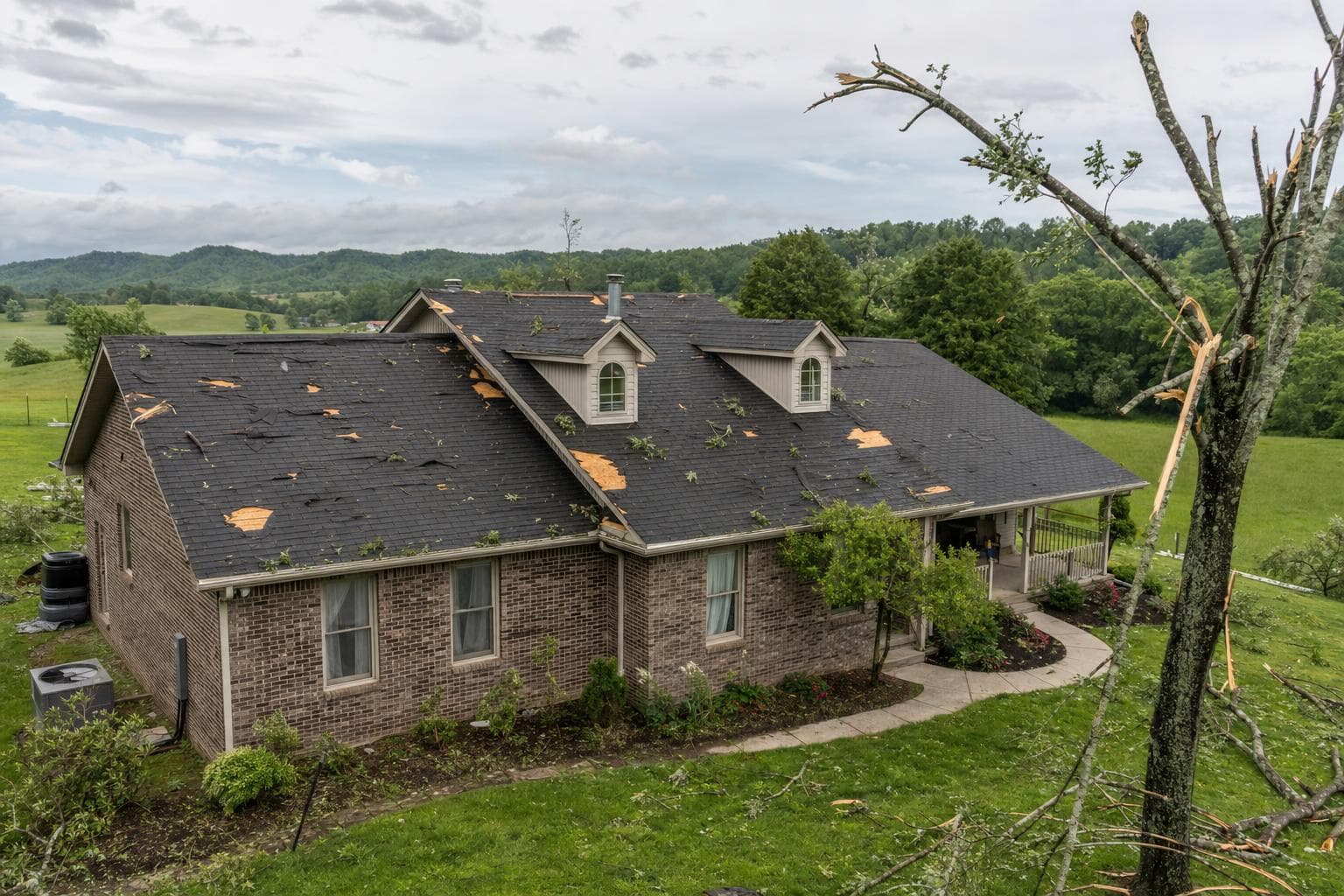
If a storm just hit your Tennessee roof, start with safety, then document everything, then stop active leaks. Tennessee roofs are exposed to severe weather more than almost anything else. Spring and summer thunderstorms drive large hail that bruises shingles and strips granules, along with damaging straight-line winds and a genuine tornado risk across Middle and West Tennessee. The state's long, hot, humid summers bake shingles and feed the dark algae streaks you see on north-facing slopes, and an occasional winter ice or snow event adds freeze-thaw stress and ice-dam leaks. In the first 48 hours, your goal is simple: protect your home, preserve evidence, and avoid doing anything that makes the damage worse or creates a dispute later.
What should you do first after storm damage hits your Tennessee roof?
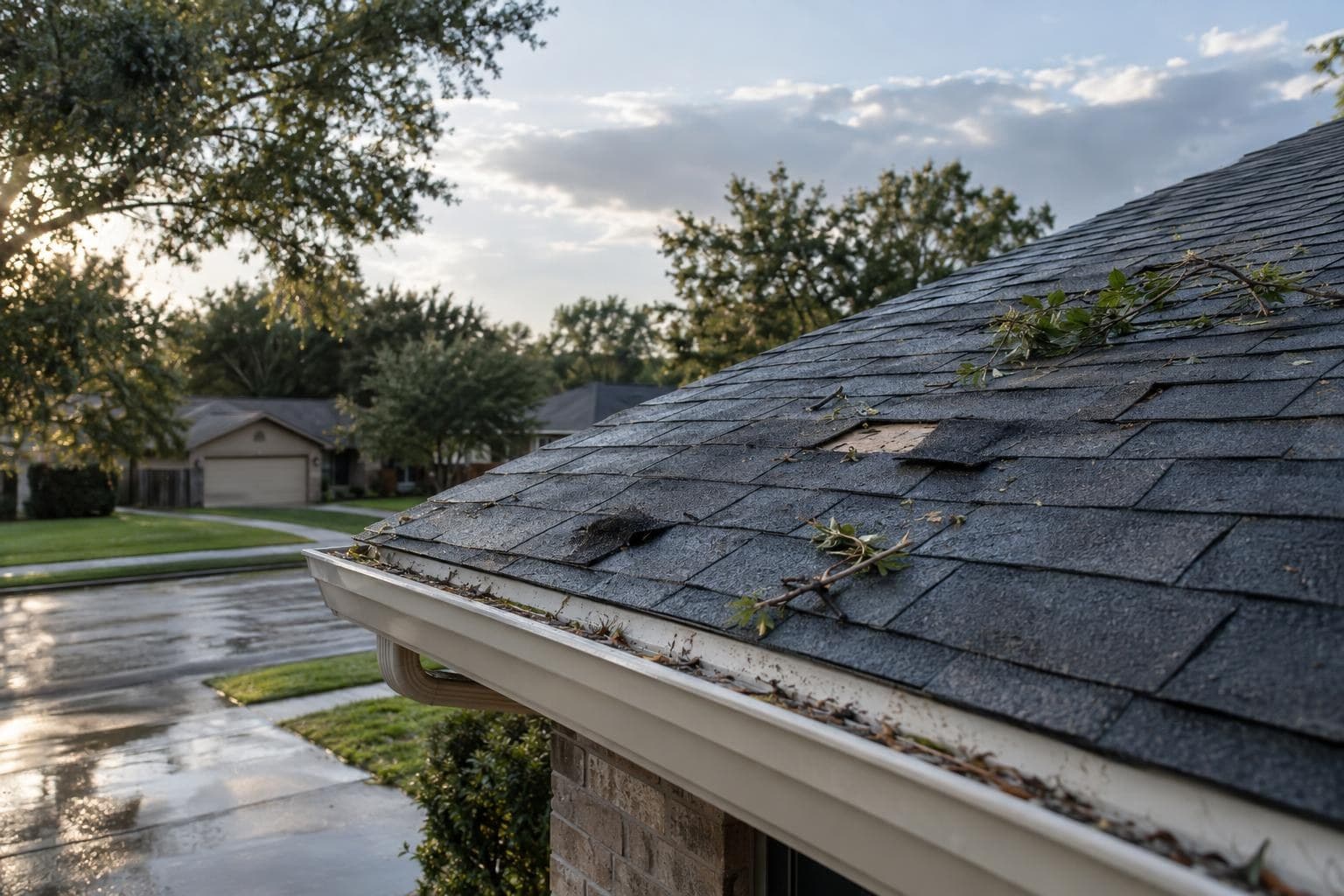
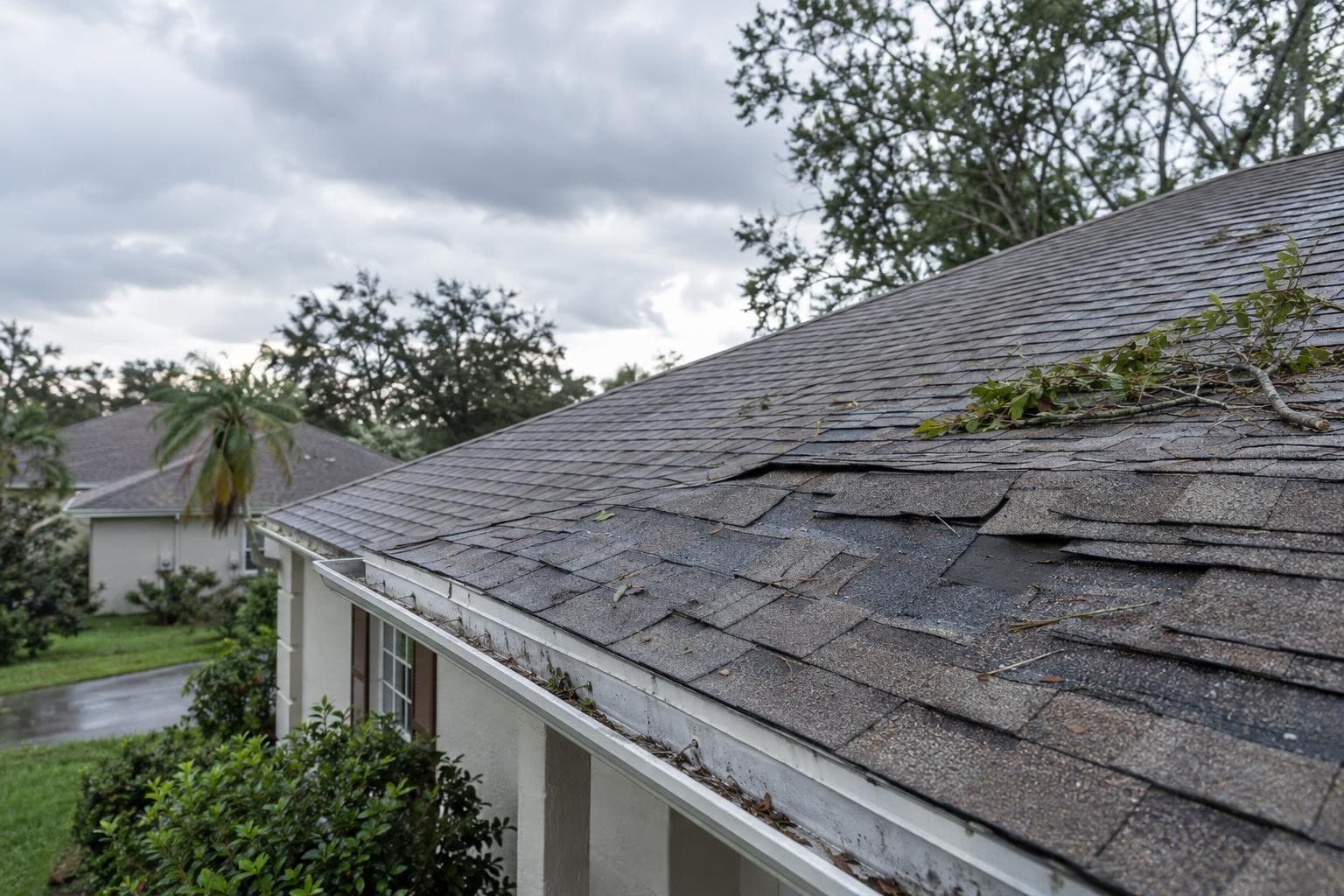
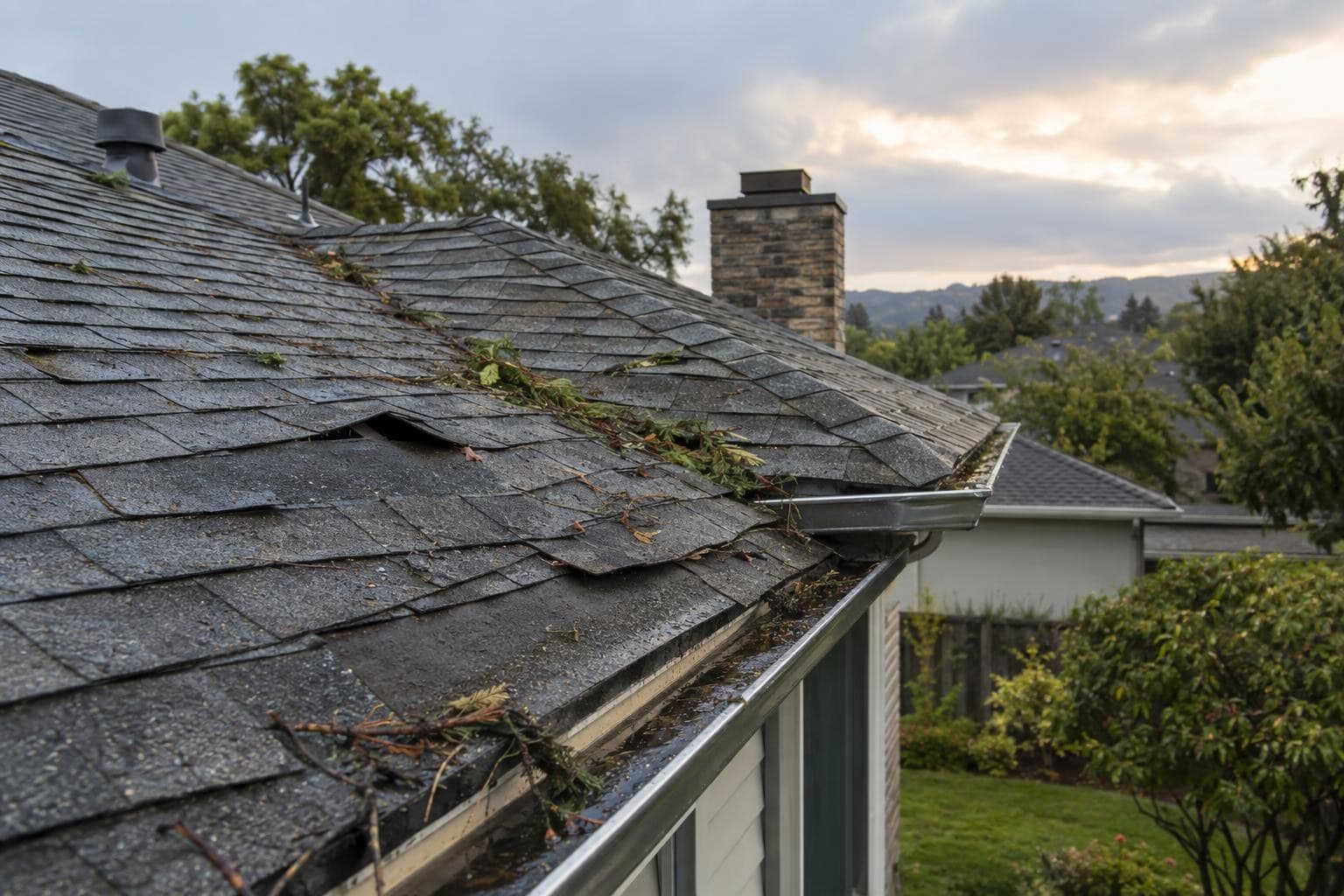
Start by making sure everyone is safe, then do a ground-level check and look inside for leaks. Do not climb onto the roof right after a storm. Wet shingles, hidden punctures, loose metal, and soft decking can turn a quick look into a fall. Walk your property instead. Look for blown-off shingles, bent gutters, downed tree limbs, damaged siding, dented metal, and shingle granules collecting near downspouts. Inside, check ceilings, attic spaces, walls, and around vents or chimneys for water spots, drips, or damp insulation. If water is entering, move valuables, set buckets, and limit interior damage right away.
How do you document roof storm damage for an insurance claim?
Take clear photos and video before cleanup or temporary repairs, then keep every receipt and note. Good documentation helps show what happened, where it happened, and how quickly you acted. Use your phone to capture wide shots of each roof slope from the ground, then closer photos of visible damage, fallen branches, dented metal, torn screens, fence damage, and any interior leaks. If hail hit, photograph soft metal items like gutters, downspouts, roof vents, and metal flashings where impacts may show up. Write down the date of the storm, when you noticed damage, and which rooms leaked. If a tarp, emergency service, or cleanup is needed, save invoices and material receipts. That paper trail matters if your carrier asks what steps you took to prevent more damage.
Should you put a tarp on a storm-damaged roof right away?
Yes, if the roof is actively leaking or exposed, temporary dry-in work is usually the right move. The point of tarping is to stop additional water damage, not to hide the problem. A roofing contractor you are considering can place a tarp or temporary covering over missing shingles, punctures, or an exposed section so your home stays protected while the next steps are sorted out. Take photos before the tarp goes on and again after it is installed. If there is no active leak and no exposed opening, you may not need a tarp immediately, but you still need a prompt inspection. Temporary protection is especially important in Tennessee because one storm can be followed by another before your roof has a chance to dry out.
Talk to a roofer today
Planning ranges, scope details, and a direct path to request a roofing quote.
How can you tell storm damage from an old roof wearing out?
Storm damage usually looks sudden and localized, while age-related wear looks broad, even, and gradual. Hail often leaves random impact marks, bruised shingles, fractured mat, or fresh granule loss in scattered patterns. Wind damage tends to crease, lift, or remove shingles, often along edges, ridges, or on slopes facing the strongest gusts. By contrast, an older roof that is simply reaching the end of its life usually shows widespread granule loss, uniform brittleness, curling, cracking, fading, and algae streaking that built up over time. Tennessee's long, hot, humid summers bake shingles and feed the dark algae streaks you see on north-facing slopes, so black streaks alone are not the same thing as hail damage. An occasional winter ice or snow event can also create freeze-thaw stress and ice-dam leaks, which may look different from wind or hail loss.
What roof signs matter most after hail or wind in Tennessee?
- Missing, lifted, creased, or torn shingles
- Fresh granules collecting in gutters or at downspouts
- Dents on gutters, downspouts, roof vents, and other soft metal
- Exposed fiberglass mat or dark bruised spots on asphalt shingles
- Bent, lifted, or loose flashing around chimneys, walls, and penetrations
- Water stains in ceilings, attic decking, insulation, or around vent pipes
- Tree limb impact marks or punctures from debris
- Ridge cap damage or loose shingles along eaves and rake edges
When should you file a claim, and what Tennessee insurance rules matter?
File promptly if you have real storm damage, and read the policy before you assume what is covered. Storm roof claims in Tennessee are time-limited by your policy, and many policies set a tight window, as little as one year from the date of the storm, to file, so do not sit on damage. Some Tennessee policies use a separate wind or hail deductible instead of the standard deductible. The declarations and roof endorsements control whether it applies and whether it is a flat amount or a percentage of the insured dwelling value. ACV, RCV, depreciation, and any roof-payment schedule also depend on the written policy language. One more point matters after every storm: you are responsible for your deductible. Any contractor offering to waive it, eat it, or hand you a free roof should be treated as a warning sign, not a bargain.
Do you need a repair, or is it time for a full replacement?
If damage is limited and the rest of the roof is in solid shape, a repair may be enough. For current Tennessee planning prices related to storm damage roof, use the cost guide and calculator, then compare the contractor's property-specific written scope. If the storm damage is widespread, if multiple slopes are affected, or if the roof was already near the end of its life, replacement may make more sense. For storm damage roof in Tennessee, ask the contractor to put the expected working days and weather plan in writing; timing depends on roof size, material, access, crew scheduling, and conditions found after tear-off. If you want the full local pricing picture, check the Tennessee cost page and the calculator for side-by-side budgeting.
Are Class 4 shingles worth it in Tennessee after storm damage?
Yes, they are worth comparing if your area sees meaningful hail exposure, but you should treat the rating as a product feature, not a damage guarantee. Class 4 shingles are worth comparing on Tennessee homes with meaningful hail exposure. Verify the exact product's current UL 2218 classification and do not treat the rating as a guarantee against every kind of damage. Tennessee does not set one statewide insurance credit. Ask the carrier in writing whether the product qualifies, which premium portion is affected, and what documentation it requires before using a credit in the budget. For storm damage roof in Tennessee, any insurance credit depends on the carrier, policy, address, and exact product; get the amount and documentation requirements from the insurer in writing.
How do you choose the right roofer after a Tennessee storm?
Start local, get the paperwork in writing, and verify what the state says to verify. Tennessee is a licensing state. Under the Tennessee Board for Licensing Contractors, a contractor must hold a state license before bidding or negotiating a price on any project costing an amount that must be confirmed for the written scope or more, counting both materials and labor, and roofing is specifically covered. That means most full roof replacements call for a licensed contractor, while a small repair under the threshold may not. You can confirm any license for free at verify.tn.gov before you sign. For any job, get a written contract with the company name, address, and phone, the full scope of work, and start and completion dates. For storm damage roof in Tennessee, do not use a fixed damage percentage as the decision rule; compare the repairable area, roof condition, material availability, code requirements, and written scopes. After a storm, a roofing contractor you are considering who can inspect, document, and dry in the home is usually the safest next call.
What should your 48-hour roof checklist look like?
- Make sure everyone is safe and stay off the roof
- Check inside for active leaks and protect belongings
- Walk the property and photograph all visible exterior damage
- Photograph interior stains, drips, attic moisture, and damaged contents
- Write down the storm date and what you observed
- Arrange temporary tarping if water is getting in or decking is exposed
- Save receipts for emergency work and cleanup
- Review your policy deductible and wind or hail endorsements
- Contact your carrier if the damage appears claim-worthy
- Schedule a roof inspection so you can separate storm damage from age-related wear
Sources reviewed
- Tennessee Dept. of Commerce & Insurance (storm recovery: claims & hiring contractors)
- Tennessee Board for Licensing Contractors (overview)
- National Weather Service: Severe Thunderstorm Safety
- Federal Trade Commission: Four Ways to Avoid Scams After a Weather-Related Disaster
- Georgia Attorney General Consumer Protection Division: Beware of Roofers Scamming Storm Victims
Plan with current pricing
Related services
Updated July 27, 2026
3D Roofs Editorial Team
Editorial Standards