Updated July 10, 2026

3D Roofs Editorial Team
Editorial Standards
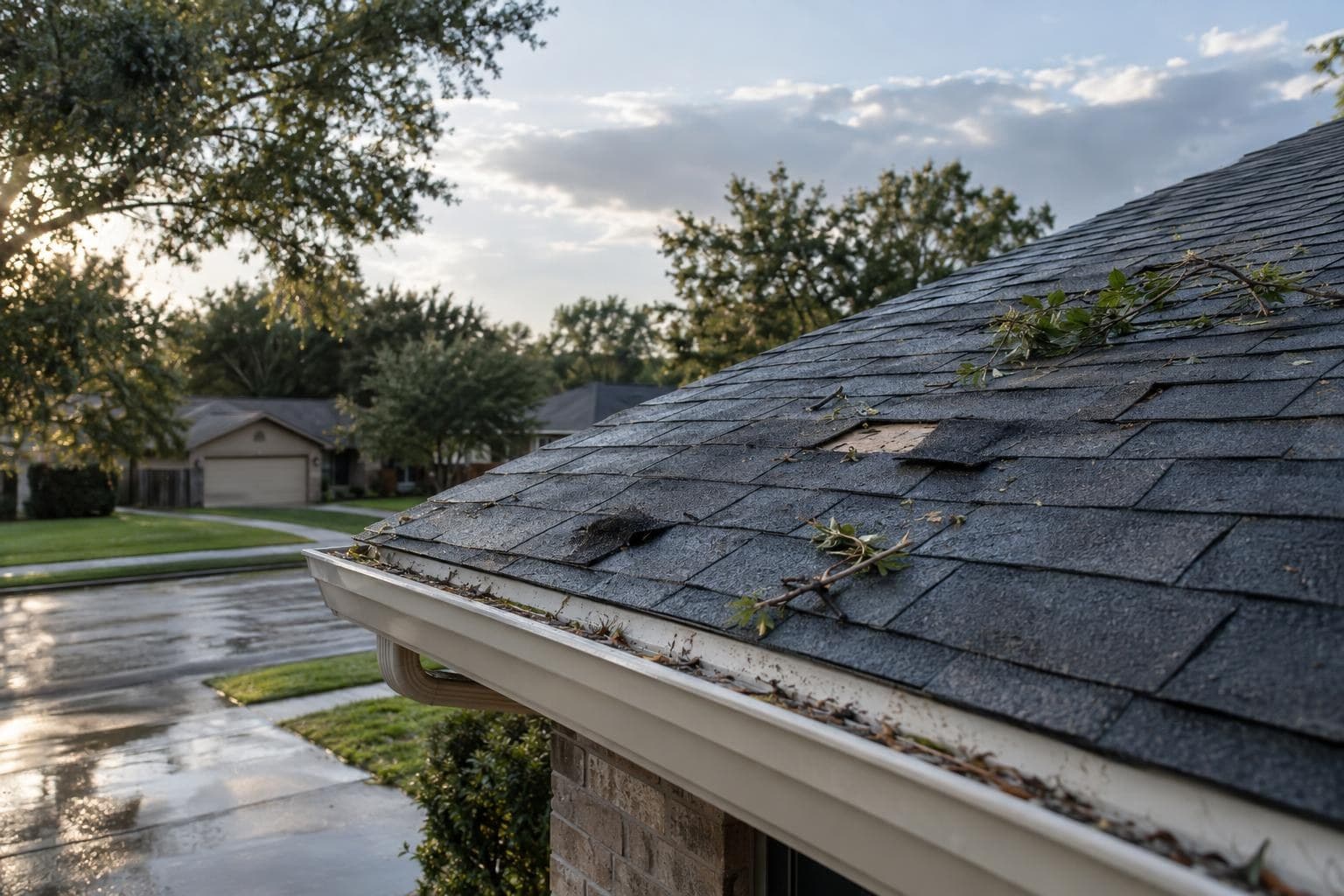
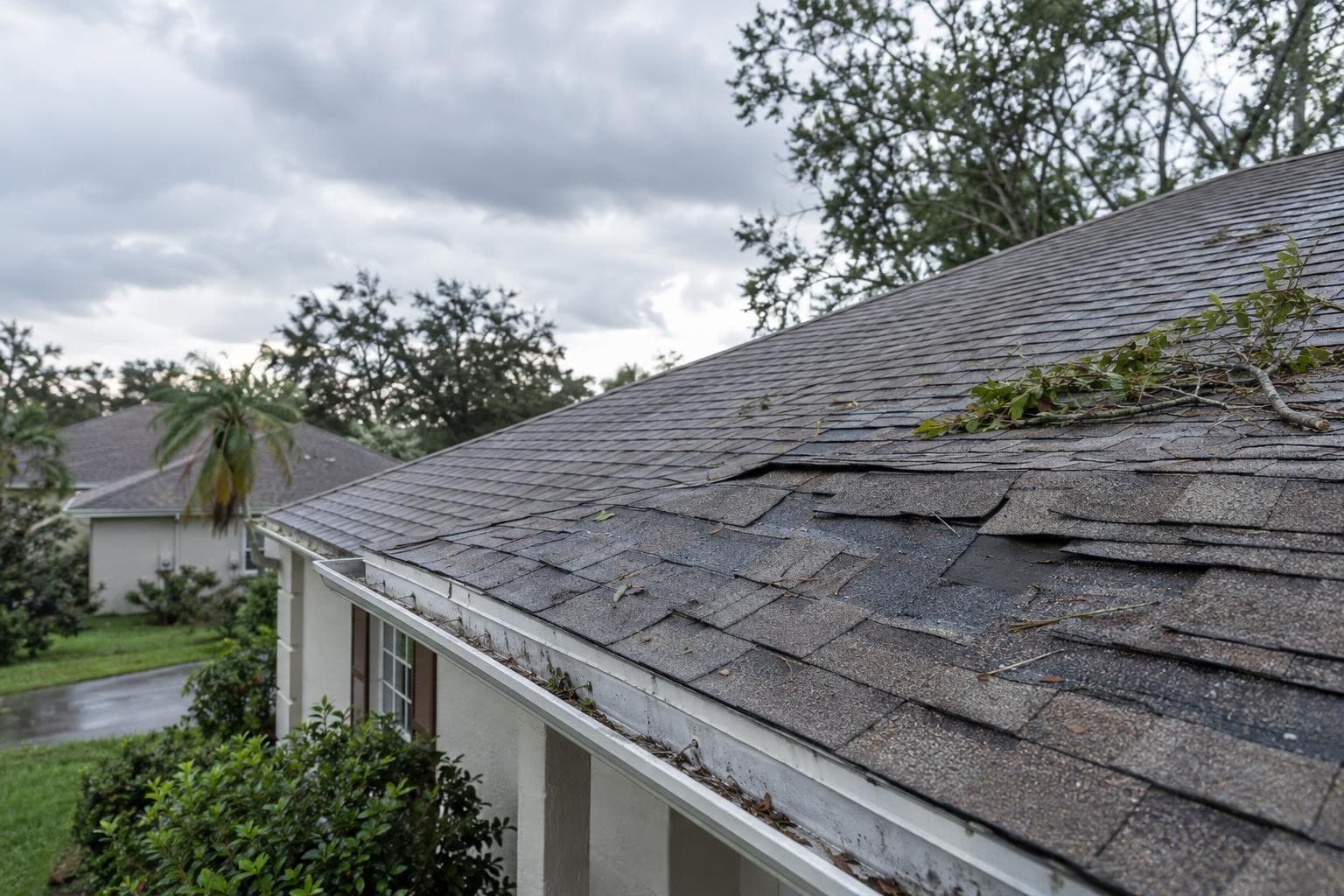
Ohio sits in the path of severe spring and summer thunderstorms that can drop hail and drive straight-line winds in the same afternoon, and on the worst days a derecho can carry damaging gusts across the whole state. In 2024 alone, multiple tornado-and-hail outbreaks moved through Ohio. If a storm just hit your home, the next few days matter: what you document now decides how your claim goes later. Here is how Ohio storms damage a roof and exactly what to do next.
How hail damages an Ohio roof
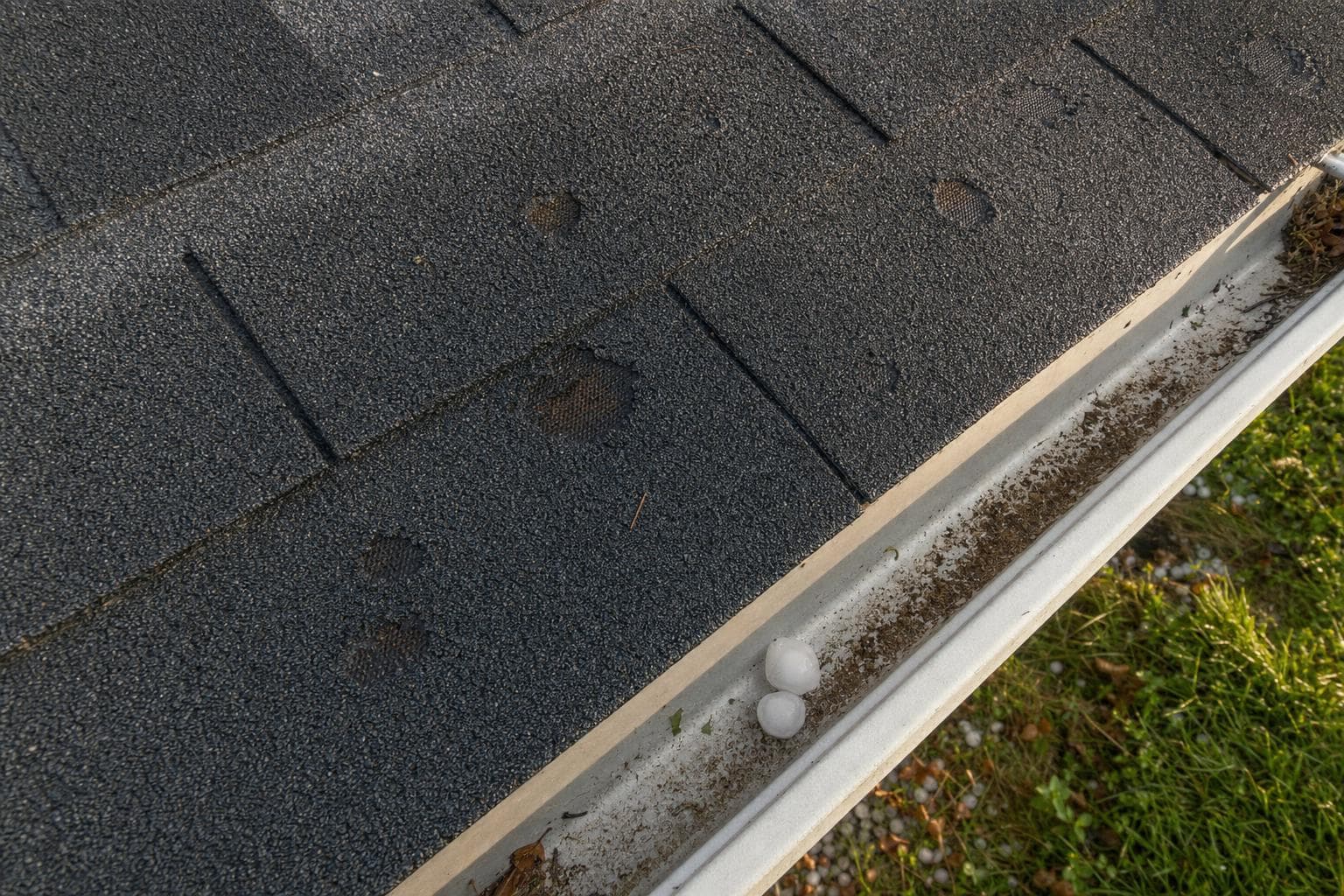
Hail does its damage in two ways. The obvious one is impact: stones bruise the shingle mat and knock the protective granules loose, exposing the asphalt to the sun and shortening the roof's life. The damage you cannot see from the ground is often worse, a soft, fractured spot in the mat that will leak long before it looks like a hole. Real hail damage concentrates on the storm-facing slopes, which is one of the first things an adjuster checks.
How straight-line and derecho winds damage it
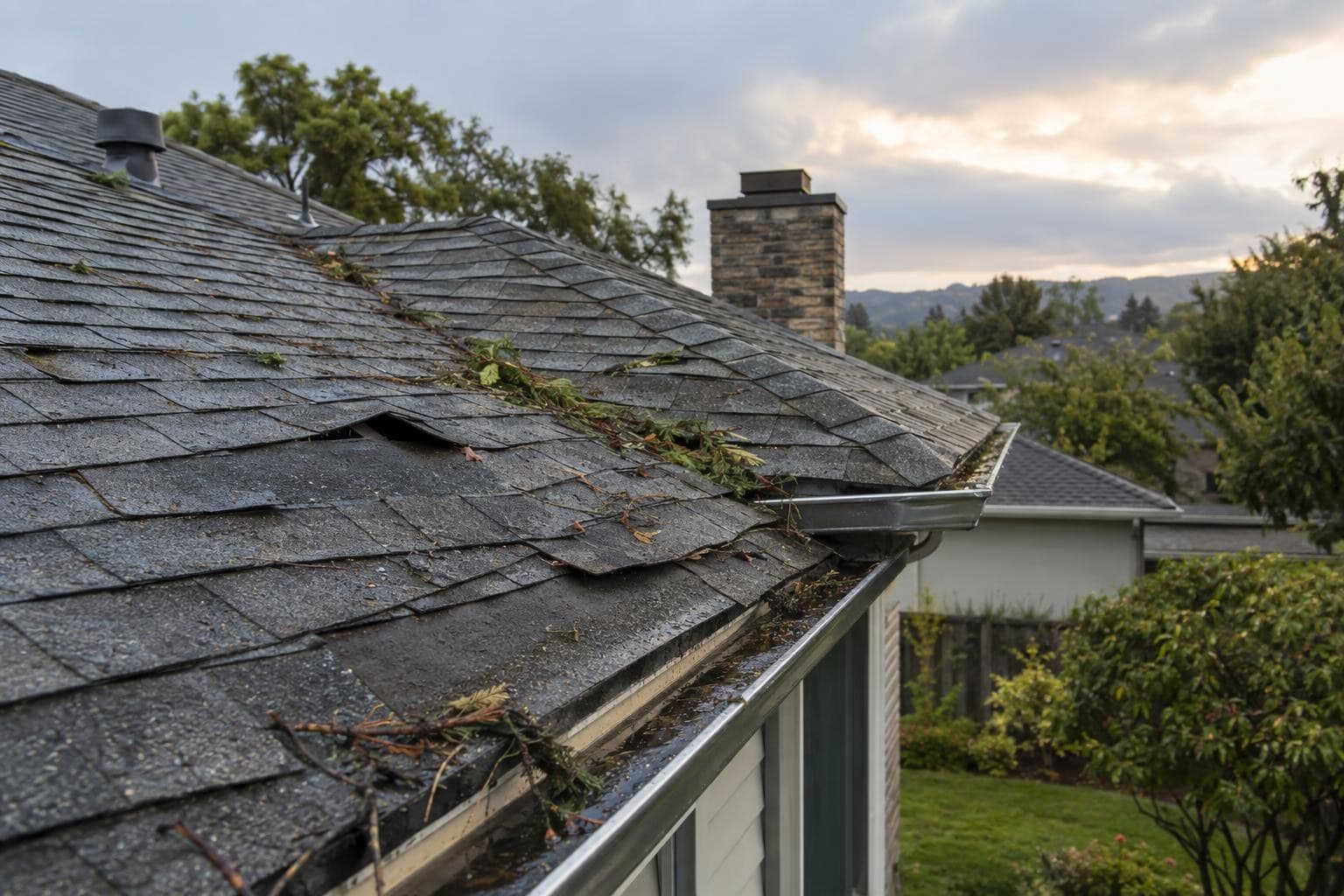
Wind works differently. Straight-line and derecho gusts lift shingles, break their seal strips, and crease or tear tabs along the edges and ridges of the roof. A telltale sign of genuine wind damage is a horizontal crease where a shingle was folded back and dropped, and missing shingles with bright, un-weathered tear lines. Wind also drives rain sideways under lifted shingles and flashing, so the leak can start well before any shingle is actually gone.
Document it before anyone touches the roof
- Photograph every slope, plus close-ups of bruised, cracked, or missing shingles, and note the storm date.
- Capture collateral evidence on the ground: dented gutters, downspouts, screens, and dropped limbs all corroborate the event.
- Save local hail and wind reports for the date, they anchor the timing of your claim.
- Do not let anyone make repairs that erase the proof before your adjuster has seen it.
Talk to a roofer today
Planning ranges, scope details, and a direct path to request a roofing quote.
Handling the Ohio insurance claim
Whether a storm claim is worth filing depends on your policy and deductible, and the coverage call is your insurer's to make. As a rule, insurance may cover sudden storm damage but generally will not pay for a roof that was already worn out. A slope-by-slope inspection in writing, before you file, helps separate fresh storm damage from old wear, which is the exact line the adjuster is looking for. Check whether your roof is written on an actual cash value or replacement cost basis, because that decides how much of the bill lands on you.
Beware the storm-chasers right behind the storm
Big Ohio storms draw out-of-state crews who knock on doors, push you to sign on the spot, and promise a 'free roof' by covering your deductible. That deductible pitch is illegal in Ohio and treated as insurance fraud, so it is a red flag, not a deal. Ohio's Attorney General has repeatedly sued out-of-state storm chasers who took deposits and disappeared. If someone came to your door, remember you have three business days to cancel a contract you signed there. Slow down, document the damage, and choose a roofer you can find again next year.
Sources
After an Ohio storm, the photos you take in the first 48 hours are worth more than anything a door-knocker promises.
Related reading and source material
- Does insurance cover roof replacement in Ohio?
- Ohio roofing contractor rules: licensing and your right to cancel
- Are Class 4 shingles worth it in Ohio?
- National Association of Insurance Commissioners: What You Need to Know When Filing a Homeowners Claim
- Insurance Institute for Business & Home Safety: Natural Weathering and Hazard Exposure
Make the Ohio property safe and dry first
Stay away from downed lines, unstable trees, standing water near electrical equipment, and visibly unstable roof areas. Arrange necessary temporary protection, preserve receipts, and photograph conditions before covering them when it is safe. Emergency work should prevent additional damage without erasing the evidence needed for permanent scope. For a Ohio property, map valleys, chimneys, cold edges, low-slope additions, gutters, and storm-exposed slopes before choosing repair or replacement details.
Build a located evidence record in Ohio
Use overview photographs to locate close-ups by slope, orientation, material, and detail. Record covering, edges, ridges, valleys, walls, penetrations, drainage, deck or attic evidence, and interior effects. Separate what is observed from what still requires testing or removal. For a Ohio property, use local exposure, roof geometry, attic design, and material availability rather than a single regional lifespan assumption.
Separate functional damage from appearance and weathering in Ohio
Explain the mechanism, whether attachment or water shedding is affected, and how widely the condition is distributed. Impact marks, dents, granule change, lifted material, failed sealant, age, and installation defects do not all support the same conclusion. The repair boundary should follow evidence. For a Ohio property, evaluate freeze-thaw transitions, snow and ice at eaves, warm-season wind and impact, tree debris, and attic moisture at the property.
Keep claim and construction decisions in separate lanes in Ohio
The roofer documents conditions and prices temporary or permanent work. The insurer applies the policy, deductible, valuation, and claim rules. The building official interprets code for the project. Preserve correspondence, estimates, contracts, changes, invoices, and completion records without assuming coverage or a replacement outcome.
What to confirm before finalizing a hail-damage roof inspection in Ohio
Map valleys, chimneys, cold edges, low-slope additions, gutters, and storm-exposed slopes before choosing repair or replacement details. For a hail-damage roof inspection in Ohio, use the reviewed state resources linked on this page, including Ohio Attorney General, to verify current credentials, insurance boundaries, contract terms, or consumer requirements that apply. Confirm permits and inspections locally, and keep the property evidence separate from any policy or sales promise.
- Make the Ohio property safe, prevent additional water entry, and photograph conditions before temporary work when practical.
- Map the cause, consequence, distribution, and uncertainty by roof area instead of relying on one close-up or interior stain.
- Test whether the repair can tie into sound layers and identify the concealed finding that would expand the opening.
- Confirm the Ohio permit and inspection path with the local building department before work begins.
- Keep the Ohio photographs, contract, approved changes, invoices, payments, product records, and warranties together.
- Compare what remains in service, the risk the owner accepts, the payment terms, and the completion evidence for each option.
Before committing to a hail-damage roof inspection in Ohio, require one final written reconciliation of roof measurements, known base work, concealed-work pricing, state and local responsibilities, product records, inspections, payment milestones, exclusions, and completion documents. The recommendation should identify what remains in service, what risk the owner accepts, and which new finding would change the scope. For a hail-damage roof inspection in Ohio, use the linked Ohio Attorney General (door-to-door sales & 3-day right to cancel) reference as the state-reference checkpoint and test the recommendation against the address's freeze-thaw cycles, snow or ice at eaves, warm-season wind or impact, tree debris, and attic moisture.
Reviewed technical references for Ohio
Related Ohio roofing guides
Related services
Updated July 10, 2026
3D Roofs Editorial Team
Editorial Standards