Updated July 27, 2026

3D Roofs Editorial Team
Editorial Standards
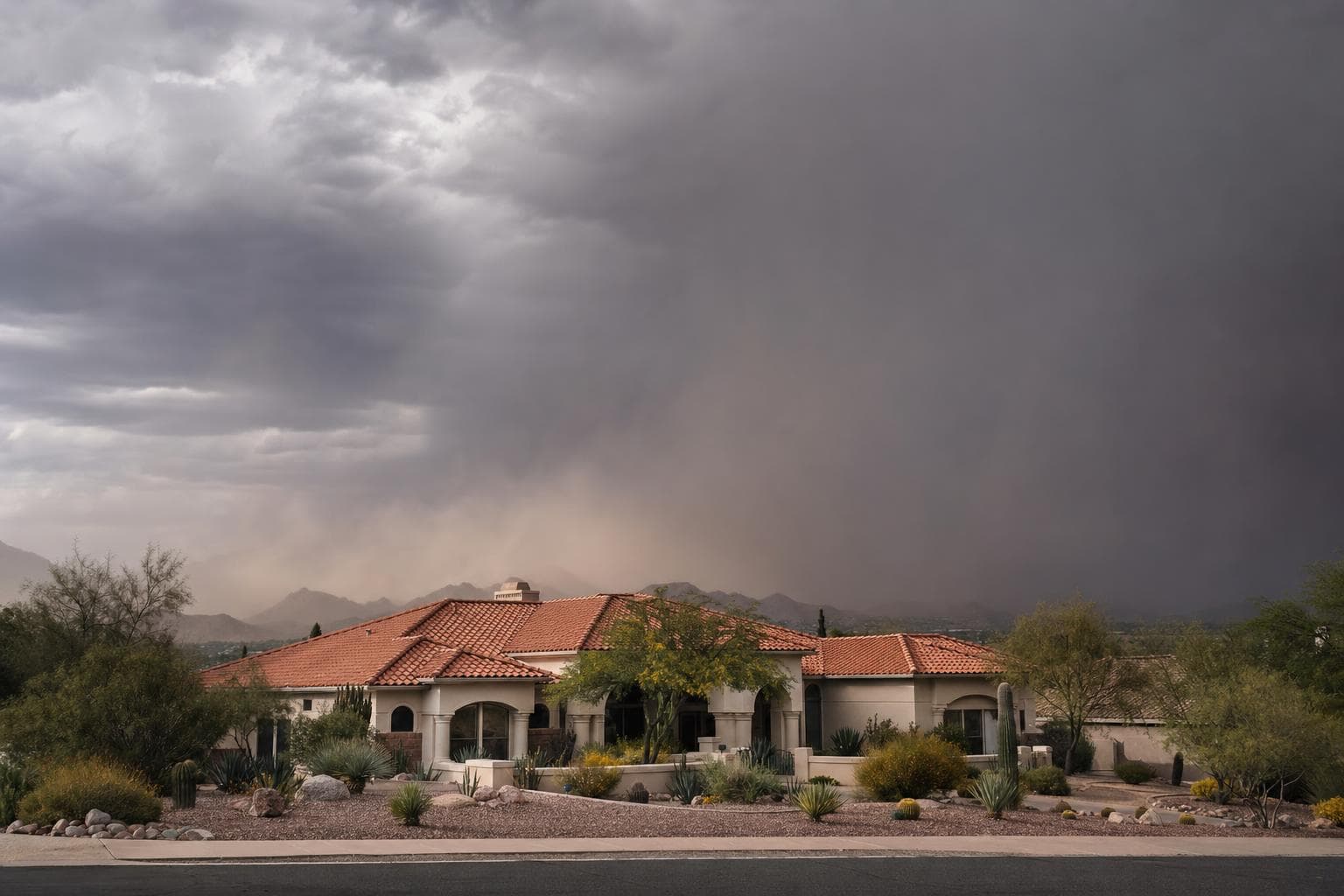
From June into September, the Arizona monsoon can take a roof from fine to leaking in the span of one afternoon storm. Microburst winds slam down out of a single cell, walls of dust scour everything in their path, and a short, violent downpour finds any weak flashing or fastener. The damage is real, the claim window is short, and what you do in the first day or two often decides how smoothly the whole thing goes. Here is the playbook.
How the monsoon actually damages a roof
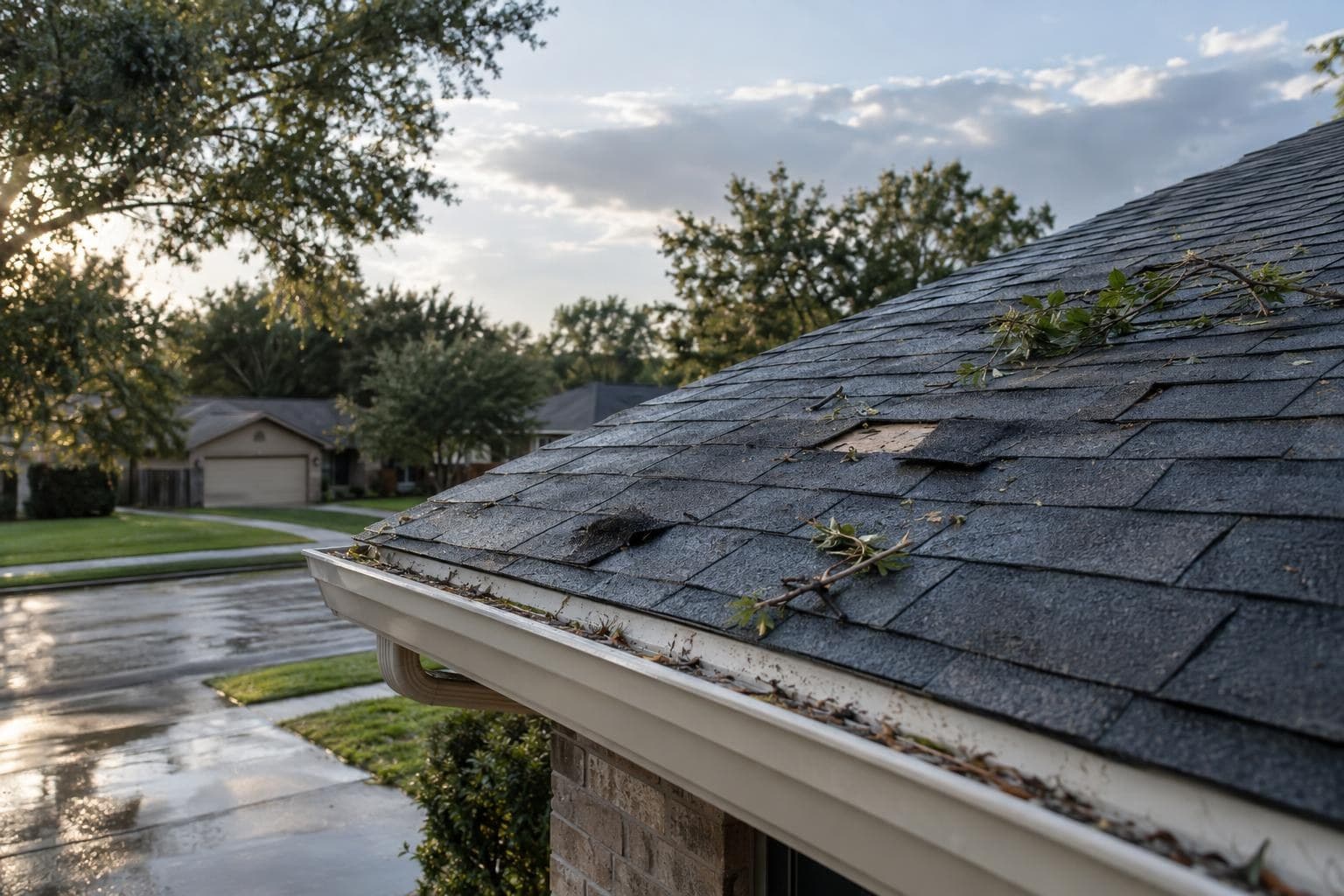
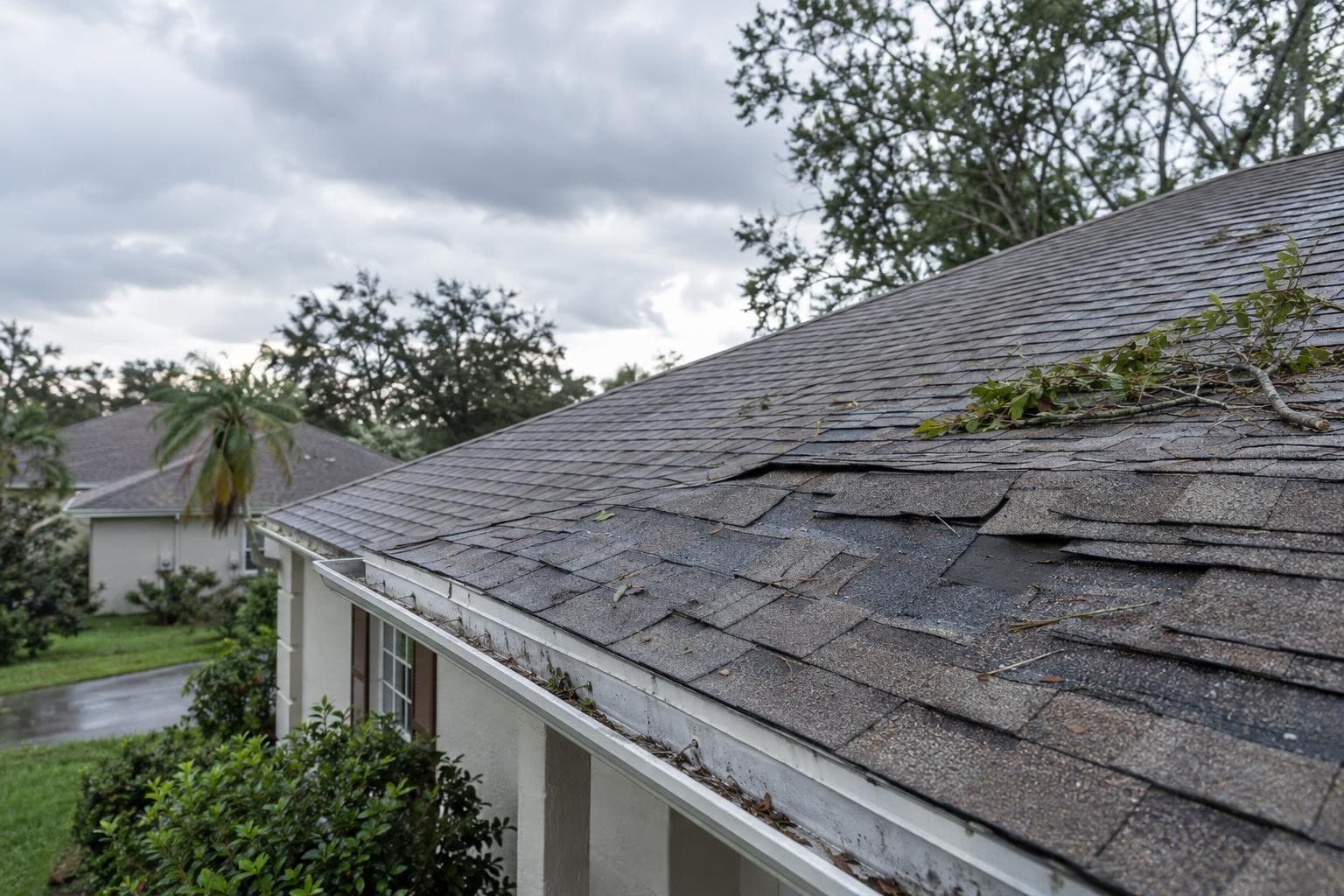
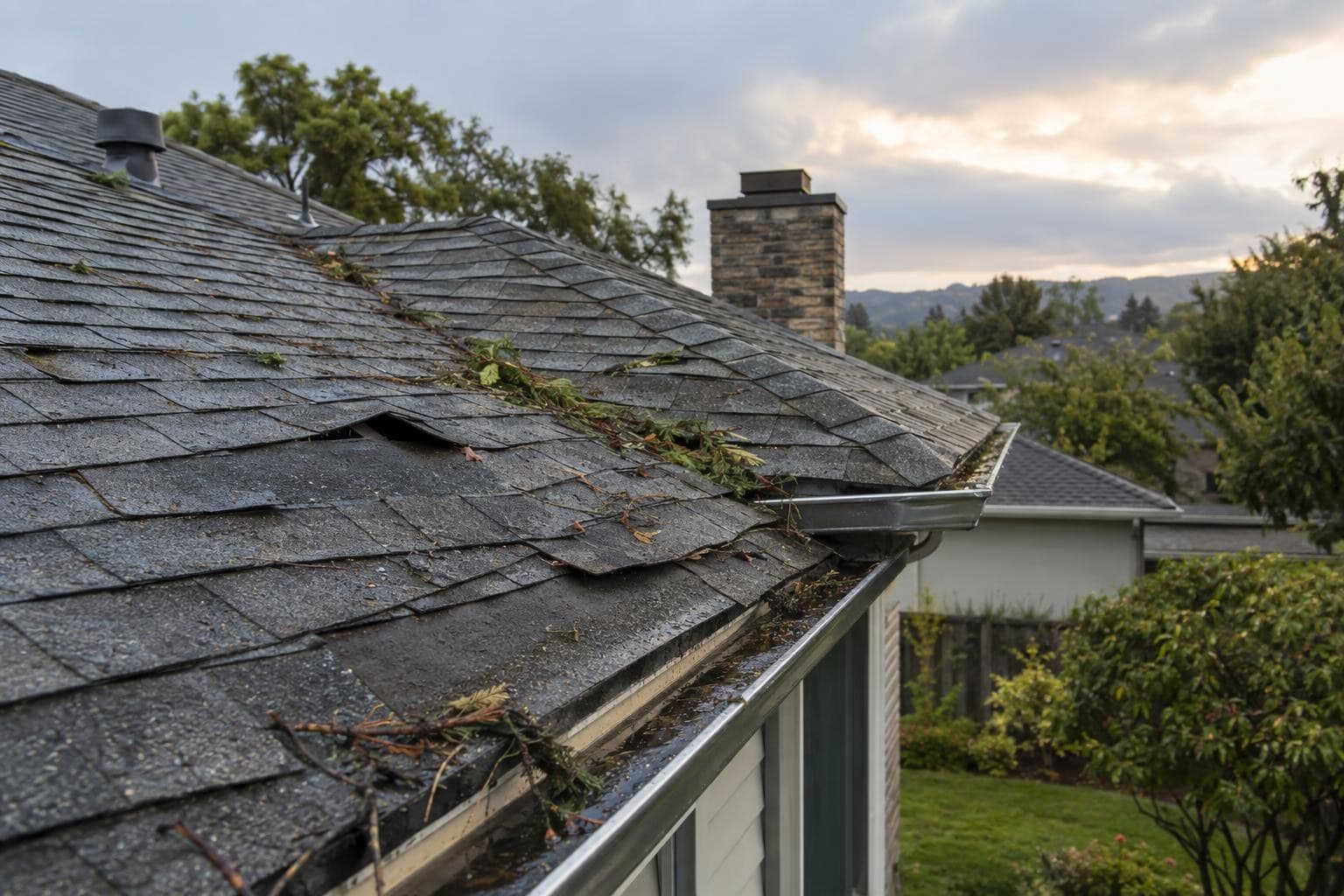
- Microburst wind: a sudden downdraft can hit a small area with extreme straight-line force, lifting and creasing shingles, breaking seal strips, and tearing tabs off the storm-facing slopes.
- Wind-driven dust: blowing grit acts like sandpaper on aging shingle surfaces and packs into valleys and around penetrations.
- Hail: some monsoon cells drop hail that bruises the shingle mat and dents soft metals like vents, flashing, and gutters.
- Sudden downpours: intense short bursts overwhelm worn flashing, lifted shingles, and tired sealant, pushing water under the surface fast.
- Flying debris: palm fronds, branches, and loose yard items become projectiles that puncture or scrape the roof.
First, make it safe and stop the bleeding
Before anything else, handle safety. Stay off a wet or wind-damaged roof, watch for downed power lines, and if water is coming in, contain it inside and move what you can. Limit yourself to temporary measures that prevent further damage, a tarp over an open slope, a bucket under an active drip, and document those too. Hold off on permanent repairs until your damage is recorded and your insurer is in the loop.
Document it like the claim depends on it
Because it does. Take clear, dated photos and video from the ground of every damaged slope, plus close-ups of creased or missing shingles, dented metals, and any interior water stains. Note the date and time of the storm and save local monsoon and hail reports for your area, directional, storm-dated evidence is what separates a fast claim from a disputed one. Keep receipts for every tarp, fan, and emergency expense.
Talk to a roofer today
Planning ranges, scope details, and a direct path to request a roofing quote.
How the Arizona claim works
Arizona's Department of Insurance and Financial Institutions (DIFI) advises homeowners to document the damage and contact their insurer before starting repairs. For monsoon storm roof damage in Arizona, ask the insurer and state insurance regulator for the current notice, proof-of-loss, inspection, acknowledgment, and decision deadlines that apply to the claim. Expect an adjuster to inspect the roof; having a licensed roofer's written scope in hand for that visit helps make sure nothing gets overlooked. Remember your deductible applies, and many Arizona policies use a percentage wind-hail deductible rather than a flat amount.
Repair or replace after the monsoon
Not every monsoon hit is a new roof. A handful of lifted shingles on an otherwise healthy roof is a repair. Widespread creasing, hail bruising across multiple slopes, or storm damage on top of a roof already near the end of its life pushes the decision toward replacement, and toward a covered claim. A licensed roofer who inspects slope by slope can tell you which conversation you are in, and document it either way.
The monsoon does its damage in minutes. The homeowners who recover fastest are the ones who photograph it the same day and call before they start repairs.
Sources
Related reading and source material
- Does insurance cover roof replacement in Arizona?
- Actual cash value vs. replacement cost coverage in Arizona
- Questions to ask a roofing contractor in Arizona
- National Association of Insurance Commissioners: What You Need to Know When Filing a Homeowners Claim
- Insurance Institute for Business & Home Safety: Natural Weathering and Hazard Exposure
Make the Arizona property safe and dry first
Stay away from downed lines, unstable trees, standing water near electrical equipment, and visibly unstable roof areas. Arrange necessary temporary protection, preserve receipts, and photograph conditions before covering them when it is safe. Emergency work should prevent additional damage without erasing the evidence needed for permanent scope. For a Arizona property, inspect UV-exposed components, edges, low-slope drainage, flashings, and the repair plan around solar or mechanical equipment.
Build a located evidence record in Arizona
Use overview photographs to locate close-ups by slope, orientation, material, and detail. Record covering, edges, ridges, valleys, walls, penetrations, drainage, deck or attic evidence, and interior effects. Separate what is observed from what still requires testing or removal. For a Arizona property, review solar exposure, large temperature movement, sudden wind and rain, drainage, elevation, and rooftop-equipment access at the address.
Separate functional damage from appearance and weathering in Arizona
Explain the mechanism, whether attachment or water shedding is affected, and how widely the condition is distributed. Impact marks, dents, granule change, lifted material, failed sealant, age, and installation defects do not all support the same conclusion. The repair boundary should follow evidence. For a Arizona property, separate low-desert heat and monsoon exposure from higher-elevation snow or freeze-thaw conditions before selecting the scope.
Keep claim and construction decisions in separate lanes in Arizona
The roofer documents conditions and prices temporary or permanent work. The insurer applies the policy, deductible, valuation, and claim rules. The building official interprets code for the project. Preserve correspondence, estimates, contracts, changes, invoices, and completion records without assuming coverage or a replacement outcome.
What to confirm before finalizing a monsoon roof-damage inspection in Arizona
Inspect UV-exposed components, edges, low-slope drainage, flashings, and the repair plan around solar or mechanical equipment. For a monsoon roof-damage inspection in Arizona, use the reviewed state resources linked on this page, including Arizona Registrar of Contractors, to verify current credentials, insurance boundaries, contract terms, or consumer requirements that apply. Confirm permits and inspections locally, and keep the property evidence separate from any policy or sales promise.
- Make the Arizona property safe, prevent additional water entry, and photograph conditions before temporary work when practical.
- Map the cause, consequence, distribution, and uncertainty by roof area instead of relying on one close-up or interior stain.
- Test whether the repair can tie into sound layers and identify the concealed finding that would expand the opening.
- Confirm the Arizona permit and inspection path with the local building department before work begins.
- Keep the Arizona photographs, contract, approved changes, invoices, payments, product records, and warranties together.
- Compare what remains in service, the risk the owner accepts, the payment terms, and the completion evidence for each option.
Before committing to a monsoon roof-damage inspection in Arizona, require one final written reconciliation of roof measurements, known base work, concealed-work pricing, state and local responsibilities, product records, inspections, payment milestones, exclusions, and completion documents. The recommendation should identify what remains in service, what risk the owner accepts, and which new finding would change the scope.
Reviewed technical references for Arizona
Related Arizona roofing guides
Related services
Updated July 27, 2026
3D Roofs Editorial Team
Editorial Standards