Updated July 10, 2026

3D Roofs Editorial Team
Editorial Standards
If a storm just hit your roof, start with safety, photos, and a temporary plan to keep water out. In New Hampshire, roofs deal with snow, ice, wind, heavy rain, and seasonal temperature swings. Those conditions can stress shingles, flashing, roof penetrations, and attic ventilation over time. Wind can damage roof coverings, and water can become a bigger problem when it gets past aging materials or vulnerable details. That is why the first 48 hours matter so much. What you document now can help you protect your home, explain what happened, and avoid mixing fresh storm damage with older wear.
What should you do in the first 48 hours after roof storm damage?
Do the safe, simple steps first: protect people, limit water entry, and document everything before cleanup changes the scene. Start inside. Look for active drips, ceiling stains, wet insulation, or water around vents, chimneys, skylights, and exterior walls. Move furniture and electronics out of the way. Put buckets or plastic down where needed. Then walk your property from the ground and take wide and close photos of anything that looks out of place.
- Take date-stamped photos and video of the roof from the ground, all elevations, and any debris or fallen branches.
- Photograph interior signs of water, including ceilings, attic decking, insulation, wall corners, and around penetrations.
- Save loose shingles, metal pieces, or other roofing fragments if they fell into the yard.
- Write down when the storm happened and when you first noticed leaking or visible damage.
- Avoid climbing onto the roof right after a storm, especially if surfaces are wet, steep, icy, or unstable.
How do you document roof damage for an insurance claim?
The best documentation is simple, organized, and tied to specific damage. You want to show what changed, where it is, and how it affected the inside of your home. Create one folder on your phone or computer for photos, videos, notes, and receipts. Keep each item labeled by area, such as front slope, rear valley, chimney flashing, attic north side, or bedroom ceiling. If you buy tarps, buckets, or other emergency supplies, keep those receipts too.
In New Hampshire, the New Hampshire Insurance Department says most homeowner policies cover damages to the dwelling caused by tornadoes or other wind damage. The department also says an insurer is only obligated to pay the cost of repairing the part of your roof that was damaged by a covered peril. If the entire roof needs replacing because of normal wear and tear, you will be responsible for paying the additional cost. That makes clear documentation especially important when part of the roof was hit by wind but other sections were already aging.
Should you tarp a storm-damaged roof right away?
Yes, if water can get in, temporary protection should happen as soon as it can be done safely. Tarping helps prevent a small opening from turning into soaked insulation, damaged drywall, and mold problems. But this is not a DIY job for every homeowner. A wet New Hampshire roof can be dangerous, and storm damage can make footing worse than it looks from the ground. If you are not sure, call a roofer whose credentials and written scope you checked and ask for emergency protection first, then inspection second.
- Use tarping when shingles are missing, flashing is displaced, tree impact opened the roof, or active leaking is present.
- Photograph the damage before the tarp goes on, then photograph the temporary protection after it is installed.
- Do not let emergency work turn into a rushed full replacement decision on day one.
- Ask for a written description of what was temporarily protected and what still needs inspection once conditions are safe.
Talk to a roofer today
Planning ranges, scope details, and a direct path to request a roofing quote.
How can you tell storm damage from normal roof aging?
Storm damage usually looks sudden and localized, while age shows up as broader wear that built up over time. In New Hampshire, snow, ice, wind, heavy rain, and temperature swings can wear a roof down gradually. Those conditions can weaken shingles, flashing, roof penetrations, and attic ventilation details. Then one storm hits, and water finds the weak point. That does not always mean the storm caused every problem you see.
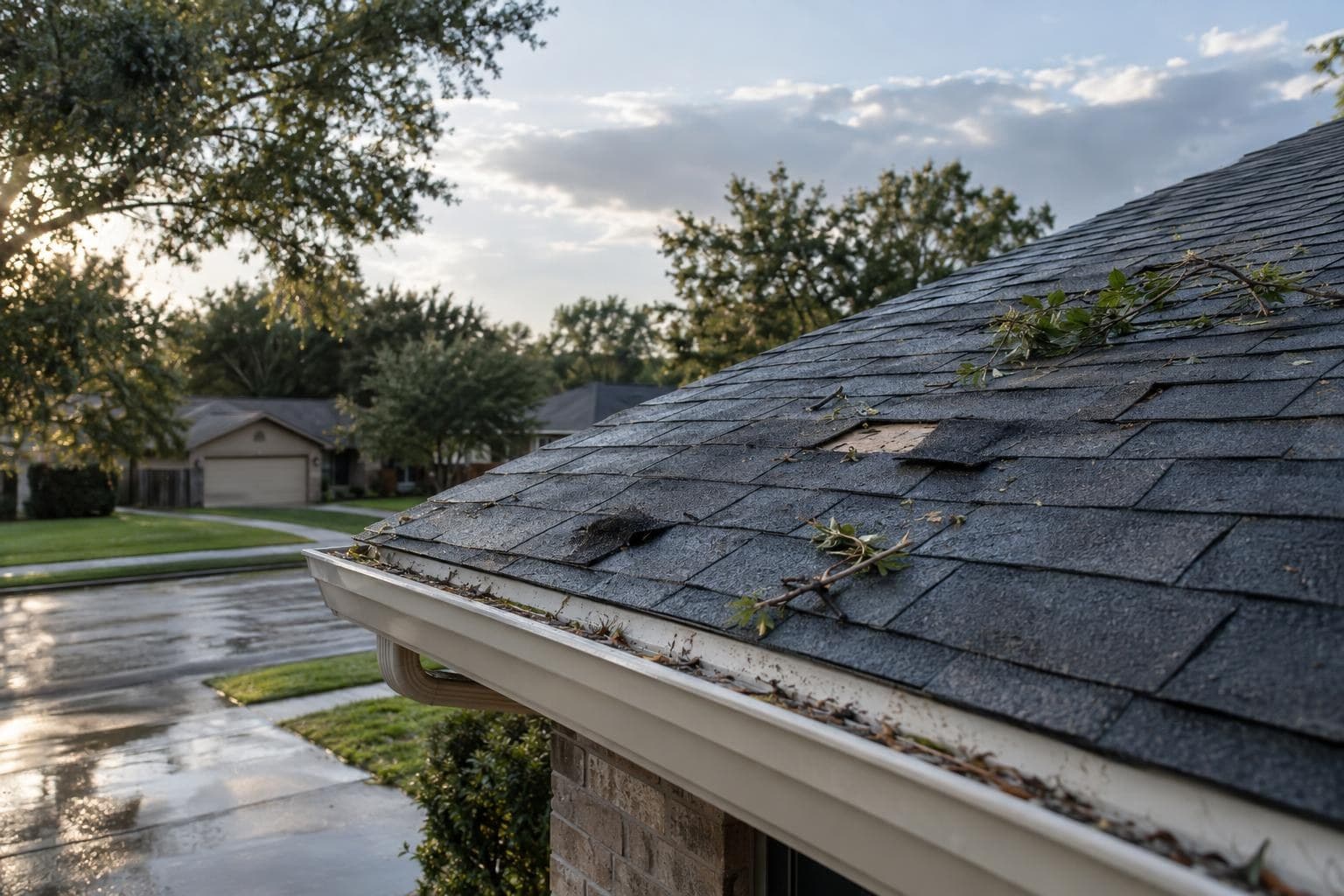
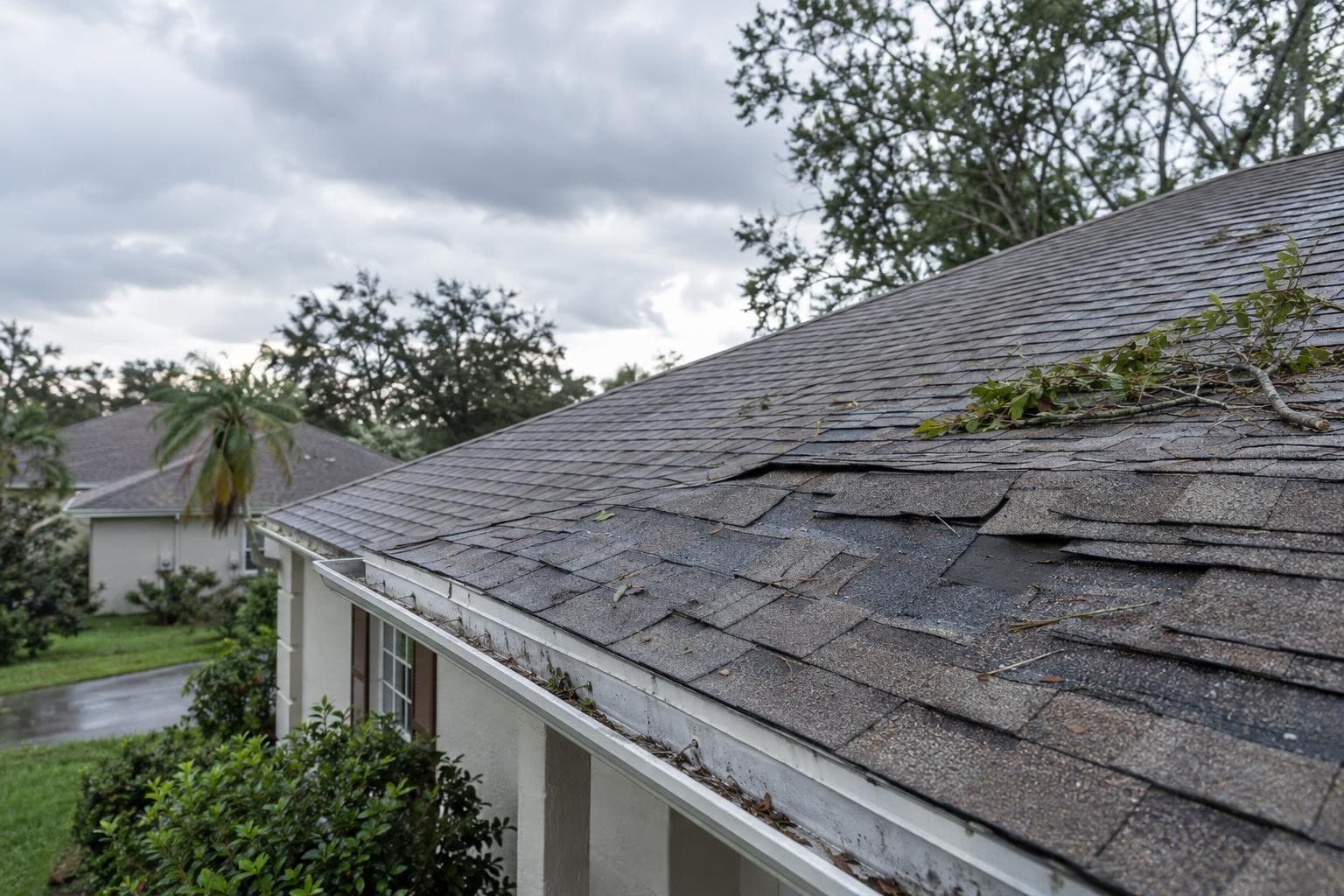
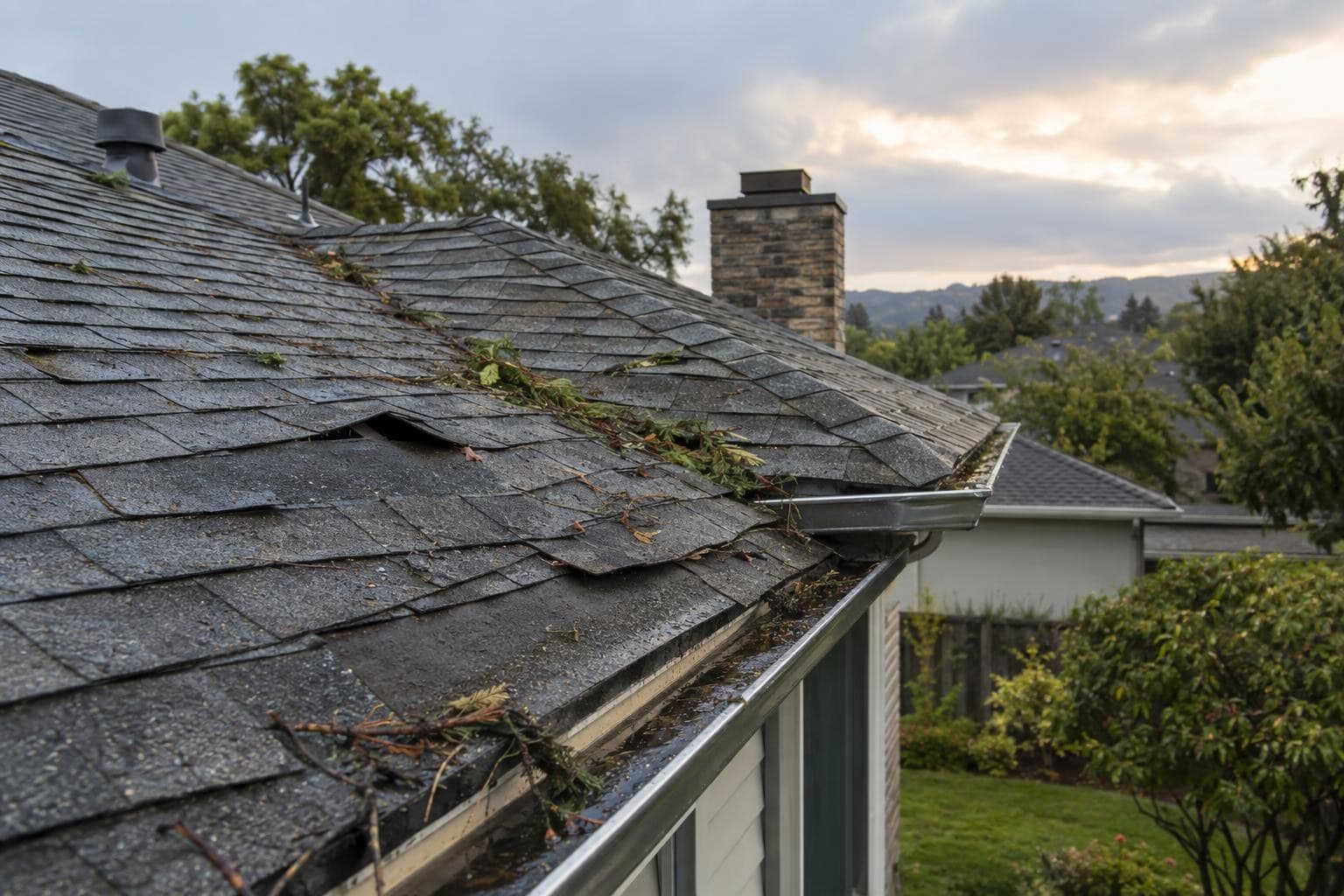
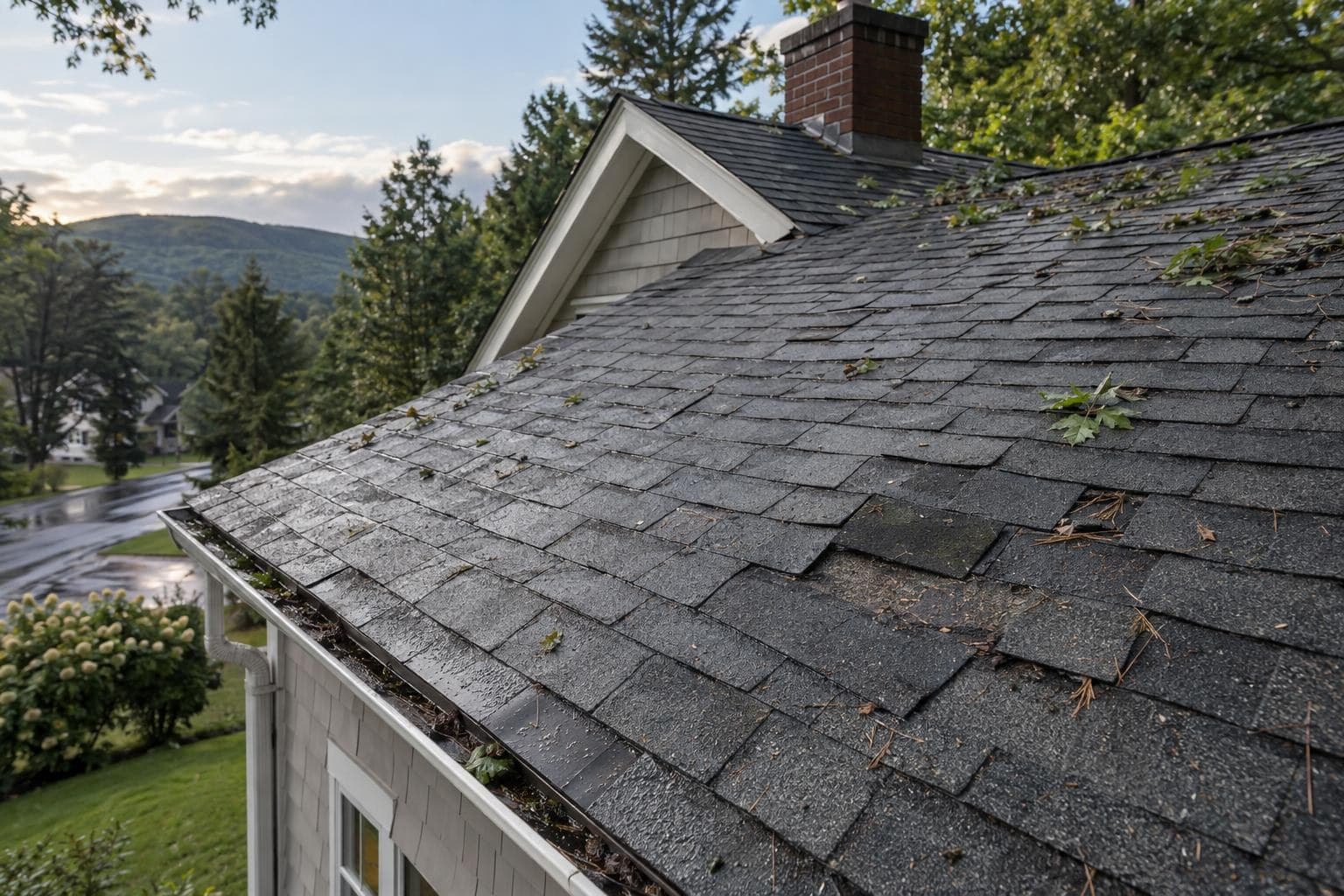
Fresh storm damage often shows up as missing shingles, torn tabs, bent or lifted flashing, displaced ridge material, punctures from debris, or a leak that started right after the event. Age-related issues often look more widespread: granule loss across large areas, brittle shingles, repeated patching, curling edges, exposed fasteners, and tired sealant around penetrations. A local roofer you have vetted can help separate what is new from what was already near the end of its service life, which matters for both repair planning and insurance discussions.
Will homeowners insurance cover your New Hampshire roof damage?
Usually for covered wind damage, yes, but not for every roof problem. The New Hampshire Insurance Department says most homeowner policies cover damages to the dwelling caused by tornadoes or other wind damage.
Flooding is a separate issue. The New Hampshire Insurance Department says homeowners policies do not cover most flooding, and that you need a separate flood insurance policy to protect your home and belongings against flood damage. The department also states that the homeowner policy specifically excludes water damage resulting from flood. If storm water entered because of flooding around the property rather than damage to the roof system itself, that is a different coverage question.
If you are worried that filing a claim will automatically cost you your policy, the New Hampshire Insurance Department says the nonrenewal of a homeowner's insurance policy is not allowed if the nonrenewal is based solely on the insured having filed a single valid claim within any one previous or current policy term. And if you run into claim handling problems, the department says complaints should be submitted in writing to the department, and that staff can answer insurance-related questions and provide guidance and information.
Should you repair the roof or replace it after a storm?
Repair makes sense when damage is limited and the rest of the roof is still in solid shape. Replacement makes more sense when the storm exposed a roof that was already heavily worn, patched many times, or near the end of its useful life. For a storm-damage roof project in New Hampshire, begin with documented damage, the policy deductible, and a property-specific repair or replacement scope. Before approving a storm-damage roof project in New Hampshire, have the bidder connect timing to roof complexity, crew access, material handling, weather, inspections, and concealed conditions. Have each bidder explain how pitch and roof complexity change crew setup, production, and measured price for a storm-damage roof project in New Hampshire.
Check current New Hampshire cost data for a storm-damage roof project in New Hampshire, then replace the range with an assembly-specific proposal based on measured conditions. If you are trying to decide between patching and replacing, compare the repair scope against the age and condition of the rest of the roof, not just the storm-hit area.
Is it worth upgrading to impact-resistant shingles in New Hampshire?
It can be worth asking about, especially if you are already replacing the roof. A Class 4 rating does not establish a policy credit in New Hampshire; the carrier and policy determine eligibility, documentation, and savings. The state guidance is simple: if you are considering Class 4 impact-resistant shingles, ask your insurer whether that roof material qualifies for any premium discount or underwriting benefit. Carriers set their own discounts and eligibility rules, so you should confirm the details with your insurer before you buy.
How do you choose a roofer after a storm in New Hampshire?
Move carefully and get the details in writing before work starts. New Hampshire homeowners need to vet roofers carefully because, according to the New Hampshire Department of Justice, contractors do not need to be licensed in the state. That means you should focus on basic consumer protection steps. Get at least three written, itemized estimates. Ask for references from past jobs and suppliers. Ask for proof of insurance. Check the roofer's address and phone number. Make sure you have a written contract before work starts or money changes hands, and confirm that it includes the scope of work, materials, total price, and payment schedule.
- Be cautious if someone shows up door to door and pushes you to sign right away.
- Be cautious if someone asks for a large deposit upfront or full payment before completion.
- Be cautious if someone insists on cash or electronic payment apps like Zelle or Venmo.
- Be cautious if the proposal is vague or the material list is missing.
- Use a qualified local roofing contractor who will inspect, document, and explain whether you are dealing with repairable damage, age-related failure, or both.
After a New Hampshire storm, your job is to slow the damage, document what changed, and make a clear repair or replacement decision based on facts. Start with photos, interior checks, and temporary protection if needed. Then compare fresh storm damage against older wear, because that difference often decides what insurance will cover and what you may need to pay yourself. If you need next-step budgeting, check the New Hampshire cost page and the calculator for the latest local cost data, then talk with a local contractor whose credentials you verified about the safest path forward.
Sources
- National Association of Insurance Commissioners: What You Need to Know When Filing a Homeowners Claim
- Insurance Institute for Business & Home Safety: Natural Weathering and Hazard Exposure
- New Hampshire Insurance Department, Homeowners and Renters Insurance
- New Hampshire Insurance Department, Flood and Storm Information
Reviewed technical references for New Hampshire
Related New Hampshire roofing guides
Related services
Updated July 10, 2026
3D Roofs Editorial Team
Editorial Standards