
Updated July 10, 2026

3D Roofs Editorial Team
Editorial Standards
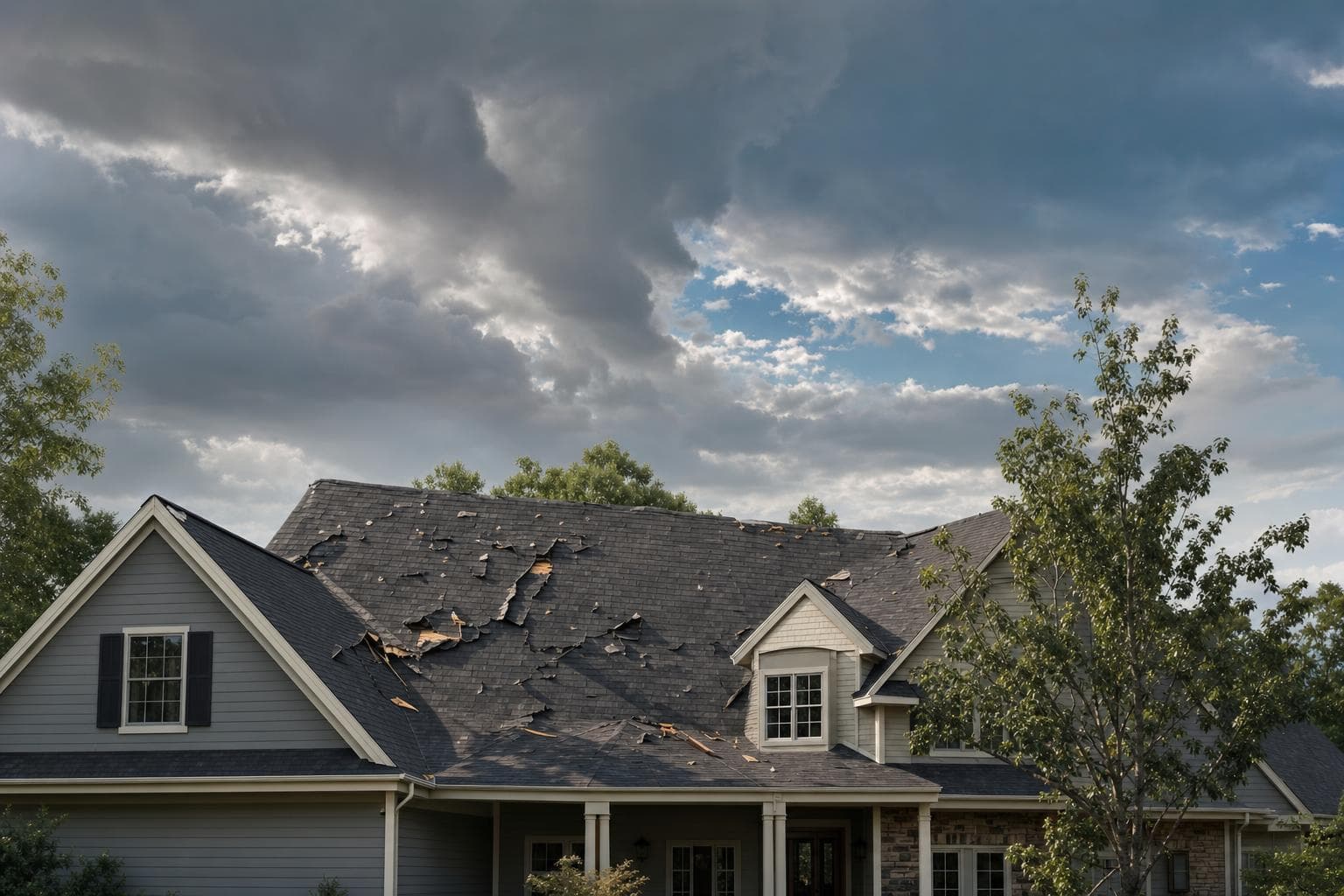
Storm-damage roofing in Warwick starts with what changed during the event. Protect active openings first, then document each roof area before permanent work covers the evidence. Warwick roofs face New England coastal weather with cold winters, snow and ice, hot humid summers, nor'easters, and Narragansett Bay salt-air. The report should locate each finding by roof area, distinguish wind, impact, debris, and water effects from prior conditions, and explain whether the affected assembly can be restored with a focused repair.
How to read storm damage on a Warwick roof
Storm work is strongest when it separates what changed during the event from what was already present. The goal is a roof-area-by-roof-area record that supports the right construction decision without promising an insurance outcome.
Protect active openings first
Use temporary protection where water is entering and conditions permit safe work. Photograph displaced material, punctures, debris impacts, snow load and ice damming, and interior water before covering the roof. Keep the temporary invoice separate so the permanent scope can be compared later.
Document the pattern, not isolated marks
Inspect each slope or roof section plus ridge, edges, flashing, vents, gutters, and prior repairs. Warwick, on Narragansett Bay, sees nor'easters, winter snow and ice, hurricane remnants, and coastal salt exposure across its long shoreline. The pattern and material response are more useful than close-up photographs with no location context.
Build the permanent scope from repairability
A focused repair should identify how it restores the damaged area and ties into sound material. A broader replacement recommendation should explain the distribution of functional damage, material availability, deck condition, and what repeated spot repairs would leave unresolved.
What storm-damage roof work costs in Warwick
Storm cost follows severity. A limited repair may stay between $350-$1,700, while damage that opens a larger section or reaches decking can move from $1,300-$7,000 into $3,100-$16,000 before a full replacement is considered.
- Minor displaced roofing or one leak
- A contained repair with serviceable material around it
- $350-$1,700
- Roof section plus flashing
- A wider repair that opens and restores one affected area
- $1,300-$7,000
- Decking or carpentry involved
- Roofing plus damaged wood or structure beneath it
- $3,100-$16,000
- Class 3 replacement reference
- A 2,000 sq ft reference roof, used only when repair cannot restore the system
- $13,950
Cost ranges are estimates developed from standardized project scopes and reviewed pricing inputs. Government labor and regional cost data are used where applicable. See our Pricing Methodology for the exact sources, calculations, and review date. Actual prices vary by property, scope, materials or equipment, location, and provider.
For a deeper breakdown, open the storm damage roof repair cost guide. Keep temporary protection, inspection, targeted repair, full replacement, decking or structural work, and non-roofing restoration as separate amounts. The permanent price should follow the documented condition, not the storm label alone.
What a storm inspection should document in Warwick
Warwick storm inspection should connect the reported event to conditions observed on each roof area instead of treating every loose shingle, dent, stain, or old patch as the same kind of damage.
Evidence that needs location and context
- The reported storm timing, direction, and weather conditions
- Overview and close-up photographs identified by slope or roof section
- Ridge, edges, flashing, vents, gutters, soft metals, and debris impacts
- Interior or attic water plus any temporary protection already installed
What the report should separate
In Warwick, the inspection should account for snow load and ice damming. It should also check salt-air corrosion near the bay. Each finding still needs a location, material, observed effect, and explanation of whether it is consistent with wind, impact, debris, water entry, age, installation, or prior work.
- Displaced or creased roofing from impact marks or punctures
- New water paths from stains unrelated to the reported event
- Temporary mitigation from the permanent construction scope
A useful storm report does not begin with repair or replacement. It begins with what changed, where it changed, and whether the affected area can be restored reliably.
How Warwick storm exposure changes the inspection
Warwick, on Narragansett Bay, sees nor'easters, winter snow and ice, hurricane remnants, and coastal salt exposure across its long shoreline.
NOAA storm reports logged 2 hail events and 16 damaging thunderstorm-wind events in Kent County from 2020 through 2025.
One storm can create several damage types
Wind can lift roofing and edge details, hail or debris can create impacts, and driven rain can enter through openings or transitions. The report should name the observed effect rather than using "storm damage" as one catch-all diagnosis.
Water may travel beyond the exterior opening
Driven rain can move through lifted edges, loose flashing, vents, walls, valleys, and punctures before appearing indoors. Exterior findings should be compared with attic or interior evidence so the permanent scope includes the full moisture path.
Event timing is context, not proof by itself
A reported storm date helps organize the inspection, but the roof still needs material-specific findings. Age, wear, manufacturing marks, algae, traffic, installation defects, and prior repairs should remain separate from newly observed storm effects.
Keeping construction and coverage separate after a Warwick storm
A roofer can document observed conditions, temporary work, and the proposed construction scope. The insurer interprets the policy and decides coverage. Keep the roof-area report, photographs, invoices, estimates, and carrier correspondence organized without asking the contractor to promise the outcome.
Rhode Island coastal policies may have hurricane deductibles.
Ice dam documentation matters.
Salt-air corrosion documented separately.
What Rhode Island law means before you sign storm-related roof work
Urgency after a storm does not replace a clear contract. Separate temporary mitigation from permanent work, review deductible and claim-related rules, and require the final scope, price, change-order process, payment terms, and warranties in writing.
Homeowners insurance covers covered perils, not every cause of loss
The state explains that homeowners insurance pays for losses and damages to your home if it is damaged or destroyed by fire, weather, theft, or another covered disaster. It also says you are only covered for a loss caused by a peril your policy covers, and you should review your policy limits and exclusions to understand what damage is excluded.
Flood damage is not covered by a standard homeowners policy
Rhode Island says, plainly, that homeowners insurance is not flood insurance and does not cover losses from flood. The state also says there is no state law in Rhode Island that requires you to purchase flood insurance, but if you have a mortgage, your lender will usually require flood insurance.
You can get help from the state insurance division and file a complaint
If you have general insurance-related questions or need help resolving an issue, the Rhode Island Division of Insurance says, "We can help." The agency says you can file a complaint online or reach the division by phone. That gives you a state path to raise concerns if a claim or coverage issue is not being handled clearly.
There is a fallback market if you cannot get coverage through the voluntary market
The state tells consumers that if you are unable to secure property insurance coverage through the voluntary market, you should contact the Rhode Island Joint Reinsurance Association for further assistance. RIJRA says its purpose is to provide basic property insurance on eligible property for applicants who have been unable to gain insurance through the voluntary market.
Choosing a storm-damage roofer in Warwick
Rhode Island draws an important line between residential and commercial roofing. The state's commercial roofing license page says a roofing contractor license applies to commercial or industrial roofing work and does not include work on residential buildings with four or fewer dwelling units. For residential roofing, the state's general contractor registration page says anyone doing residential or commercial construction work, including repairs, needs to be registered with the Rhode Island Contractors’ Registration and Licensing Board, and the examples of work requiring registration include roofers. For you, that means a smart first step is to look up your roofer through the state's Search a Registrant/Licensee tools and confirm they are properly registered for residential construction work. You can also ask your roofer who will perform the work, whether any subcontractors will be used, and for a clear written scope so you can compare materials, flashing details, and cleanup terms before you sign.
Sources: Rhode Island Division of Insurance, Consumers · Rhode Island Contractors' Registration and Licensing Board, Commercial Roofing License · Rhode Island Contractors' Registration and Licensing Board, General Contractor Registration · Rhode Island Joint Reinsurance Association
Storm-damage questions Warwick homeowners ask
What should I do first after a storm damages my Warwick roof?+
Keep people away from downed lines, unstable limbs, sagging ceilings, wet electrical areas, and visible structural movement. Photograph exterior and interior conditions from safe locations and arrange temporary protection when water is entering and roof access is safe. Preserve the uncovered condition in photographs before permanent work begins.
What should a storm-damage roof inspection document in Warwick?+
The report should identify every roof area reviewed and include overview and close-up photographs of roofing, ridge, edges, flashing, vents, gutters, exposed metals, debris impacts, temporary work, and relevant attic or interior water. Each finding should name its location, material, observed effect, and any access limitation.
How can a roofer separate new storm damage from older roof problems?+
The roofer should compare the reported event with the location and pattern of displaced, creased, fractured, punctured, or water-affected materials, then document age, wear, installation conditions, manufacturing marks, algae, traffic, and prior repairs separately. Timing provides context, but the material-specific condition supports the construction conclusion.
How much does storm-damage roof work cost in Warwick?+
The 3D Roofs planning model puts a contained storm repair in Warwick around $350-$1,700, a roof section with flashing around $1,300-$7,000, and work involving decking or carpentry around $3,100-$16,000. A 2,000 sq ft Class 3 replacement reference is $13,950, but full replacement should be priced only when repair cannot restore the documented condition.
When can storm damage be repaired instead of replacing the roof?+
A focused repair may work when the damage is contained and adjacent roofing, flashing, fasteners, and decking can accept a durable tie-in. Replacement deserves a closer look when functional damage is distributed, the structure or deck is affected broadly, matching material cannot be integrated reliably, or no sound repair boundary remains.
Who decides what storm work is needed and whether insurance covers it?+
The roofer documents construction conditions, explains repairability, and writes the proposed work. The insurer interprets the policy and decides coverage. Keep temporary mitigation, permanent roofing, deductibles, optional upgrades, and non-roofing restoration separated in the documents so the construction decision remains understandable regardless of the claim outcome.
